What Does a Finch Eat in the Wild?
Many people struggle to understand what finches eat in the wild, especially if you’re trying to create the perfect environment for them at home. You’re not alone—figuring out their natural diet can feel tricky. But knowing what fuels these vibrant little birds can make all the difference.
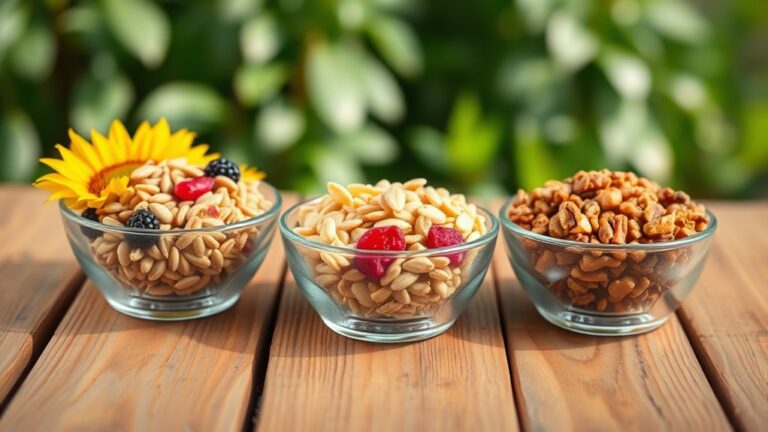
In the wild, you’ll find finches mostly eating seeds from grasses, weeds, and trees, which fuel their energy and health. They also snack on insects, larvae, fruits, and berries, especially during breeding and seasonal changes, to get extra protein, vitamins, and hydration.
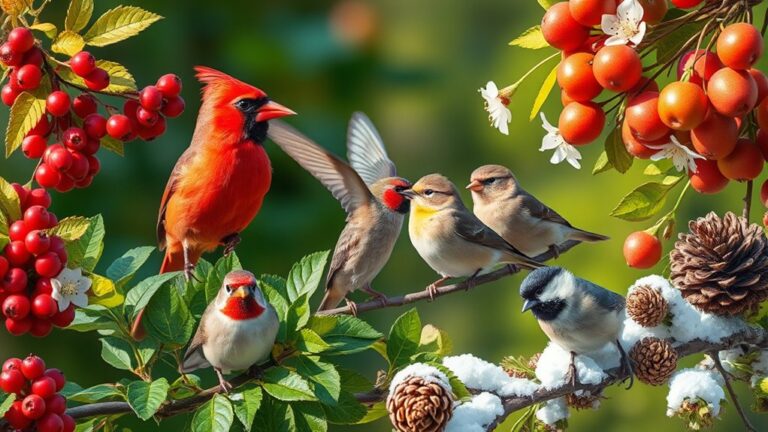
Finches adjust their foraging habits based on habitat and predator presence, often feeding in flocks for safety. Keep exploring to uncover how their diet shifts with the seasons and environments they live in.
Key Takeaways
- Finches primarily eat seeds from grasses, weeds, and trees. These seeds provide essential fats, proteins, and carbohydrates that give them energy and keep them healthy.
- They also add insects, larvae, and small spiders to their diet, especially during breeding seasons when they need extra protein.
- Fruits and berries like elderberries and wild blueberries give finches vitamins, antioxidants, hydration, and quick energy.
- Finches mostly forage near the ground and in low shrubs. They often do this in groups to stay alert and lower the risk of predators.
- Their diet changes with the seasons. In spring and summer, they eat more insects and nectar, while in winter, they rely more on seeds.
What Do Wild Finches Mainly Eat?
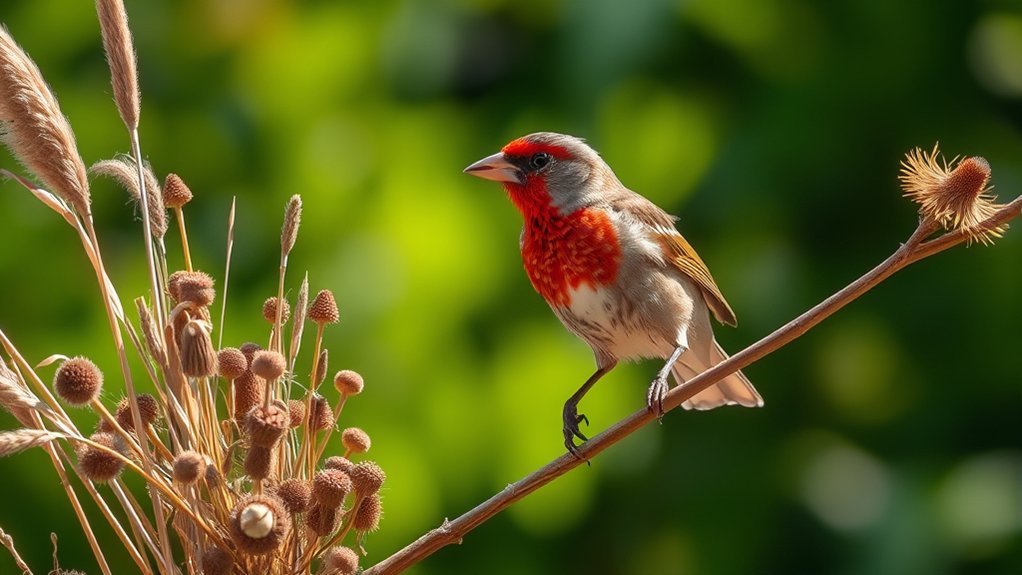
Although wild finches enjoy a variety of foods, they mainly eat seeds from grasses, weeds, and trees. When you watch finches in the wild, you’ll notice they spend much of their time foraging close to the ground or in low shrubs, where these seeds are abundant.
Their feeding habits tie directly to their nesting habits. You’ll find nests built in areas that offer quick access to food while providing some protection against predator threats.
You’ll want to keep in mind that finches stay alert to avoid predators like hawks and cats, often feeding in groups to keep watch. By choosing nesting sites near plentiful seed sources, they reduce the need for long, risky foraging trips.
How Seeds Form the Core of a Finch’s Diet
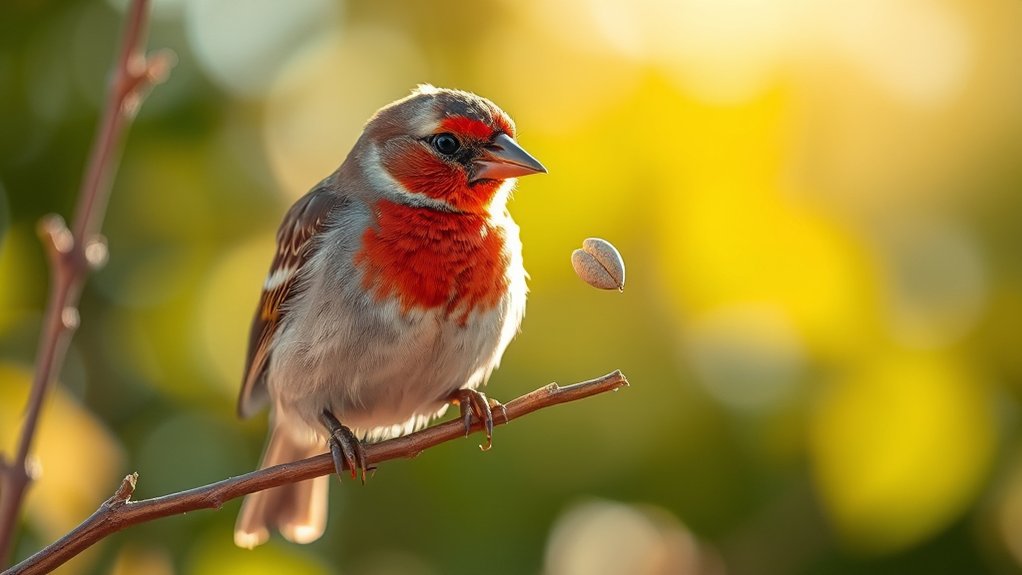
Because seeds provide essential nutrients and energy, they form the core of a finch’s diet. When you watch finches, you’ll notice they spend much time foraging for various seeds. These offer the fats, proteins, and carbohydrates they need to stay active and healthy.
Seeds are vital for finches, supplying essential nutrients that keep them active and healthy.
Seeds also allow finches to practice predator avoidance. By quickly grabbing food and retreating to safe perches, they reduce exposure to threats.
You’ll see finches choosing nesting sites near abundant seed sources, aligning their nesting preferences with food availability. This strategy helps them feed their young efficiently without traveling far, minimizing risk.
Understanding how critical seeds are helps you appreciate why finches often favor habitats rich in seed-producing plants. When you provide seeds in your backyard, you mimic this natural preference, supporting their energy needs and natural behaviors.
Seeds truly are the backbone of a finch’s survival strategy in the wild.
What Insects and Larvae Do Finches Eat?
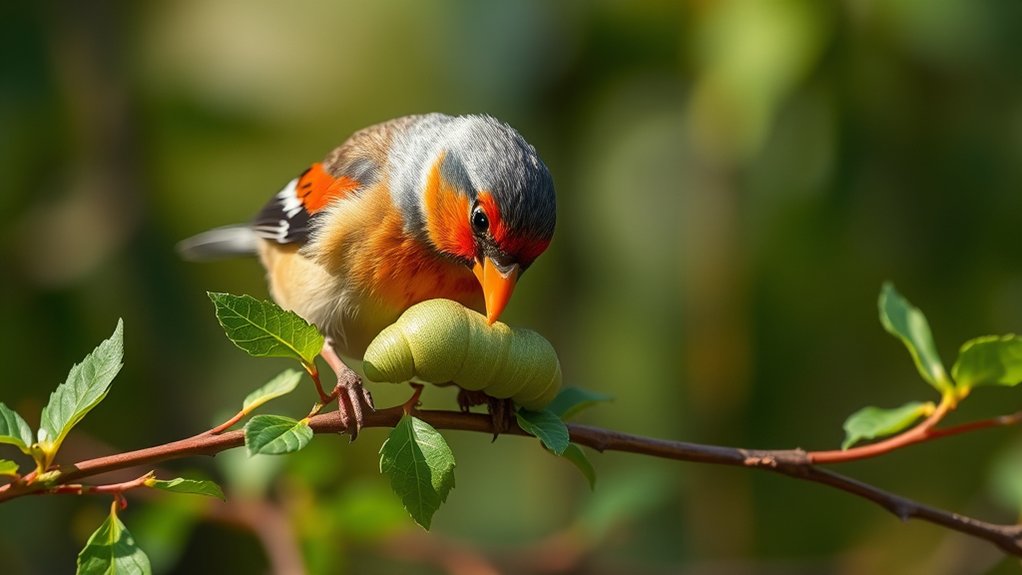
When finches need extra protein, they turn to insects and larvae as an essential part of their diet. You’ll often see them foraging for aphids, caterpillars, beetle larvae, and small spiders. These tiny creatures provide critical nutrients that help finches during breeding seasons and times of rapid growth.
You might notice how their nesting behaviors influence insect hunting. Finches gather protein-rich insects to feed their chicks, ensuring healthy development.
To stay safe while hunting, finches rely on predator avoidance strategies, such as quick, agile movements and staying near cover. This cautious approach helps them snatch insects without becoming prey themselves.
How Fruits and Berries Supplement Finch Nutrition
You’ll find that fruits and berries give finches essential vitamins and antioxidants that really boost their health. For example, common choices like elderberries and mulberries don’t just provide nutrition—they also offer natural sugars that give your bird energy. Knowing how these supplements work can help you support a balanced diet for your finch.
Nutritional Benefits of Fruits
How do fruits and berries improve a finch’s diet? They offer essential nutrients that seeds alone can’t provide, helping finches stay healthy despite challenges like urban development and predatory threats. Fruits supply vitamins, minerals, and hydration, which support energy and immune function.
You’ll find these key benefits:
- Vitamins A and C boost finches’ immune defenses.
- Natural sugars provide quick, digestible energy.
- Water content helps maintain hydration in dry environments.
- Antioxidants protect cells from environmental stress.
Common Berries Finches Eat
Although seeds form the core of a finch’s diet, berries play an essential role in providing additional nutrients and energy. You’ll notice finches often seek out common berries like elderberries, blackberries, and wild blueberries, especially during finch migration when energy demands spike.
These fruits offer vital vitamins and antioxidants that support their stamina on long flights. During nesting behavior, berries also become crucial, supplying extra nourishment for both adults and growing chicks.
How Buds and Flowers Fit Into a Finch’s Diet
Since finches thrive on a variety of foods, buds and flowers play an essential role in their diet by providing crucial nutrients and natural sugars. When you observe finches feeding on these plant parts, you’re seeing more than just nourishment. They also contribute to plant pollination, helping ecosystems flourish.
Finches rely on buds and flowers for vital nutrients while aiding plant pollination and ecosystem health.
Eating buds and flowers supports their energy needs, especially during active phases like nesting behaviors when they require extra fuel.
You’ll notice finches:
- Target tender flower buds for easy access to nutrients
- Consume nectar and petals rich in sugars and vitamins
- Help pollinate plants as they move from flower to flower
- Use flower materials in nest building, integrating diet and nesting behaviors
Seasonal Changes in Finch Diet
You’ll notice that finches adjust their diet with the seasons to make the most of whatever food is around. In spring, they mostly go for fresh buds and flowers. Then, when summer rolls in, they switch things up and start eating more seeds and insects. And by the time winter comes, their feeding habits change once again to handle the scarcity of resources.
Spring Food Sources
Spring offers finches a fresh bounty that shifts their diet considerably from winter months. As you observe finches, you’ll notice their migration patterns bring them to areas rich in new food sources. Their nesting behaviors also demand higher energy, so their diet adapts accordingly.
During spring, finches focus on fresh seeds from budding plants, early-stage insects like aphids and caterpillars, soft buds and shoots, and nectar from blooming flowers.
These food sources provide essential nutrients for growth and egg-laying. You’ll see finches actively foraging for protein-rich insects, vital for feeding their young. Understanding these seasonal dietary shifts helps you appreciate how finches thrive and adapt in the wild during this vibrant time of year.
Summer Diet Variations
As temperatures rise, finches adjust their diet to match the changing availability of food in summer. You’ll notice their feeding habits shift because of migration patterns and nesting behaviors.
During this season, finches consume more protein-rich insects to support their young. Seeds remain important but take a smaller role.
Here’s a quick look at their summer diet variations:
| Food Type | Purpose | Availability |
|---|---|---|
| Insects | Protein for nestlings | Abundant in warm months |
| Seeds | Energy | Moderate, varies by region |
| Berries | Vitamins and hydration | Seasonal, peaks mid-summer |
| Nectar | Quick energy | Available in flowering plants |
Understanding these seasonal changes helps you appreciate how finches thrive in summer’s dynamic environment.
Winter Feeding Habits
Winter brings three major shifts in finch feeding habits that you’ll notice if you observe carefully. As food becomes scarce, finches adapt by changing their diet and behaviors to survive colder months. You’ll find that urban nesting finches rely more on human-provided seeds and scraps, making city environments essential for their winter survival.
They also become more cautious, increasing predator avoidance by feeding in safer, covered areas.
Here are key winter feeding habits to watch for:
- Increased consumption of seeds over insects
- Foraging in urban areas due to food scarcity
- Gathering food in flocks for better predator avoidance
- Using sheltered spots linked to urban nesting to stay warm and safe
How Habitat Influences Finch Food Availability
Though finches adapt to various environments, the availability of their preferred foods depends heavily on the habitat they occupy. If you observe finches in urban areas, you’ll notice they rely on seeds from ornamental plants, leftover bird feeders, and even human food scraps. This urban adaptation means they often face different food choices compared to those in forests or grasslands.
You’ll also see that urban finches adjust their feeding habits to avoid predators like cats and hawks, often feeding during safer times or in hidden spots.
In contrast, finches living in natural habitats have access to a wider variety of seeds, insects, and berries, but food availability can fluctuate with the seasons. When you consider where finches live, you realize their habitat shapes not only what they eat but also how they find food while staying safe from predators.
Understanding this helps you appreciate their resilience and resourcefulness in different environments.
How Finches Forage and Find Food in the Wild
When you watch finches in the wild, you’ll notice they use specific foraging techniques to spot and gather food efficiently. They mainly rely on seeds, insects, and sometimes fruits as their primary food sources. Knowing how they find and choose these foods gives you a clearer picture of their daily survival. It’s pretty interesting to see how skilled they are at picking out just the right bits to eat.
Foraging Techniques Explained
How do finches locate their meals amid the vastness of the wild? You’ll notice they use sharp observation skills and quick movements to stay safe from predator threats while searching for food. Their foraging techniques balance efficiency with caution, especially during nesting behaviors when feeding young.
When you watch finches forage, you’ll see they:
- Scan their surroundings for danger before landing
- Use their beaks to pick seeds from plants or dig into bark
- Forage in groups to increase safety and share information
- Adjust their feeding times to avoid peak predator activity
Food Sources Identified
While finches rely on keen senses and quick movements to find food, their diets vary widely depending on available resources. You’ll notice they forage in diverse habitats, from forests to grasslands. Habitat conservation guarantees a steady food supply.
To stay safe, finches use clever predator protection strategies while feeding. Here’s a quick look at common food sources:
| Food Source | Foraging Method | Habitat Type |
|---|---|---|
| Seeds | Ground pecking | Grasslands |
| Insects | Leaf probing | Forests |
| Fruits & Berries | Canopy picking | Shrublands |
Knowing these food sources helps you appreciate how protecting habitats supports finches’ survival and growth.
Natural Water Sources for Finch Hydration
Although finches primarily get moisture from their food, they still need access to natural water sources to stay hydrated. When you’re observing finches in the wild, you’ll notice they often visit clean, safe spots for drinking.
You should be aware that urban water contamination can limit finches’ options, making natural sources even more essential. Finches also use predator avoidance strategies, such as drinking quickly or from hidden spots, to stay safe while hydrating.
Here are some natural water sources finches rely on:
- Dew on leaves and grass in the early morning
- Small, shallow puddles free from pollutants
- Slow-moving streams with clear water
- Rainwater collected in tree hollows or rock crevices
How to Support Finches by Understanding Their Diet
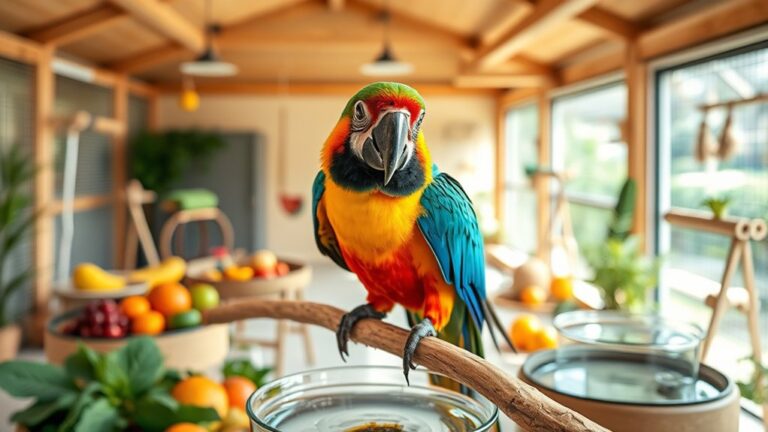
Understanding what finches eat can help you create a supportive environment that meets their nutritional needs. By providing a variety of seeds, fruits, and insects, you mimic their natural diet and encourage healthy foraging. This also supports their nesting behavior, as well-nourished finches have better energy for building nests and raising chicks.
You can improve predator avoidance by placing feeders and water sources in safe locations, such as near shrubs or trees that offer quick cover. Avoid exposing finches to open, risky areas where predators can easily spot them. Furthermore, maintaining clean feeding areas reduces disease risk, keeping finches strong and alert.
Frequently Asked Questions
How Do Finches Store Food for Later Consumption?
You’ll notice finches don’t usually store food for later consumption like some birds do. During finch foraging, they eat seeds immediately rather than hoarding them.
However, some species might engage in seed hoarding by hiding seeds in small caches to retrieve later, especially when food is scarce. So, while finches primarily eat on the spot, certain finches do practice seed hoarding to guarantee they have food during tough times.
Do Finches Eat Different Foods During Migration?
Yes, during finch migration, you’ll notice finch diet variation as they adapt to available food sources along their route. You’ll see them eating more insects, berries, and seeds depending on the region and season. This flexibility helps them maintain energy for the journey.
What Predators Threaten Finches While They Forage?
When you’re out foraging, keep in mind finches face a whole host of predators like hawks, snakes, and cats, so predator avoidance is a must. They stay alert and use quick, erratic movements to dodge danger, showing smart foraging behaviors.
It’s a classic case of “don’t put all your eggs in one basket.” Finches constantly scan their surroundings, balancing feeding with staying safe from threats while they search for food.
How Do Finches Communicate About Food Sources?
You’ll notice finches use finch song and food-related calls to communicate about food sources. When they find a good spot, they sing specific songs or make calls that signal others to join.
These sounds vary depending on the type of food and its availability. By listening closely, you can tell if they’re alerting their flock to an abundant seed patch or warning about scarce resources nearby.
Can Finches Survive on a Human-Provided Diet Alone?
You can help finches survive on a human-provided diet, but it’s best to mimic their natural Finch dietary preferences. Their Finch foraging behavior involves searching for a variety of seeds, insects, and fruits, so sticking to just one type of food won’t meet all their nutritional needs.
Offering a balanced mix of seeds, fresh fruits, and occasional protein treats will keep them healthy and satisfied when you’re feeding them.
Conclusion
You might think feeding wild finches is as simple as scattering any seeds, but understanding their natural diet truly makes a difference. By knowing they mainly eat seeds, insects, fruits, and buds, you can better support their health and survival.
Feeding them appropriate foods and providing natural water sources helps finches thrive in your area. So, next time you want to help, remember: it’s about matching their wild diet, not just any birdseed mix.
Keeping in mind what does a finch eat in the wild ensures you’re giving them the best chance to stay healthy and happy.