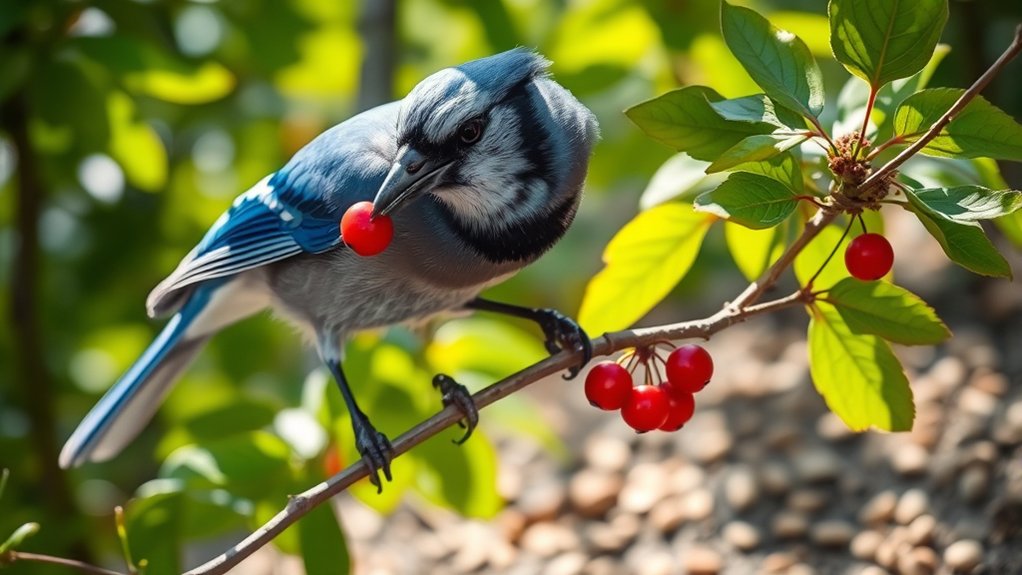
What Do Birds Eat?
If you’ve ever wondered what to feed birds in your backyard but felt overwhelmed by all the options, you’re not alone. Many people struggle to find the right foods that attract and nourish local birds without confusing their natural habits. Understanding what birds eat can help you make better choices and enjoy more feathered visitors.
Birds eat a mix of seeds, insects, fruits, small animals, and aquatic prey, adjusting their diets based on where they live and the season. You’ll find seed-eaters cracking shells, insectivores snatching bugs, and fishing birds diving for fish.
They rely on nutrient-rich foods for energy, especially during migration and breeding.
Offering the right foods can support local birds and their natural habits. There’s plenty more to investigate about how birds find and use their food sources.
Key Takeaways
- Birds eat a variety of foods including seeds, insects, fruits, small animals, mollusks, and aquatic prey based on availability.
- Many birds adapt their diets seasonally, eating more insects during breeding and more seeds or fruits in colder months.
- Seed-eating birds have strong beaks to crack seeds, while insectivores hunt bugs for protein, especially during migration.
- Aquatic birds catch fish and crustaceans using sharp beaks, keen eyesight, and specialized swimming adaptations.
- Fruits, nuts, and seeds provide energy and nutrients, and birds aid ecosystems by dispersing seeds and supporting biodiversity.
Main Types of Bird Diets Explained
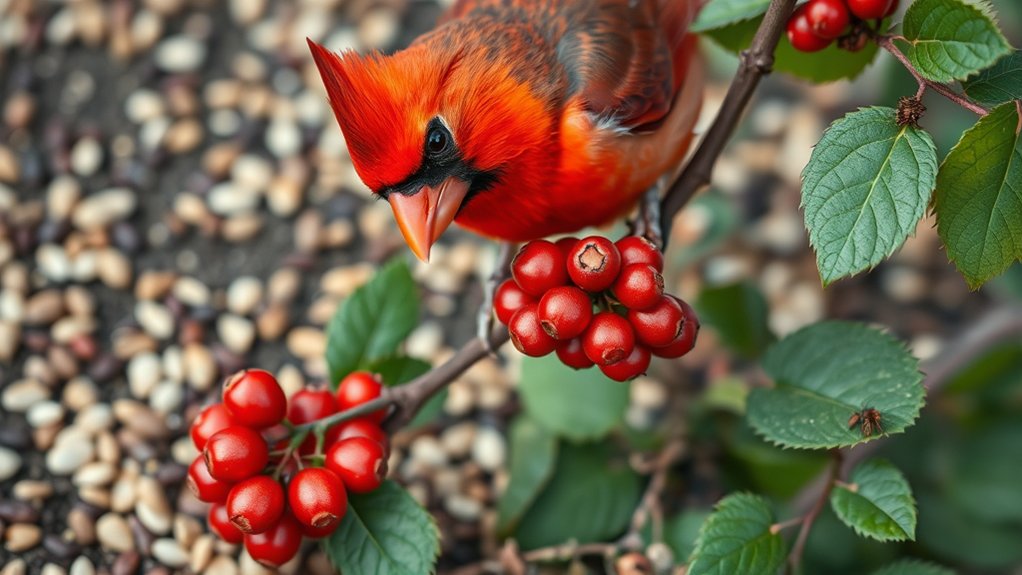
Although birds come in many species, their diets generally fall into a few main types. You’ll find some birds primarily eat seeds and grains, while others prefer insects, fruits, or even small animals. Understanding these main diets helps you grasp how birds survive and thrive.
For example, insectivores feast on bugs, which fuels their energy during bird migration patterns, demanding intense stamina. Meanwhile, granivores focus on seeds, supporting their energy needs differently.
When you observe nest building behaviors, diet plays a key role too. Birds that consume protein-rich insects often build sturdier nests to protect their young, using materials influenced by their environment and food sources.
Knowing these diet types lets you appreciate how birds adapt their feeding habits to meet life’s challenges, especially during long migrations or breeding seasons. So, by recognizing these dietary categories, you better understand birds’ survival strategies without needing to plunge into how diets shift with seasons or habitats.
How Bird Diets Change With Seasons and Habitats
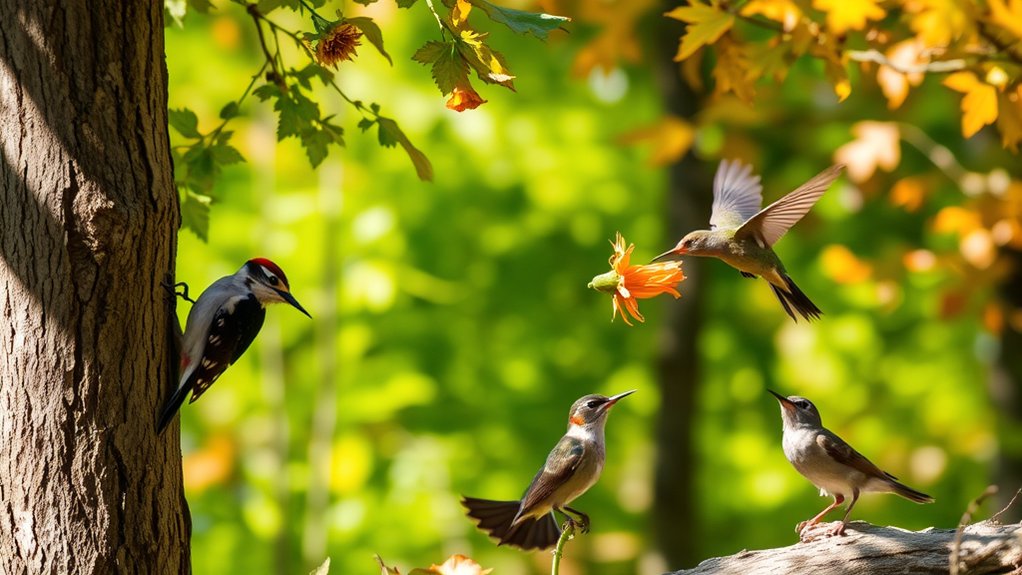
Because food availability shifts with the seasons and habitats, birds adjust their diets to survive and thrive. You’ll notice many birds change what they eat as the year progresses. During migration patterns, birds often fuel up on energy-rich foods like insects or berries to sustain long flights.
Birds adapt their diets seasonally, fueling up on energy-rich foods like insects and berries during migration.
Once they reach breeding grounds, their nesting behaviors influence diet changes. They may consume more protein-rich insects to support egg production and feed hungry chicks.
In colder months or harsher habitats, birds might switch to seeds, nuts, or fruit when insects become scarce. Wetland birds may rely on aquatic plants and small fish when available, but shift to terrestrial insects or seeds in dryer seasons.
Understanding these seasonal and habitat-driven diet shifts helps you appreciate how birds adapt to their environment and meet their nutritional needs year-round.
Seed-Eating Bird Diets: How They Find and Eat Food
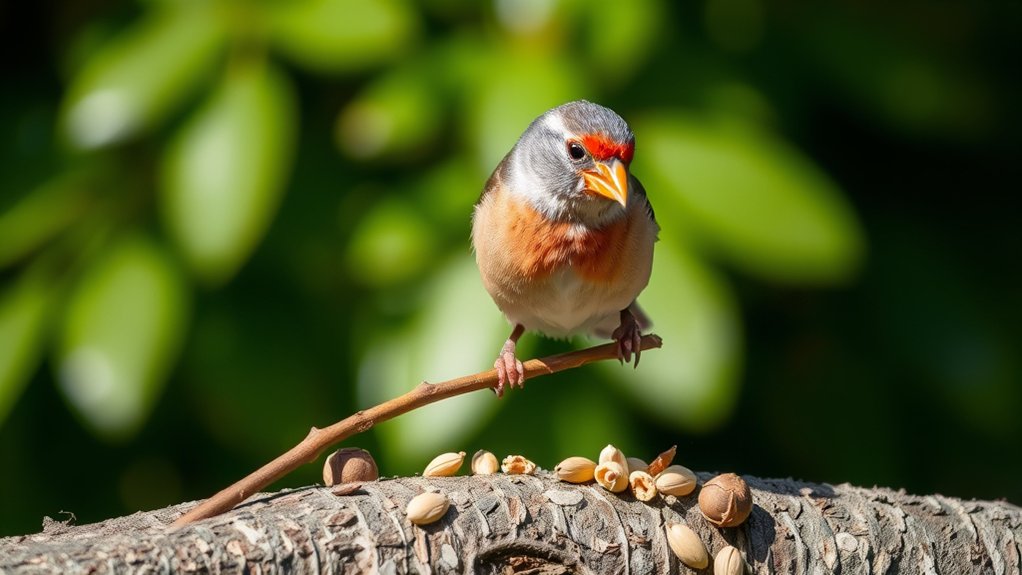
When you watch seed-eating birds, you’ll see they use specialized techniques and physical traits to find and consume their food efficiently. Whether they’re urban nesting or on migratory feeding routes, these birds adapt their behavior to thrive.
Their strong, conical beaks crack open tough seed shells, while their keen eyesight helps them spot food from afar.
Here’s how they manage it:
- Use sharp beaks to husk seeds quickly
- Scan open fields and urban parks for seed abundance
- Cache seeds to eat later during scarce times
- Adjust feeding times based on migratory schedules
- Exploit human habitats by foraging near feeders and gardens
Which Bugs Do Insect-Eating Birds Like Best?
Seed-eating birds rely on sturdy beaks to crack open seeds, but insect-eating birds use a different set of skills to catch their meals. You’ll find that these birds prefer soft-bodied insects like caterpillars, beetles, and flies.
Their choice depends largely on bird migration patterns. Many insect-eating birds time their travels to coincide with insect hatches, ensuring a rich food supply. During nesting behaviors, parents focus on high-protein prey, often feeding their chicks caterpillars and aphids for ideal growth.
You might notice that birds like warblers and swallows target specific bugs abundant in their breeding grounds. Understanding these preferences helps explain why insect-eating birds frequent certain habitats during migration and nesting seasons.
Why Some Birds Eat Nectar and How They Do It
Although many birds rely on insects or seeds for food, some have developed a taste for nectar. It provides a sweet and energy-rich meal. You’ll find that nectar feeding behaviors are fascinating because these birds have adapted to extract nectar efficiently while also helping flowers reproduce.
Some birds have adapted to nectar feeding, enjoying a sweet, energy-rich meal while aiding flower reproduction.
Flower adaptation plays a key role. Plants have evolved shapes and colors that attract these birds, ensuring a steady food source.
When you observe nectar-feeding birds, notice these traits:
- Long, slender beaks designed to reach nectar deep inside flowers
- Specialized tongues that lap up nectar quickly
- Ability to hover like hummingbirds, allowing access to delicate blooms
- Preference for brightly colored flowers, especially reds and oranges
- Regular visits to the same flowers, aiding pollination
Hunting Strategies and Diets of Birds of Prey
Birds have evolved a wide range of feeding habits to survive, from sipping nectar to hunting live prey. When it comes to birds of prey, their hunting strategies are finely tuned for capturing and consuming animals. You’ll notice they use keen eyesight to spot targets from high perches or during flight.
Some species employ swift plunges or stealthy glides to surprise their prey. Urban nesting has led many raptors, like peregrine falcons, to adapt by hunting pigeons and rodents in cities. You can observe how these birds thrive by adjusting their diet to available urban prey.
Migratory feeding is another key behavior. During long migrations, birds of prey fuel up by hunting a variety of small mammals, birds, or insects along the way. This flexibility in diet ensures they maintain energy for their journey.
Understanding these strategies helps you appreciate how these birds stay at the top of the food chain.
Common Fruits and Berries in Bird Diets
When you investigate a garden or forest in late summer and fall, you’ll often spot birds feasting on colorful fruits and berries. These natural treats provide essential energy, especially for migratory feeding. They help birds fuel long journeys.
Urban nesting birds also benefit from fruit-bearing plants in city parks and gardens. They adapt their diets to the available resources.
Here are some common fruits and berries that birds enjoy:
- Blackberries: Rich in antioxidants, attracting thrushes and robins.
- Elderberries: Popular among waxwings and cedar birds.
- Mulberries: A favorite for urban nesting species like starlings.
- Serviceberries: Eaten by many songbirds during migration.
- Hawthorn berries: Provide food late into the season for resident birds.
How Aquatic Birds Find and Eat Their Food
When you watch aquatic birds, you’ll notice they use sharp hunting techniques to catch fish, crustaceans, and insects. You’ll see how their special adaptations, like webbed feet and pointed beaks, help them fish efficiently. So, let’s take a closer look at how these birds find and eat their watery meals.
Hunting Techniques in Water
Although aquatic environments can be challenging to navigate, many birds have perfected unique hunting techniques to catch their prey. You’ll notice they skillfully use water surface tension to their advantage, gently landing on water or skimming its surface without breaking it.
Some rely on aquatic vegetation for cover, patiently waiting to ambush unsuspecting prey. Others plunge beneath the surface, using sharp eyesight to spot movement in murky waters.
Here are common hunting techniques aquatic birds use:
- Hovering above water to spot prey
- Submerging deep to chase fish or insects
- Probing mud and vegetation for hidden food
- Skimming water surfaces for insects and small creatures
- Using aquatic plants as blinds for stealth attacks
These methods help birds thrive in watery habitats.
Types of Aquatic Prey
Because aquatic birds rely on diverse habitats, they target a wide range of prey to meet their nutritional needs. You’ll find them feeding on fish, crustaceans, mollusks, and aquatic insects, depending on availability.
During migratory feeding stops, birds often exploit rich coastal waters or inland wetlands bursting with small fish and invertebrates. If you observe urban nesting species, you’ll notice they adapt by hunting in city ponds and rivers, where aquatic prey like small fish and amphibians thrive despite human activity.
This flexibility helps them survive in changing environments. Whether in remote wetlands or bustling urban areas, aquatic birds adjust their diets based on prey diversity and abundance, ensuring they get the nutrients needed for energy and reproduction throughout their life cycles.
Adaptations for Fishing
To catch their aquatic prey, birds have developed specialized adaptations that help them spot, capture, and consume food efficiently. You’ll notice how feather adaptations keep them waterproof and streamlined, allowing quick plunges. Their keen eyesight lets them spot fish below the water.
Migratory patterns also play a role, guiding birds to rich fishing grounds during different seasons. When you observe fishing birds, you’ll see these features in action:
- Sharp, pointed beaks to snag slippery prey
- Webbed feet for swift swimming and stability
- Waterproof feathers to stay dry and buoyant
- Excellent underwater vision for spotting fish
- Seasonal migration to follow food availability
These adaptations work together so you can appreciate how birds thrive in aquatic environments.
How Grains and Nuts Help Birds Thrive
When you provide birds with grains and nuts, you give them vital nutrients that boost their energy and overall health. Grains offer carbohydrates for sustained energy, while nuts supply healthy fats and proteins essential for growth and feather maintenance.
Birds often engage in seed dispersal by eating grains and carrying seeds to new locations, which helps plants reproduce and supports ecosystems. You might notice birds practicing nut storage, hiding nuts in various spots to eat later when food is scarce.
This behavior not only guarantees their survival during tough times but also benefits nature by promoting forest regeneration.
Foods to Offer to Attract Different Bird Species
Although different bird species have varied dietary preferences, you can attract a wide range of birds by offering the right foods. Whether you’re in an urban planting setting or a rural area, knowing what to provide helps support birds during critical periods like bird migration. You’ll notice more visitors if you tailor your offerings to local species’ needs.
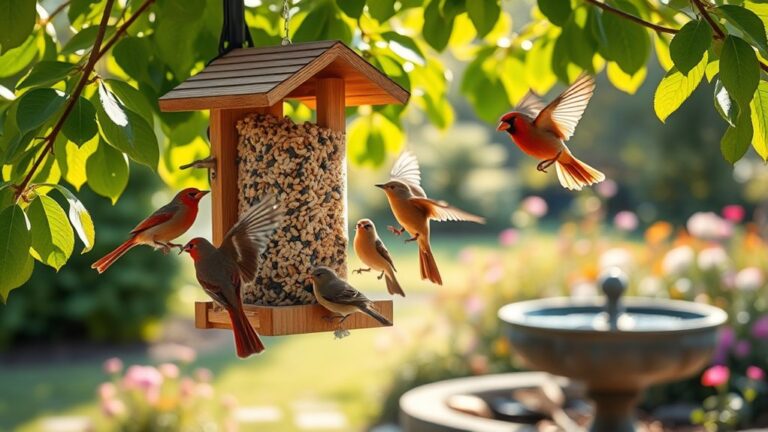
Here are some foods that attract various birds:
- Black oil sunflower seeds: favored by finches, cardinals, and chickadees
- Nyjer (thistle) seeds: perfect for goldfinches and siskins
- Suet cakes: great for woodpeckers and nuthatches, especially in colder months
- Fruit pieces (apples, berries): attract orioles, thrushes, and mockingbirds
- Mealworms: loved by bluebirds and wrens, offering extra protein during migration
Frequently Asked Questions
How Do Birds Digest Different Types of Food?
You digest different foods thanks to your bird digestive system, which has special dietary adaptations. When you eat, food moves through your crop for storage, then to your stomach.
There, the glandular part secretes enzymes to break down food. The muscular gizzard grinds tough items like seeds. Your intestines absorb nutrients efficiently, adapting to what you eat. These adaptations help you process various diets, from insects to fruits or seeds.
Can Birds Eat Human Food Safely?
You shouldn’t feed birds most human food because 90% of what we eat lacks the balance needed for proper bird nutrition. While birds appreciate dietary diversity, many human snacks contain salt, sugar, or preservatives that harm them.
Instead, provide natural options like seeds, fruits, and insects to support their health. Remember, your choice directly affects their well-being, so stick to bird-friendly foods to keep them thriving.
How Do Baby Birds Get Their First Food?
When baby birds hatch, they rely on their parents for nestling nutrition. You’ll see parent birds using specific bird feeding methods, like regurgitating partially digested food directly into the chicks’ mouths. This guarantees the hatchlings get soft, easily digestible meals essential for growth.
If you ever observe, parents tirelessly bring insects, worms, or soft seeds to the nest, carefully feeding each baby bird to keep them healthy and strong.
Do Birds Have Favorite Meals or Preferences?
You might be surprised to learn that birds do have favorite meals. Their bird feeding habits reveal that avian dietary preferences vary widely, from seeds and fruits to insects and nectar.
You’ll notice some species enthusiastically return to specific foods, showing clear tastes. Understanding these preferences helps you provide the right food, supporting their health and happiness.
How Does Bird Diet Affect Their Migration Patterns?
Your bird’s diet plays a big role in migration triggers, signaling when to start their journey. Nutritional needs push them to find food-rich areas, so dietary adaptations help them survive long flights and changing environments.
For example, some birds store fat from high-energy foods to fuel migration. If their usual diet shifts, their migration timing or routes might change too, showing how closely linked diet and migration really are.
Conclusion
You’ll see birds eating seeds, catching bugs, sipping nectar, and nibbling fruits. You’ll notice them adapting diets with seasons, exploring habitats, and thriving on grains and nuts.
You’ll learn how aquatic birds plunge for food and why offering the right treats attracts different species. By understanding what birds eat, you’ll appreciate their diversity, support their health, and enjoy watching them flourish in your own backyard every day. This knowledge about what birds eat makes every birdwatching moment more rewarding.