How to Prevent Root Rot in Plants in 7 Steps
If you’ve ever dealt with soggy soil and wilting leaves, you’re not alone. Many plant lovers struggle with root rot, a common problem that can quickly ruin your favorite greenery.
Preventing root rot is key to keeping your plants thriving, and luckily, it’s easier than you might think.
Prevent root rot in plants by checking soil moisture, fixing drainage, and watering only when the top inch feels dry. Choose pots with clear drainage holes and use a fast-draining mix with perlite or pumice.
If roots look brown or mushy, trim them with clean tools and repot right away. Give plants bright light and good airflow, and watch for wet soil or leaf discoloration.
These simple steps can keep your roots healthy, and there’s more to learn.
Key Takeaways
- Check soil moisture before watering, and water only when the top inch feels dry. This helps prevent overwatering, which is a common cause of root rot.
- Use pots with clear drainage holes and empty saucers after watering to avoid standing water. Good drainage keeps roots healthy and happy.
- Choose a fast-draining, airy potting mix with perlite, pumice, or pine bark. These materials help air circulate around the roots and prevent soggy soil.
- Improve garden drainage with raised beds, mounds, or amended soil. Better drainage means water won’t pool around the roots and cause problems.
- Watch for root rot early, trim damaged roots, and repot in fresh soil. Catching it early can save your plant and keep it thriving.
Check for Root Rot Risk in Soil and Drainage
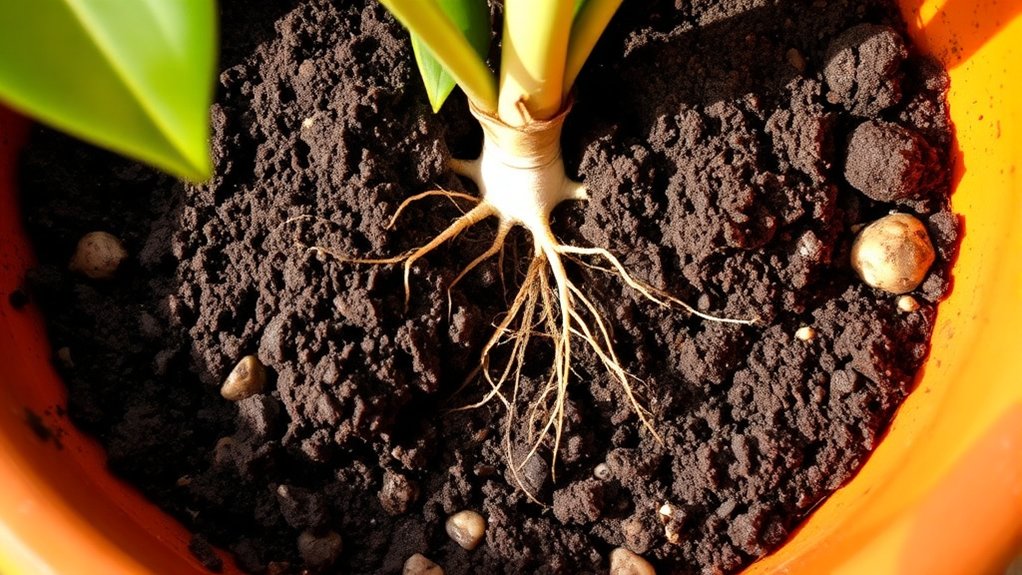
Before you water again, check whether the soil holds moisture too long, because soggy conditions are one of the main triggers of root rot. You can test soil moisture by pressing a finger a few inches below the surface or by using a moisture meter.
If the mix stays wet after you expect it to dry, your plant may be sitting in poor soil. That’s a warning sign, especially in heavy clay or compacted potting media. Improve drainage by loosening dense soil, adding coarse material, or repotting into a freer-draining mix.
If soil stays wet too long, poor drainage may be the problem—loosen it or repot into a freer-draining mix.
You should also make sure containers have clear drainage holes and empty saucers after watering. In garden beds, raised mounds or amended soil can help excess water move away from roots.
When water drains well, roots get the oxygen they need, and rot-causing fungi lose their advantage. Catching these issues early helps you protect plants before damage spreads.
Water Plants Only When the Top Inch Is Dry
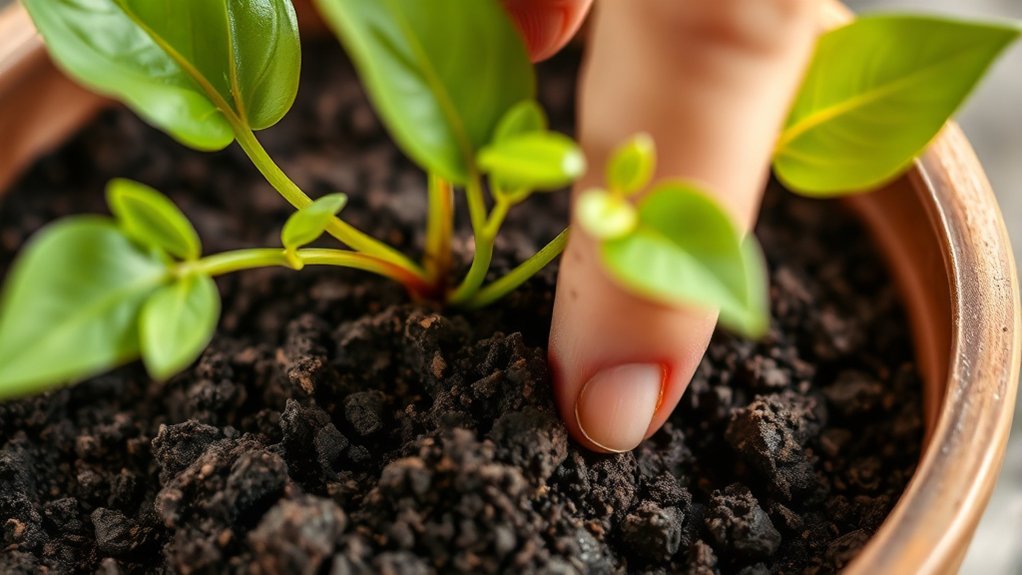
Water only when the top inch of soil feels dry, because watering on a fixed schedule can keep roots too wet. You can check it with your finger or a wooden stick, and you’ll learn how quickly each plant uses water. This simple habit helps you match watering to actual need instead of guessing.
Moisture retention changes with potting mix, light, and air movement, so the same plant may dry faster in summer and slower in winter. Soil temperature also affects drying: warm soil loses moisture more quickly, while cool soil holds it longer. If the surface still feels damp, wait and check again the next day.
When you do water, give the plant enough to moisten the root zone evenly, then pause until the top inch dries again. That rhythm supports healthier roots and lowers the chance of rot.
Use Pots With Drainage Holes

Even careful watering can’t help if excess water has nowhere to go, so choose pots with drainage holes. You let surplus moisture escape before it sits around your plant’s roots and causes rot. Check the holes before you buy, and make sure they’re open, not blocked by labels or debris. If you use a decorative cachepot, place your nursery pot inside it and empty any collected water after watering.
Think about pot material too. Terracotta dries faster than plastic, while glazed ceramic and metal can hold moisture longer. Pick the material that matches how often you water and how quickly your plant uses moisture.
Also match container size to the root ball. A pot that’s too large holds extra wet soil, but one that’s too small crowds roots and dries unevenly. With the right pot, you give roots airflow, reduce standing water, and lower the risk of root rot.
Choose a Fast-Draining Potting Mix
A fast-draining potting mix helps keep roots from sitting in soggy soil for too long. You want a blend that sheds extra water quickly while still holding enough moisture for steady growth.
Check the label for airy ingredients and a loose soil texture, then adjust with organic amendments if needed.
| Ingredient | Role | Best For |
|---|---|---|
| Perlite | Improves drainage | Most houseplants |
| Pumice | Adds aeration | Succulents |
| Pine bark | Creates space | Orchids |
| Coir | Holds light moisture | Tropical plants |
| Sand | Speeds runoff | Cacti |
Mix components so the soil feels crumbly, not dense or sticky. When you water, the mix should absorb moisture, then release excess fast.
That balance helps you avoid waterlogged roots and supports healthier growth.
Trim Rotting Roots and Repot Early
If you notice root rot, go ahead and trim off the damaged roots immediately using clean, sharp tools. After that, repot your plant into fresh soil. This gives the healthy roots a better chance to recover. Catching it early can really stop the rot from spreading and help your plant bounce back.
Remove Damaged Roots
Stop root rot in its tracks by cutting away the damaged roots as soon as you spot them. During root inspection, you protect root health by gently lifting the plant, rinsing off debris, and snipping away any brown, mushy, or foul-smelling sections with sterilized shears.
Keep cuts clean and remove only tissue that’s clearly compromised. If you leave decay behind, it can spread fast and weaken the whole plant.
| Root sign | Action | Result |
|---|---|---|
| Soft, dark roots | Trim back | Stops spread |
| Firm, pale roots | Leave intact | Preserves growth |
| Bad odor | Inspect closely | Finds rot early |
Work carefully, then move on quickly so the plant doesn’t sit exposed. Early action gives your plant the best chance to recover before the damage worsens.
Repot Into Fresh Soil
After trimming away the rotten roots, repot the plant right away in fresh, well-draining soil to give it a clean start. Choose a pot with drainage holes, and don’t reuse the old mix since lingering pathogens can trigger another outbreak.
Adjust the soil composition to match the plant’s needs: add perlite, bark, or sand for better airflow, and keep the mix loose, never packed tight. When you use proper repotting techniques, set the plant at the same depth it grew before, then fill around the roots gently.
Water lightly to settle the soil, but don’t soak it. Place the pot in bright, indirect light and monitor moisture closely for the next few weeks so you can catch stress early and help new roots recover well.
Give Plants Better Light and Airflow
Plants stay healthier when they get enough light and good air circulation, because damp, shaded conditions let soil stay wet longer and create the perfect setup for root rot. Place your plants where they receive the right light intensity for their species, since too little light slows growth and leaves the mix moist for longer.
If a window is weak, move the pot closer or add a grow light to keep conditions bright and steady. You should also improve air circulation around the foliage and pot. Space plants apart, avoid crowding them on shelves, and use a small fan on a low setting if your room feels still.
Good airflow helps the surface dry faster after watering and reduces trapped humidity around the roots. Together, brighter light and moving air help you manage moisture more effectively and keep your plants growing strong without creating soggy conditions that invite problems.
Watch for Early Signs of Root Rot
Catch root rot early by checking your plants regularly for warning signs. You’ll often notice discoloration in leaves first, especially yellowing, browning, or a dull, washed-out look.
Check whether the soil stays wet long after watering, because soggy conditions feed the problem. Gently lift the plant if you can; roots should look firm and light-colored, not mushy, dark, or foul-smelling.
Watch for wilted stems, even when the soil feels moist, since damaged roots can’t move water upward. You may also see slowed growth, dropping leaves, or a plant that stops responding to normal care.
Inspect the base of the stem too, because soft or blackened tissue can signal rot spreading. If you spot these changes, act fast by reducing water, improving drainage, and repotting if needed. Early attention gives your plant the best chance to recover before the damage becomes severe.
Frequently Asked Questions
How Do I Disinfect Tools After Trimming Rotten Roots?
Clean your tools right after trimming rotten roots. Scrub off debris, then soak or wipe blades with 70% isopropyl alcohol or a 10% bleach solution for 10 minutes.
Rinse and dry them completely to protect root health and keep tool sanitation solid. If you’re working on multiple plants, disinfect between each one so you don’t spread infection.
Store tools dry, and replace any with rust or residue buildup.
Can Root Rot Spread Between Nearby Potted Plants?
Yes, root rot can spread between nearby potted plants if you let contaminated water, soil, or tools move from one pot to another. Why risk one sick plant endangering the rest?
You should protect root health by isolating affected pots, improving soil drainage, and cleaning tools after each use. If you catch it early, you can stop the problem from spreading and save your healthier plants.
Which Houseplants Are Most Resistant to Root Rot?
Snake plants, ZZ plants, pothos, and spider plants are among the most root-rot-resistant houseplants. You’ll do best with low maintenance plants and drought resistant varieties that tolerate drying out between waterings.
Succulents like aloe and jade also handle soggy mistakes better than many others, as long as you don’t overwater them. Choose pots with drainage, and you’ll help these tough plants stay healthy and thrive longer indoors.
Does Cold Weather Increase the Risk of Root Rot?
Yes, cold weather can increase your plant’s root rot risk. Cold temperatures slow root growth and reduce how quickly soil dries, so moisture levels stay higher for longer. You should water less often and make sure pots drain well.
If your plant sits in chilly, soggy soil, roots can suffocate and decay fast. Keep it warmer, avoid overwatering, and check the mix before you water again.
Can Fungicides Cure Root Rot Once Symptoms Appear?
No, fungicides won’t magically rescue a plant already showing root rot. You can slow the spread, but fungicide effectiveness drops fast once roots have collapsed.
You’ll need to cut away damaged roots, improve drainage, and repot into fresh medium to protect root health. If you wait, the rot can race through the plant like wildfire.
Act quickly because treatment works best before symptoms appear and serious decay takes hold.
Conclusion
Root rot can sneak up fast, but you can stop it before it spreads. By checking soil, watering only when the top inch is dry, and using drainage holes and fast-draining mix, you give roots a healthier home.
Here’s a useful stat to remember: overwatering is one of the top causes of houseplant death. Stay alert for early signs, and your plants will have a much better chance to thrive.
Preventing root rot is key to keeping your plants healthy and happy.