5 Best Flowers for Cottage Gardens
Finding the perfect flowers for a cottage garden can feel overwhelming. You want blooms that bring charm but also stand up to the elements. If you’ve struggled to find plants that offer both beauty and resilience, you’re not alone.
Many gardeners dream of that timeless, relaxed look but aren’t sure where to start. For a cottage garden, you can’t go wrong with roses, delphiniums, foxgloves, sweet peas, and other classic blooms that mix charm with resilience. Best Flowers for Cottage Gardens.
Roses bring fragrance and romance, delphiniums add tall spires of color, and foxgloves soften borders with their bell-shaped flowers. Sweet peas give you lovely scent and climbing beauty.
These flowers bloom generously, attract pollinators, and create that relaxed, timeless look that gets even better when you investigate a bit more.
Key Takeaways
- Cottage garden flowers combine charm, resilience, and long bloom times, creating colorful, low-maintenance displays.
- Roses add timeless fragrance and romantic structure, especially along fences, trellises, and borders.
- Delphiniums provide striking vertical color with tall spires that add height and drama to mixed plantings.
- Foxgloves bring soft, bell-shaped blooms that suit partial shade and blend beautifully with roses and lavender.
- Sweet peas offer fragrant, delicate flowers and climb supports for a classic cottage garden look.
What Makes Cottage Garden Flowers Work Well?

Cottage garden flowers work well because they blend charm with resilience, giving you color, texture, and long bloom times without demanding a formal layout. You can tuck them among paths, fences, and borders, and they’ll still thrive with a relaxed, layered look.
Their informal growth habit lets you mix heights and colors without worrying about perfect spacing. That flexibility makes companion planting easy since you can pair flowers that support pollinators, shade roots, or fill gaps between stronger plants.
Many cottage favorites also offer seasonal blooms, so your garden keeps changing from spring through fall instead of fading after one peak. You’ll get a lively display that feels abundant, not crowded, because each plant contributes its own shape, scent, or color.
Best of all, these flowers reward simple care, so you can spend less time maintaining structure and more time enjoying a garden that feels welcoming, soft, and full of life.
Roses: The Classic Cottage Garden Flower
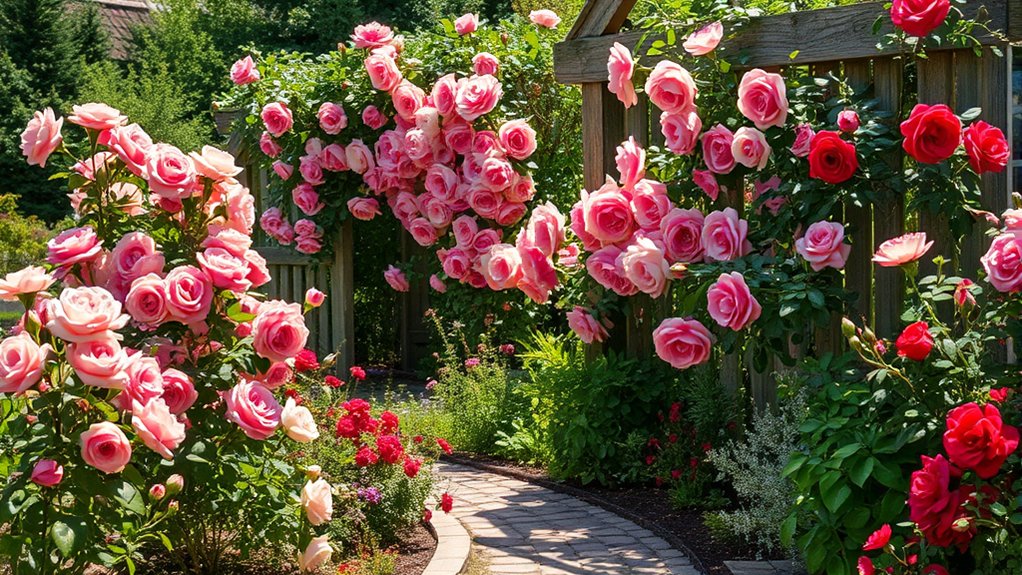
Few flowers feel as timeless in a cottage garden as roses, with their layered blooms, rich fragrance, and easy ability to soften fences, trellises, and borders. You can use them to add romance without making your design feel stiff or formal.
Choose historic varieties for old-fashioned charm, reliable bloom cycles, and a look that suits mixed planting. Climbing roses work beautifully when you want vertical interest on an arbor, wall, or gate, and they help you frame pathways with color and scent.
- Pick disease-resistant plants that suit your climate.
- Give roses full sun and well-drained soil.
- Deadhead often to encourage more blooms.
You’ll get the best effect by pairing roses with informal companions and letting them spill naturally through the bed. Keep pruning light and purposeful, and your cottage garden will feel lush, welcoming, and deeply rooted in tradition.
Delphiniums for Tall Cottage Garden Color

After the romance of roses, delphiniums bring a striking vertical lift to a cottage garden with their tall spires of blue, purple, pink, or white blooms. You can use them to add drama behind shorter perennials and create a layered look that feels lush and polished.
Choose delphinium varieties that suit your space, from compact types for smaller beds to towering selections for bold borders.
| Need | Best Choice |
|---|---|
| Bright color | Blue and purple delphiniums |
| Smaller space | Compact delphinium varieties |
| Strong performance | Rich soil and steady moisture |
Give them growing conditions with full sun, fertile soil, and shelter from harsh wind. Water consistently, and you’ll help the stems stay strong and the flowers open beautifully. If you deadhead spent spikes, you may even encourage a second show later in the season.
In your cottage garden, delphiniums deliver height, elegance, and a classic old-fashioned charm.
Foxgloves for a Soft Cottage Garden Look
Foxgloves add a gentle, romantic feel to a cottage garden with their tall, bell-shaped flowers and softly speckled throats. You can use them to soften borders, frame paths, and blend with roses and lavender for a dreamy effect.
Foxgloves bring a gentle, romantic charm to cottage gardens with their tall, speckled blooms and graceful form.
Choose foxglove varieties that suit your space, from classic biennials to compact types for smaller beds. They thrive in partial shade and rich, well-drained soil, so give them the right start.
- Pick a sheltered spot with morning sun.
- Space plants to improve air flow and reduce mildew.
- Follow simple planting tips: water after planting, mulch lightly, and let some flowers self-seed.
You’ll get the best display when you leave a few blooms to mature because foxgloves often return on their own. Their vertical form adds height without harshness, making your garden feel full, soft, and timeless.
Sweet Peas for Fragrance and Charm
Sweet peas bring one of the sweetest scents you can grow in a cottage garden, with delicate blooms that spill over trellises, arches, and obelisks in soft, romantic drifts. You can choose sweet pea varieties in pink, lavender, white, and deep crimson to build a layered, old-fashioned display that feels lively all season. Train them early on supports, and they’ll climb quickly, filling your space with perfume and color.
For best results, follow simple planting tips: sow seeds in cool soil, give them full sun, and keep roots moist but never soggy. Pinch young plants to encourage bushier growth, and pick blooms often so they’ll keep flowering.
If you want extra impact, plant them near paths, doors, or seating areas where you can enjoy their fragrance up close. With just a little care, sweet peas reward you with charm, movement, and the classic cottage garden feel you’re after.
Frequently Asked Questions
Which Cottage Flowers Bloom Longest Through Summer?
You’ll get the longest bloom from long blooming perennials like hardy geraniums, coreopsis, coneflowers, salvia, and yarrow. Deadhead them often, and they’ll keep giving you bright summer color combinations for weeks.
You can also add daylilies and black-eyed Susans for nonstop color. Plant them in full sun with good soil, and you’ll enjoy a cottage-style display that stays lively from early summer into fall.
How Often Should Cottage Garden Flowers Be Deadheaded?
You should deadhead cottage garden flowers every few days during peak bloom, and you can do it weekly if growth slows. Use simple deadheading techniques: snip spent blooms just above a healthy leaf or bud. This keeps plants tidy, boosts new flowers, and supports better flower maintenance.
Check roses, dahlias, and cosmos often, since they’ll keep producing when you remove faded heads. Stay consistent, and your garden’ll look fresher longer.
Which Cottage Flowers Tolerate Partial Shade Best?
Like stars dimmed by cloud cover, you’ll find foxgloves, astilbe, bleeding hearts, and hardy geraniums handle partial shade best. You’ll also do well with hellebores, columbines, and brunnera, all shade-loving varieties that still bloom beautifully.
For smart partial shade tips, give them rich soil, steady moisture, and morning sun when you can. You’ll keep your cottage flowers healthy, lively, and bright even in softer light.
What Soil Type Suits Cottage Garden Flowers?
You’ll get the best results with a fertile, loamy soil that holds moisture yet drains well. Most cottage garden flowers prefer neutral to slightly alkaline soil, so check your soil pH and adjust it if needed.
Good drainage requirements matter because soggy roots can rot, especially in heavy clay. Mix in compost to improve structure, feed plants naturally, and keep blooms healthy, abundant, and long-lasting throughout the season.
How Do You Prevent Cottage Flowers From Flopping?
You can prevent cottage flowers from flopping by choosing sturdy varieties, pinching back early growth, and giving plants enough sun. Use staking techniques for tall stems, and group flowers in tight plant combinations so they support each other naturally.
Water deeply but avoid overfeeding, since rich, floppy growth bends easily. If wind’s strong, add discreet supports before stems topple, and deadhead regularly to keep plants balanced and upright.
Conclusion
You can make your cottage garden bloom like a storybook dream by choosing flowers that blend beauty, height, fragrance, and charm. Roses, delphiniums, foxgloves, and sweet peas each bring their own magic, turning your space into a living tapestry.
When you plant with care, your garden won’t just grow; it’ll sing, spill, and sway with color. With the right blooms, you’ll create a cottage garden that feels timeless, welcoming, and wonderfully alive.
Choosing the best flowers for cottage gardens ensures your space will be full of life and beauty all season long.