How to Grow Tomatoes in 5 Simple Steps
If you’ve ever tried growing tomatoes but ended up with a few sad fruits or none at all, you’re not alone. Many people struggle to get their tomato plants thriving despite their best efforts.
Whether it’s choosing the right variety or dealing with pests, growing delicious tomatoes can feel overwhelming. But don’t worry, with the right approach, you can enjoy a bountiful harvest.
Grow tomatoes in five simple steps: choose a variety that fits your space and climate, prepare rich, well-drained soil with compost and the right pH, and plant after frost when the ground has warmed.
Water deeply at the base, mulch to hold moisture, and feed lightly as plants grow. Finally, inspect often for pests and disease, remove problem leaves, and rotate crops each year.
Keep going, and you’ll pick up even better ways to boost your harvest.
Key Takeaways
- Choose tomato varieties suited to your space, climate, and disease-resistance needs.
- Prepare well-drained, nutrient-rich soil with compost and a pH between 6.0 and 6.8.
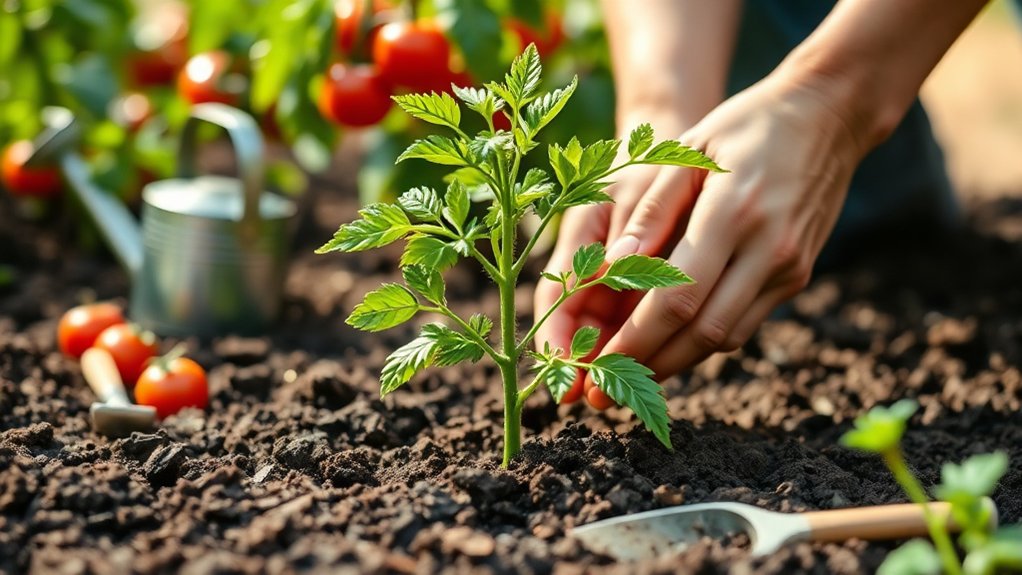
- Plant tomatoes after frost danger passes, spacing them properly and setting them deep.
- Water deeply at the base, mulch the soil, and feed plants with balanced fertilizer.
- Inspect regularly for pests and disease, remove damaged growth, and rotate crops yearly.
Choose the Right Tomato Variety

Choosing the right tomato variety can make the difference between a frustrating season and a productive one. You should start by matching determination types to your space and goals. Determinate plants stay compact and set fruit quickly, while indeterminate plants keep growing and producing over a longer season.
Match tomato types to your space and goals; determinate plants stay compact, while indeterminate plants keep producing longer.
If you want classic flavor, try heirloom varieties, but remember they can be less uniform and sometimes more vulnerable to stress. In areas with short summers, choose early-maturing tomatoes so you can harvest before cool weather arrives.
In hot climates, select heat-tolerant types that still set fruit well. You should also weigh disease resistance, especially if your garden has faced blight, wilt, or other common problems.
Read seed packets carefully, compare labels, and pick varieties that fit your climate considerations and growing conditions. When you choose well at the start, you give yourself healthier plants and a better harvest later.
Prepare Tomato Soil for Drainage and Nutrients

Before you plant, make sure your tomato bed drains well and holds enough nutrients to support strong growth. Test the soil pH and aim for a slightly acidic range, around 6.0 to 6.8, so roots can absorb nutrients efficiently.
Mix in compost or well-rotted manure to boost organic matter, improve texture, and feed beneficial microbes. If your soil stays soggy, use drainage techniques like raised beds, mounding, or adding coarse material to lighten heavy clay.
Work the amendments into the top 8 to 12 inches, where most roots will grow. Keep the nutrient balance steady by avoiding excess nitrogen, which can produce lush leaves but fewer tomatoes.
Instead, choose a complete fertilizer with a little more phosphorus and potassium. After preparing the bed, water it lightly and check that moisture soaks in without pooling, then your tomatoes will settle into a healthy, productive home.
Plant Tomatoes at the Right Time

Wait until the danger of frost has passed and the soil has warmed before setting out your tomato plants, since cold conditions can stunt growth and stress young roots. You’ll get better results when nighttime temperatures stay consistently mild because tomatoes grow best in steady warmth.
Check your local frost dates, then count back from your expected planting window so you can start seeds or buy transplants at the right stage. Your seasonal considerations should match your climate, since short summers call for earlier-started transplants and long seasons allow more flexibility.
Check local frost dates and plan backward so seedlings or transplants are ready for your growing season.
Use planting techniques that fit your garden, such as setting seedlings deeply to encourage strong roots and spacing them so air can move freely. If you rush planting, you may slow development and reduce fruit set.
When conditions look right, plant on a calm day, keep the soil moist enough to settle around roots, and let the plants adjust without disturbance.
Water and Feed Tomato Plants
Once your tomatoes are settled in the garden, keep the soil evenly moist so the roots can grow steadily and the plants can set fruit without stress. Water deeply at the base, not on the leaves, and let the top inch of soil dry slightly before you water again.
Early morning watering gives plants time to absorb moisture before the day heats up. Mulch around the stems to slow evaporation and keep the root zone cooler.
Feed tomatoes with a balanced fertilizer after transplanting, then switch to one richer in phosphorus and potassium when buds appear. Follow the label, because too much nitrogen can give you lush leaves but fewer tomatoes.
If you’re using pruning techniques to open the plant, you may notice it needs less water. Healthy companion planting can also help nearby crops share space well, but your tomatoes still need your careful attention.
Watch the plants weekly and adjust watering and feeding as weather and growth change.
Keep Tomatoes Safe From Pests and Disease
Keep an eye on your tomato plants for early signs of trouble, because catching pests and disease fast makes treatment much easier. Check leaves, stems, and fruit for holes, spots, curled growth, or sticky residue.
Remove damaged foliage right away, and keep weeds down so pests have fewer places to hide. Water at the base of the plant, not overhead, to reduce fungal problems.
You can also use companion planting with basil, marigolds, or onions to help confuse insects and support healthier growth. If you spot aphids, hornworms, or other pests, handpick them when possible, then apply organic pesticides only as directed.
Rotate your tomato patch each year, and avoid planting tomatoes where peppers, potatoes, or eggplants grew recently. Give plants enough space for air to move through them, and clean up fallen leaves and fruit.
These simple habits help you protect your crop and harvest healthier, better-looking tomatoes all season long.
Frequently Asked Questions
How Tall Do Tomato Plants Usually Grow?
Tomato plants usually grow 2 to 6 feet tall, though some varieties stay compact and others climb much higher. You’ll get the best height when you give them good growing conditions, like full sun, rich soil, and steady water.
You should also plan support systems, such as stakes, cages, or trellises, so stems stay upright. Indeterminate types keep growing all season, while determinate types reach a set size.
Can Tomatoes Grow in Containers Indoors?
Yes, you can grow tomatoes in containers indoors, and they’re like little sunlit lanterns on your windowsill. You’ll want compact varieties, sturdy container types, and rich soil with drainage.
Place them where indoor light is strongest, or add a grow light if your room stays dim. You’ll also need to water carefully, pollinate gently, and give them support.
With attention, you can harvest fresh tomatoes right inside your home.
Should Tomato Plants Be Pruned Regularly?
Yes, you should prune tomato plants regularly, but not too much. You’ll improve airflow, reduce disease, and direct energy into fruit, which are key pruning benefits.
Use simple pruning techniques by removing suckers below the first flower cluster and any yellowing leaves. You’ll want to check plants weekly and trim lightly, especially for indeterminate varieties.
Don’t overdo it, because too much pruning can stress your plants and lower yield.
When Should Tomato Flowers Be Pinched Off?
You should pinch tomato flowers off only when the plant is young and still building strong roots and stems. During early flower development, remove blooms that appear before the plant has settled in, especially in the first flowering stages after transplanting.
Like a singer warming up before the big show, your plant needs strength first. Once it’s vigorous, let the flowers stay so you can set fruit and harvest well.
How Long Do Tomatoes Take to Ripen?
Tomatoes usually take 20 to 30 days to ripen after they set fruit, but tomato varieties can change that a lot. You’ll see faster ripening in warm, sunny ripening conditions, while cooler weather slows things down.
If you want sweeter tomatoes, let them stay on the vine until they color fully. Pick them early only if frost threatens, then finish ripening them indoors at room temperature.
Conclusion
Growing tomatoes doesn’t have to be complicated. If you pick the right variety, prepare rich, well-drained soil, plant at the right time, and keep up with watering and feeding, you’ll set your plants up for success.
One study found that consistent care can boost tomato yields by up to 20%, which shows how much the little things matter. Stay alert for pests and disease, and you’ll enjoy a healthier, tastier harvest.
By following these tips, you’ll be well on your way to growing tomatoes that thrive and produce delicious fruit.