What Is a Mallard Duck?
If you’ve ever wanted to connect with nature but found yourself unsure where to start, you’re not alone. Many people struggle to identify common wildlife around them, especially when it comes to waterfowl. Understanding familiar birds like the mallard duck can make your outdoor experiences more enjoyable and meaningful.
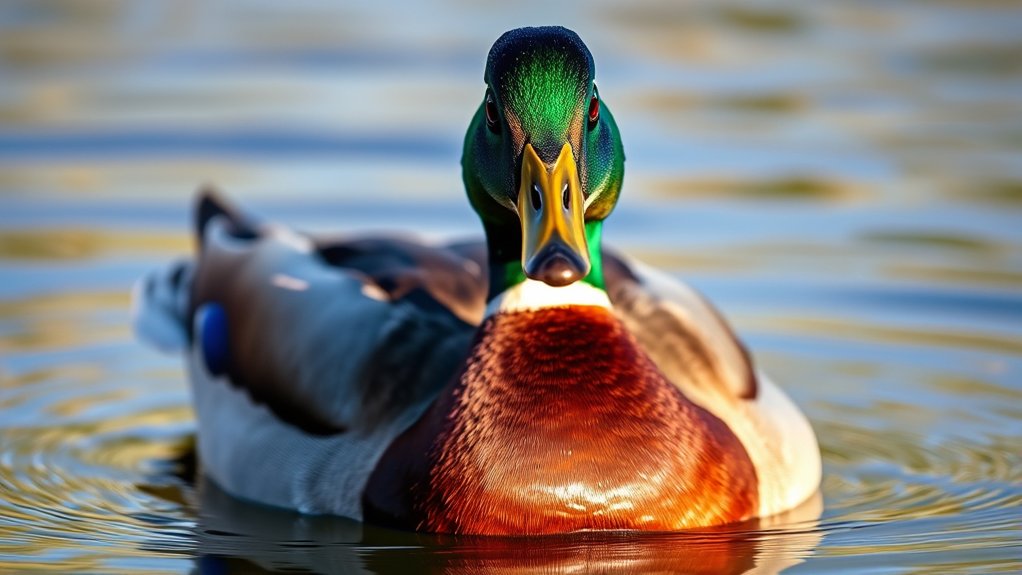
A mallard duck is a common, adaptable waterfowl you’ll find in parks, lakes, and urban ponds across North America, Europe, and Asia. Males stand out with glossy green heads and bright yellow bills, while females have camouflaged brown feathers.
They eat aquatic plants, insects, and small fish, foraging by dabbling on water or grazing on land.
Known for their seasonal migrations and social behaviors, mallards play an important role in ecosystems.
Keep exploring to uncover more about their habits and importance.
Key Takeaways
- The mallard duck is a widespread waterfowl species found across North America, Europe, and Asia. They live in diverse aquatic habitats.
- Male mallards have glossy green heads and bright yellow bills. Females have mottled brown plumage that helps with camouflage.
- They feed on aquatic plants, insects, small fish, and seeds. They use dabbling and grazing techniques to forage.
- Mallards breed in spring, nesting near water in hidden spots. They play a vital role in wetland ecosystems and biodiversity.
- These adaptable ducks thrive in urban environments but face threats from habitat loss, pollution, and hunting. They require conservation efforts.
What Is a Mallard Duck and Where Are They Found?
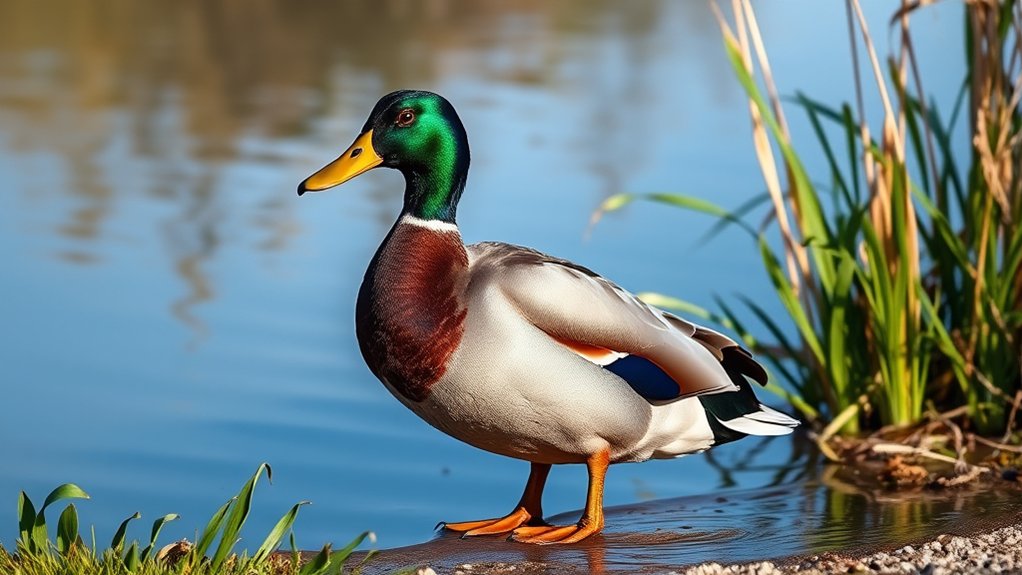
Although you might see mallard ducks in many places, you may not know much about them. Mallards are one of the most common and widespread ducks, found across North America, Europe, and Asia.
Mallard ducks are common and widespread, inhabiting diverse regions across North America, Europe, and Asia.
You’ll notice their adaptability, as they thrive in various habitats like lakes, rivers, and even urban parks. When it comes to mallard migration, these ducks travel seasonally to find suitable breeding or wintering grounds, often covering impressive distances.
Understanding this migration helps with mallard conservation efforts, ensuring that their habitats along migratory routes remain protected. You can play a role in mallard conservation by supporting wetland preservation and reducing pollution in water bodies.
Mallards’ widespread presence and adaptability make them essential to many ecosystems, so learning about where they live and how they migrate is crucial if you want to appreciate these fascinating birds fully.
How Can You Identify Male and Female Mallards?
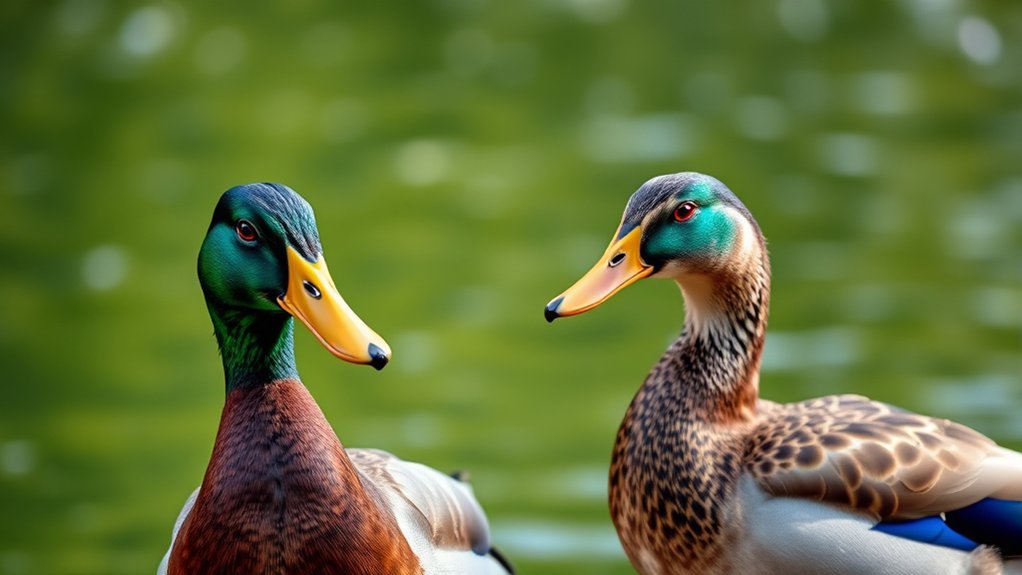
If you want to tell male and female mallards apart, just look for their distinct features. Males usually show off bright, colorful plumage. On the other hand, females have more muted, camouflaged tones.
Male Mallard Features
When you spot a mallard, you can quickly tell if it’s a male by its vibrant colors and distinctive markings. Male mallards flaunt a glossy green head, bright yellow bill, and a white collar separating the head from the chestnut-brown chest. These features help during Mallard migration when males need to attract mates.
Their iridescent blue wing patches, bordered with white, also stand out during flight. Understanding these features supports Mallard conservation efforts by helping you identify males in the wild.
| Feature | Description |
|---|---|
| Head Color | Glossy green |
| Bill | Bright yellow |
| Chest | Chestnut brown |
Recognizing these traits makes it easier to distinguish males from females in the wild.
Female Mallard Traits
While male mallards boast bright, eye-catching colors, female mallards have more subtle, camouflaged plumage that helps them blend into their surroundings. When you spot a mallard with mottled brown feathers and a more muted appearance, you’re likely looking at a female. This coloring is essential during nesting, as it keeps her hidden from predators.
Female mallard behavior also differs during mallard courtship; she’s more reserved, often observing males before choosing a mate. You’ll notice her making soft quacking sounds and moving cautiously near the water’s edge. By paying attention to these traits, like plumage color, quiet demeanor, and cautious movements, you can easily tell female mallards apart from their more vibrant male counterparts in the wild.
What Do Mallards Eat and How Do They Forage?
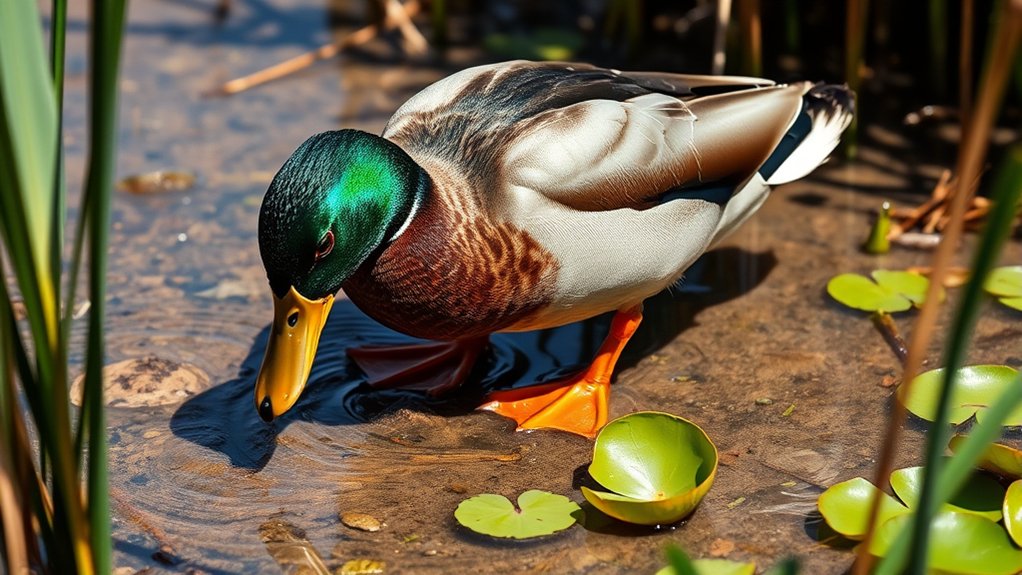
Although mallards thrive in diverse habitats, they adjust their diet based on what’s available around them. You’ll find mallards eating a mix of aquatic vegetation, insects, small fish, and seeds. During Mallard migration, their diet shifts depending on the regions they pass through, helping them build energy reserves for the journey.
When foraging, mallards dabble at the water’s surface or tip their bodies to reach underwater plants. You might also see them grazing on land, especially in fields rich with grains.
Understanding what mallards eat is vital for Mallard conservation efforts. Providing safe wetlands with abundant food sources supports their health and migration success. If you want to help, avoid disturbing their habitats and consider planting native aquatic plants.
What Are Typical Mallard Behaviors in the Wild?
Because mallards are highly social birds, you’ll often see them engaging in behaviors like vocalizing, preening, and establishing dominance within flocks. Their vibrant feather coloration, especially the males’ iridescent green heads, plays a key role in communication and mate selection. You might notice their intricate migratory patterns too, as many mallards travel seasonally to find suitable habitats.
When observing mallards, pay attention to these typical behaviors:
- Vocalizing They use quacks and calls to communicate warnings or attract mates.
- Preening Mallards regularly groom to maintain waterproof feathers and vibrant coloration.
- Dominance Displays Males often engage in head-bobbing or chasing to assert hierarchy within the flock.
When and Where Do Mallards Raise Ducklings?
You’ll notice that mallards begin raising their ducklings in the spring breeding season. They typically pick hidden spots close to water—places like dense vegetation or brushy areas—to build their nests. Knowing when and where they do this really helps you get a better sense of their natural habits.
Breeding Season Timing
When spring arrives, mallard ducks start preparing to raise their ducklings in safe, sheltered locations. You’ll notice that the breeding season typically begins between March and June, depending on where the mallards are after their migration.
Mallard migration influences when and where they settle, making sure they’re in ideal environments for raising young. For successful breeding, consider these key points:
- Timing varies by region, with northern populations breeding later than southern ones.
- Mallards prioritize areas with abundant food and cover.
- Conservation efforts help maintain healthy habitats, supporting breeding success.
Typical Nesting Locations
Although mallards can nest in various places, they usually choose spots that offer safety and easy access to water. You’ll often find their nests hidden among tall grasses, reeds, or shrubs near ponds, lakes, or slow-moving streams.
During Mallard migration, females may adapt by selecting temporary nesting sites aligned with their travel routes. This flexibility helps guarantee their ducklings have the best chance of survival.
If you’re involved in Mallard conservation, you’ll know protecting these habitats is vital for maintaining healthy populations. By preserving wetlands and natural cover, you support safe nesting areas for mallards to raise their young.
How Do Mallards Adapt to Different Habitats?
Because mallards live in diverse environments, they’ve developed flexible behaviors and physical traits to thrive everywhere from city parks to remote wetlands. You’ll notice their urban adaptation allows them to exploit food sources and nesting spots in busy human areas. Their migratory patterns also help them adjust seasonally, moving to warmer locations when needed.
Here are three key ways mallards adapt to different habitats:
- Diet flexibility: They eat a wide range of plants, insects, and small fish, depending on what’s available.
- Nesting versatility: Mallards build nests in various places, from dense reeds to urban green spaces, protecting their eggs from predators.
- Behavioral adjustments: In cities, mallards become less wary of humans, making it easier to find food and shelter.
What Role Do Mallards Play in Their Ecosystem?
While mallards may seem like just common waterfowl, they play an essential role in maintaining the balance of their ecosystems. You’ll find that mallards contribute to controlling insect populations by feeding on various invertebrates, which helps keep pests in check.
Their foraging habits also aid in seed dispersal, promoting plant diversity in wetland areas. As they migrate, mallard migration patterns connect different habitats, supporting nutrient cycling across regions.
When you observe mallards in their habitat, you’re witnessing a species that supports both aquatic and terrestrial food webs. Mallard conservation efforts highlight their significance, ensuring these ducks continue to fulfill their ecological roles.
What Threats Do Mallards Face in the Wild?
Even though mallards thrive in diverse environments, they face numerous threats that challenge their survival in the wild. When you watch mallards during their migration, you might not realize how dangerous their journey can be. Besides natural predators, they also struggle with habitat loss, pollution, and human interference.
Here are three major threats mallards face:
- Habitat destruction: Wetlands are drained for agriculture and urban development, limiting safe spaces for nesting and feeding.
- Pollution: Chemicals and plastics contaminate water bodies, affecting mallard health and food sources.
- Hunting pressure: Although regulated, hunting can reduce local populations, especially during migration seasons.
Their urban adaptation helps mallards survive in city parks and ponds, but it also exposes them to risks like vehicle collisions and disease from close contact with people and other birds. Understanding these challenges helps you appreciate the resilience of mallards and why protecting their habitats is essential.
Why Do Mallards Matter to People and Culture?
Why do mallards hold such a special place in people’s hearts and cultures around the world? You’ll find that mallards symbolize adaptability and resilience, traits admired across many societies. Their annual mallard migration fascinates birdwatchers and nature lovers alike, marking seasonal changes and connecting distant ecosystems.
Plus, these ducks thrive in urban habitat, showing you how wildlife can coexist with city life. You might have spotted mallards swimming in city parks or ponds, reminding you of nature’s persistence amid concrete.
Cultures often feature mallards in folklore and art, reflecting their importance as symbols of beauty and freedom. You benefit from their presence by learning about ecological balance and the impact of urban expansion on wildlife.
Recognizing why mallards matter helps you appreciate biodiversity and encourages you to support conservation efforts that guarantee these vibrant birds continue to enrich both natural and urban landscapes.
How To Attract Mallards to Your Pond or Park?
Wondering how to invite mallards to make your pond or park their home? You can support mallard migration and promote urban conservation by creating a welcoming habitat. Here’s how to attract these ducks effectively:
1. Provide Clean Water
Mallards need fresh, safe water for swimming and feeding. Keep your pond clean and free from pollutants to encourage their stay.
2. Plant Native Vegetation
Offer natural cover with reeds, grasses, and aquatic plants. These provide shelter and nesting sites, making your area more appealing during migration seasons.
3. Offer Food Sources
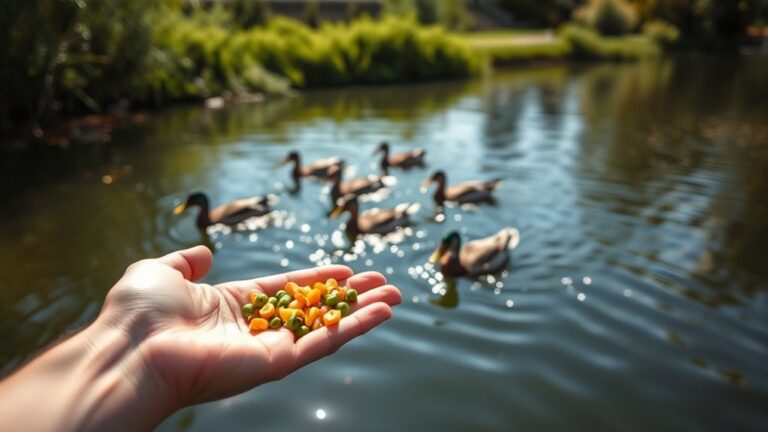
Supplement their diet with duck-friendly foods like cracked corn, oats, or specially formulated pellets. Avoid bread, as it’s unhealthy for them.
Frequently Asked Questions
How Long Do Mallard Ducks Live in Captivity?
In captivity, mallard ducks can live up to 10-15 years if you provide proper care. You’ll want to maintain a balanced duck diet, including grains, vegetables, and occasional protein, to keep them healthy.
Creating a comfortable mallard habitat with clean water for swimming and safe shelter helps them thrive. By paying attention to their diet and environment, you’ll guarantee your mallard enjoys a long, happy life in captivity.
Can Mallards Hybridize With Other Duck Species?
Yes, mallards can hybridize with other duck species, which raises hybridization concerns. When you encounter these hybrids, it’s important to realize they can affect local populations by blending genetic traits.
This mixing can impact genetic diversity, sometimes reducing the purity of native species. If you’re managing habitats or studying ducks, be aware that hybridization might complicate conservation efforts and alter the natural balance of duck populations in your area.
What Sounds Do Mallard Ducks Make?
You’ll hear mallard communication mainly through their distinctive quacks. Females produce loud, raspy quacks that you recognize easily, especially during mating or when warning of danger.
Males have softer, quieter duck vocalizations like whistles and grunts. When you listen closely, you’ll notice these sounds help mallards stay connected, signal threats, and coordinate with each other.
Paying attention to their vocalizations reveals much about their behavior and social interactions.
Are Mallard Ducks Migratory?
You might be surprised, but yes, mallard ducks are migratory! When the chill of winter hits, they leave their usual mallard habitat, which includes ponds, lakes, and wetlands.
They follow food sources closely, driven by their mallard diet of aquatic plants and small insects. This seasonal journey helps them find warmer climates and abundant food, ensuring they survive harsh conditions.
How Fast Can a Mallard Duck Fly?
You’ll be surprised to learn that mallard ducks can fly up to 55 miles per hour when they’re in full flight. Their speed helps them escape predators and migrate efficiently.
Their duck diet, rich in aquatic plants and insects, fuels their energy for these flights. Mallard behavior includes quick takeoffs and agile maneuvers, so their flying ability is vital for survival and finding food.
You’ll notice they’re strong, fast flyers indeed.
Conclusion
Think of mallards as the friendly neighbors of the bird world. They’re everywhere, from city parks to quiet ponds, always adding life and color.
Just like how a single mallard pair can raise up to a dozen ducklings, their presence nurtures the ecosystem around them. By learning to spot and support these adaptable birds, you’re not just watching wildlife.
You’re helping nature’s community thrive right in your backyard by appreciating the mallard duck.