What Do Ducks Do All Day?
If you’ve ever wondered what ducks do all day, you’re not alone. Many people struggle to understand the daily habits of these fascinating birds and wish they could learn more about their behavior. Whether you’re a nature enthusiast or just curious, knowing what ducks do all day can deepen your appreciation for them.
You’ll find ducks spending their days swimming, foraging, preening, resting, and communicating with each other. They forage mainly in the morning, searching for plants and insects to fuel their energy.
Preening keeps their feathers waterproof and healthy, while swimming helps with fitness and body temperature.
Ducks also rest in groups for safety and stay alert to their environment. Their daily routines shift with seasons and habitats, adapting for survival and comfort.
You can uncover even more about their fascinating behaviors.
Key Takeaways
- Ducks spend their days foraging for food, feeding on aquatic plants, insects, seeds, and small fish to maintain energy and care for offspring.
- They preen daily to keep their feathers waterproof, remove parasites, and ensure good insulation. This is vital for their survival and health.
- Swimming helps ducks stay agile, regulate body temperature, and strengthen muscles needed for migration and daily activities.
- Ducks communicate through vocalizations and body movements. They rest in groups for safety and choose sheltered spots near water to relax.
- Seasonal changes drive behaviors like nesting in spring, building energy for fall migration, and adjusting feeding habits during winter scarcity.
What Does a Typical Day Look Like for Ducks?
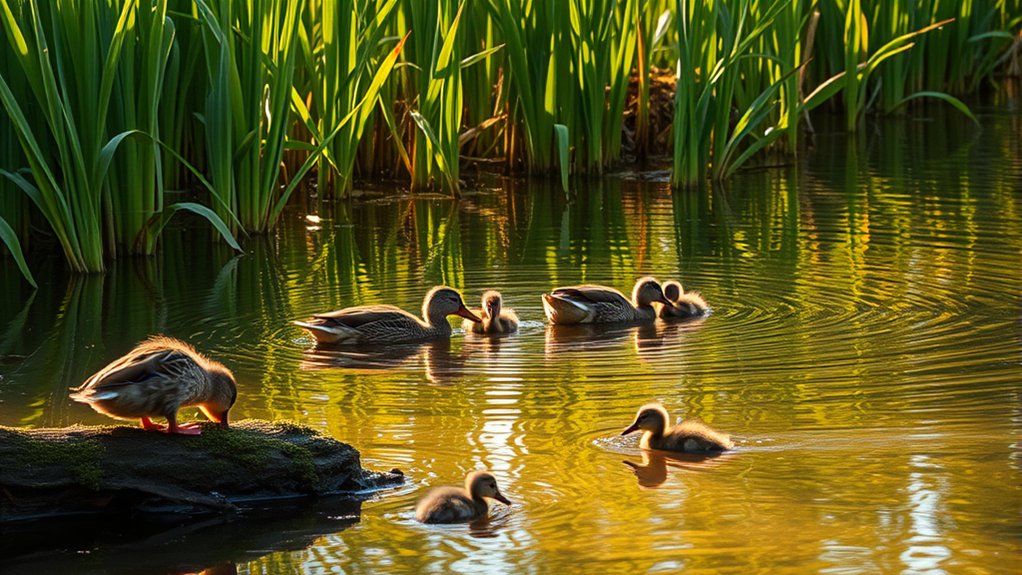
Although ducks spend much of their time in water, their typical day involves a mix of activities including feeding, preening, and resting. You’ll notice that during nesting season, ducks focus a lot on their nesting habits. They find safe spots near water, build nests with grass and down feathers, and care for their eggs.
This period is essential, so they spend time protecting their nests and staying close to their young.
Outside nesting season, you’ll observe ducks preparing for migration. Their migration patterns vary by species, but generally, they rest and feed to build energy reserves. You’ll see them flying in formations, often at dawn or dusk, traveling to warmer areas.
Throughout the day, their activities balance survival needs with caring for their offspring, making their daily routine both purposeful and dynamic. Understanding these habits helps you appreciate how ducks adapt to changing environments and seasons.
How Do Ducks Spend Their Mornings Foraging?
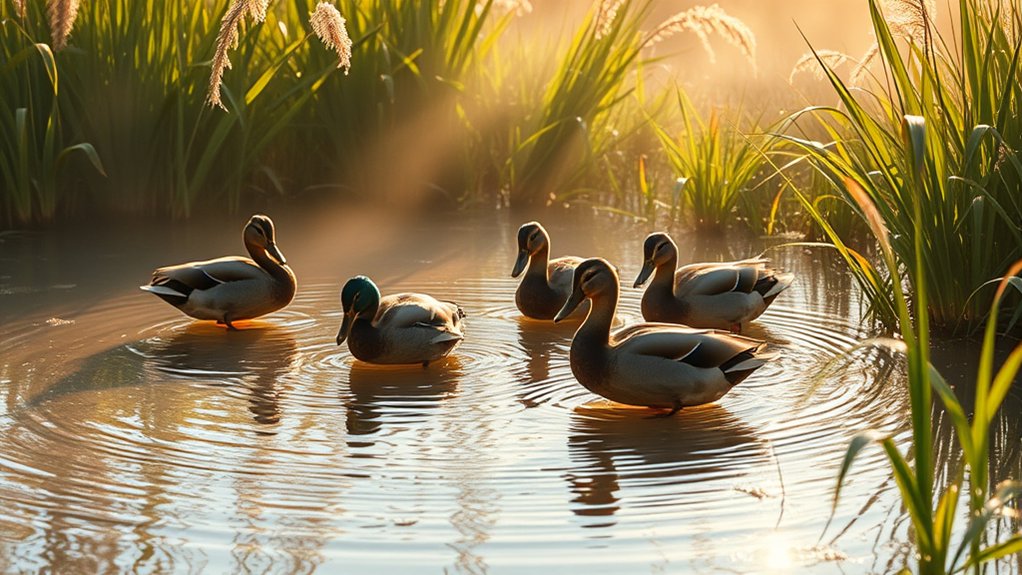
When you watch ducks in the early morning, you’ll notice them actively searching for food near water edges and grassy areas. They’re usually on the lookout for plants, insects, and small fish to fuel their day.
It’s pretty interesting to see where they forage and what they eat because it gives you a better appreciation of their morning routine. You kind of get a glimpse into what keeps them going throughout the day.
Early Morning Feeding Habits
As the sun rises, ducks impatiently begin their morning routine by searching for food along the water’s edge and in nearby fields. You’ll notice they focus on gathering nutrients essential for ducks’ nesting, ensuring they have the energy to build and protect their nests later.
Their early meals also support feather maintenance, keeping their plumage waterproof and insulated. When you watch closely, you’ll see ducks dabbling and sometimes tipping forward to reach underwater plants, insects, or small fish.
This feeding strategy helps them fuel up after a night’s rest and prepares them for the day’s activities. By the time the morning light fully brightens, ducks have already secured the essentials they need to stay healthy and active throughout the day.
Preferred Foraging Locations
Because ducks rely on specific environments to find their food, you’ll often see them foraging in shallow waters, marshes, and grassy fields during the morning. Their feeding habits focus on areas where food is abundant and safe from predation threats.
You might notice them quickly moving between spots, balancing nourishment and safety. Understanding these preferred foraging locations gives you insight into how ducks adapt their routine to survive.
| Location | Food Availability | Predation Risk |
|---|---|---|
| Shallow Waters | High (insects, plants) | Moderate |
| Marshes | High (invertebrates) | Low |
| Grassy Fields | Moderate (seeds, insects) | High |
| Pond Edges | Moderate (vegetation) | Moderate |
| Agricultural Land | Variable (grain) | High |
Typical Food Choices
Although ducks forage in various locations, their food choices depend heavily on what’s available nearby. When you watch ducks in the morning, you’ll see them using different feeding techniques to gather nourishment efficiently.
Their diet shifts with the seasons and their migration patterns, which influence the local resources they rely on. Typically, you’ll notice them feasting on:
- Aquatic plants and algae, which provide essential nutrients.
- Small insects and larvae, offering protein boosts.
- Seeds and grains found along shorelines or fields.
Why Is Preening Essential for Ducks’ Health?
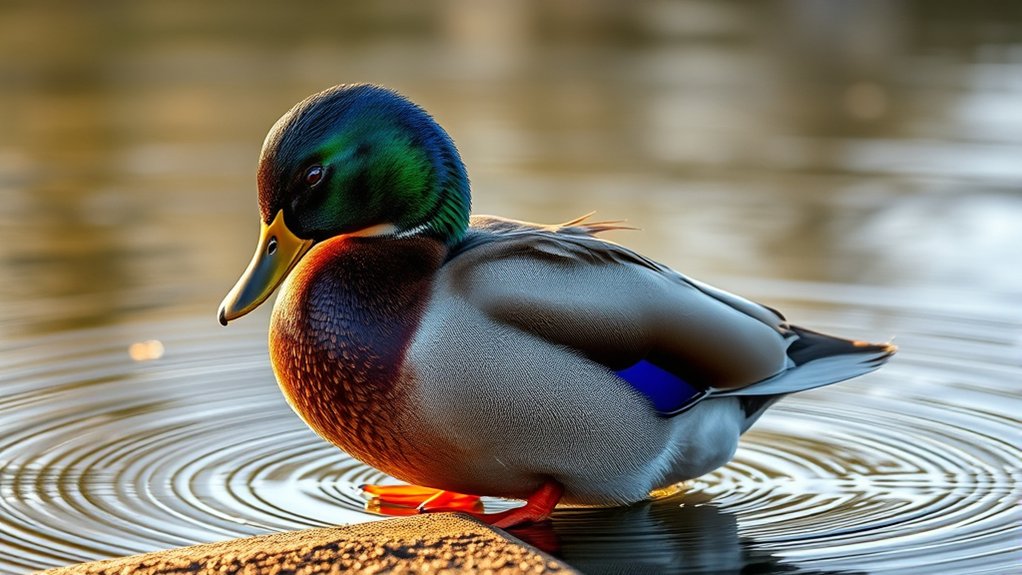
When ducks preen, they actively maintain their feathers’ waterproofing and insulation, which keeps them healthy and warm. You might not realize it, but preening is essential for feather maintenance.
Ducks spread oil from a gland near their tails across their feathers, ensuring water rolls off instead of soaking in. This process protects their skin from moisture and cold.
For ducklings, preening supports proper growth by helping their developing feathers form correctly, which is indispensable for future survival. If a duck skips preening, its feathers can become damaged or lose waterproofing, leading to discomfort and potential illness.
By preening daily, ducks also remove dirt and parasites that could harm their health. So, when you see a duck tidying its feathers, know it’s not just grooming. It’s a critical activity that preserves their ability to stay warm, dry, and active throughout the day.
Preening truly is a key factor in a duck’s overall well-being.
How and Why Ducks Swim Every Day
You’ll notice that ducks swim every day because it helps keep them healthy and agile. They paddle using their webbed feet, moving with smooth, coordinated strokes that let them glide easily through the water. When you understand how often and why they swim, it’s easier to appreciate just how important this activity is for their survival and overall well-being.
Benefits of Daily Swimming
Why do ducks swim every day? Swimming is more than just exercise; it’s vital for their survival and well-being. When you watch ducks glide through water, you’re seeing how daily swimming supports their lives in powerful ways.
- It keeps their feathers waterproof and clean, which is essential during nesting to protect eggs and stay warm.
- Swimming strengthens muscles, preparing them for long migratory patterns that demand endurance and agility.
- It helps ducks regulate body temperature, making sure they stay comfortable in changing weather.
Swimming Techniques and Behavior
Although ducks spend much of their time on land, their swimming techniques reveal how perfectly adapted they are to water. You’ll notice they paddle with webbed feet, using smooth strokes to glide effortlessly.
This skill supports ducks’ nesting habits, allowing them to reach safe spots on water to protect eggs. Ducklings develop strong swimming instincts early, following their mother closely.
| Technique | Purpose | Behavior Example |
|---|---|---|
| Webbed Paddling | Efficient movement | Gliding smoothly |
| Body Buoyancy | Staying afloat | Floating with ease |
| Head Dipping | Foraging underwater | Searching for food |
| Wing Adjustment | Steering and balance | Turning sharply |
| Group Swimming | Safety in numbers | Ducklings following mom |
You’ll see these behaviors every day, and they’re vital for survival and growth.
What Social Behaviors Do Ducks Show in a Flock?
When ducks gather in a flock, they communicate through a variety of vocalizations and body movements. These help maintain group cohesion and establish social hierarchies. You’ll notice how these social behaviors become especially important during key times like nesting and molting cycles. That’s when ducks need extra protection and support from the group.
Here are three social behaviors you’ll find fascinating:
- Vocal Alerts: Ducks use loud quacks and calls to warn each other of danger, creating a safety net for the flock.
- Preening Together: They often preen side by side, strengthening social bonds and helping each other stay clean, especially during molting.
- Hierarchy Displays: Through subtle head bobbing and wing flapping, ducks assert dominance or submission, keeping order without conflict.
When and Where Do Ducks Take Rest Breaks?
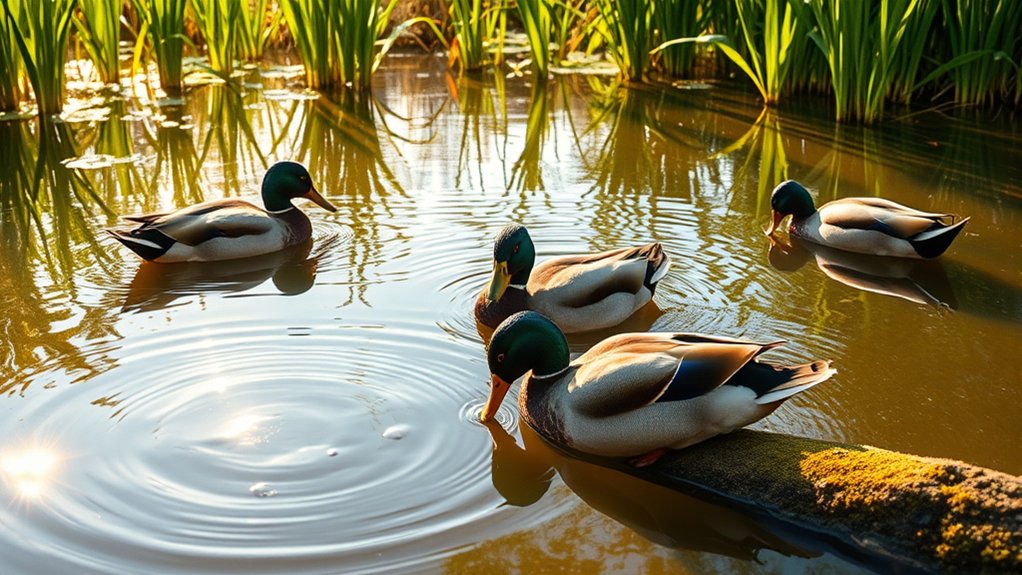
You’ll notice that ducks usually take their rest breaks in the early mornings and late afternoons, when the sun is low. They like calm spots, such as sheltered ponds or grassy banks, where they can relax safely.
Often, they rest together in groups. This way, they can keep an eye out for any nearby danger and stay alert.
Preferred Resting Times
Because ducks need to conserve energy for foraging and flying, they usually take their rest breaks during the warmer parts of the day. You’ll notice that ducks adjust their resting times based on their nesting habits and molting processes. When you observe them, you’ll see how these natural rhythms shape their daily schedules.
Here’s why their preferred resting times matter:
- During molting, ducks rest more often to recover from feather loss.
- Nesting ducks take longer, more frequent breaks to protect their eggs.
- Warmer daylight hours provide safe, comfortable times to rest without risking cold exposure.
Common Resting Locations
Ducks choose their resting spots based on safety, comfort, and proximity to food sources. You’ll often find them settling near calm waters, reeds, or grassy banks where they feel protected from predators.
During breeding season, ducks’ nesting habits influence where they rest. Females select hidden, sheltered areas to keep eggs safe. If you watch closely, you’ll see ducklings resting near their mother. This is vital for duckling development as they gain warmth and protection.
These locations also allow easy access to feeding grounds, so ducks don’t waste energy traveling far between meals and rest. Whether on land or water, ducks pick spots that balance security and convenience, helping them recharge efficiently throughout the day.
You can observe these patterns in almost any wetland or pond environment.
Group Resting Behavior
When groups gather to rest, they often choose spots that offer both safety in numbers and easy access to food. You’ll notice ducks resting near water edges or grassy banks where they can quickly feed or flee if danger appears.
These group rest breaks also play a subtle role in their mating rituals and nesting behaviors, helping ducks bond and coordinate.
Here’s why these resting spots matter:
- Protection: Being together reduces the risk of predators catching any one duck.
- Social Connection: Resting as a group strengthens bonds necessary for mating rituals.
- Nesting Preparation: Calm rest periods help ducks conserve energy for nesting behaviors ahead.
Next time you see ducks resting together, you’re witnessing a smart survival strategy in action.
How Do Ducks Communicate Through Quacking and Body Language?
Although you might think quacking is just noise, it actually serves as an essential tool for ducks to share information and express emotions. Ducks’ vocalizations vary widely, from loud quacks to soft whistles, and each sound carries specific meanings.
When you listen closely, you can tell if a duck is signaling danger, calling for its mate, or simply communicating with its ducklings. Alongside these vocal signals, ducks use body language cues to amplify their messages.
For example, head bobbing can show excitement or alertness, while wing flapping might signal aggression or a desire to attract attention. You’ll also notice ducks puffing up their feathers to appear larger when threatened.
How Ducks’ Daily Activities Change With the Seasons
As the seasons shift, you’ll notice ducks adjusting their routines to fit changing weather and daylight. These changes aren’t random; they’re driven by survival and reproduction needs. You can see this clearly in three key ways:
- Nesting Habits: In spring, ducks focus on building nests and protecting their eggs. You’ll watch them carefully select hidden spots, dedicating hours to keeping their young safe.
- Migration Patterns: When fall arrives, many ducks prepare for migration, gathering energy and flying to warmer climates. You feel the urgency in their synchronized departures.
- Feeding Behavior: During winter, food scarcity means ducks alter their feeding times and locations, often seeking open water and reliable food sources.
How Ducks Adapt Their Routines to Different Habitats
Because ducks live in diverse environments, they constantly adapt their daily routines to fit the unique demands of each habitat. When you observe ducks in wetlands, you’ll notice they spend much time dabbling for food in shallow waters, while those in forests might forage on land more frequently.
Ducks’ nesting behaviors also shift depending on where they settle. In marshes, they build nests hidden in dense vegetation, but in urban areas, they may choose safer, less obvious spots.
You’ll also see how migration patterns influence their routines. Ducks in colder regions prepare for long migrations by increasing feeding and resting periods to build energy reserves. Meanwhile, ducks in milder climates might stay put, modifying their activities only slightly with changing food availability.
How Human Presence Affects Ducks’ Daily Habits
When humans frequent parks or waterfronts, ducks often change their daily habits to stay safe and find food. You might notice ducks becoming more cautious or shifting their feeding times to avoid crowds.
Human activity impacts ducks’ migration patterns, sometimes causing them to delay travel or choose new routes to escape busy areas. The urban habitat impact is clear as ducks adapt by using smaller, quieter spaces within cities.
You might be surprised how sensitive ducks are to your presence:
- Ducks may feed earlier or later to avoid peak human activity.
- They often hide or rest in less accessible spots when people are nearby.
- Increased noise and pollution can stress ducks, affecting their health and migration.
Frequently Asked Questions
What Do Ducklings Do Differently From Adult Ducks All Day?
You’ll notice ducklings focus more on duckling growth, spending much of their day eating and resting to build strength. Unlike adult ducks, who engage in activities like foraging, preening, and swimming confidently, ducklings stick close to their mother for protection and guidance.
They’re learning essential skills but don’t plunge or fly yet. So, while adult duck behaviors include more independence, ducklings prioritize growing and developing under watchful eyes.
How Do Ducks Find Mates During Their Daily Activities?
While you might spot ducks calmly swimming or foraging, they’re also busy with mating rituals. You’ll see males performing elaborate courtship displays, like head bobbing and vibrant feather shows, to catch a female’s eye.
These striking contrasts between peaceful activity and intense displays help ducks find mates effectively. So, during your daily observations, you’ll notice how these rituals stand out, making the search for a partner a mesmerizing part of their routine.
What Predators Do Ducks Watch Out for During the Day?
You need to watch out for predators like foxes, hawks, and snapping turtles during the day. While you’re busy feeding, these threats can sneak up quickly.
During duck migration, you stay extra alert, as predators take advantage of your long travels and changed feeding habits. Staying vigilant helps you avoid danger and guarantees you can keep feeding and migrating safely. Don’t let predators catch you off guard!
How Long Can Ducks Hold Their Breath Underwater?
Think of a duck as a silent explorer, mastering breathing techniques like a seasoned diver. You’ll be amazed to learn ducks can hold their breath underwater for about 30 seconds, showcasing impressive underwater endurance.
This brief pause lets them forage beneath the surface without panic. When you watch a duck glide and submerge, remember it’s using nature’s own rhythm, balancing air and water in a graceful dance of survival.
Do Ducks Sleep With One Eye Open?
Yes, ducks do sleep with one eye open as part of their unique sleep habits. This behavior, called unihemispheric slow-wave sleep, lets one half of their brain rest while the other stays alert.
You’ll notice this duck behavior especially when they’re in potentially dangerous environments. It helps them stay vigilant for predators. So, when you see a duck seeming half-asleep, it’s actually keeping an eye out while still getting rest.
Conclusion
You’ll see that ducks live their days like a well-choreographed dance, balancing foraging, swimming, and socializing with graceful ease. Their routines shift with the seasons, adapting like a river that flows through changing landscapes.
By understanding their habits, you can appreciate how ducks thrive in diverse habitats and even how your presence influences them. Watching ducks is more than observing wildlife; it’s witnessing nature’s rhythm in motion and learning what ducks do all day.