Where Does the Mallard Duck Live?
If you’ve ever tried to spot mallard ducks in the wild, you know it can be tricky to figure out where they actually live. You’re not alone—many people struggle with understanding their habitats since mallards are found in so many different places. Knowing where to look can make all the difference if you want to observe these beautiful birds up close.
You’ll find mallard ducks living almost everywhere, from urban parks with ponds to natural wetlands and slow-moving rivers. They prefer shallow, calm waters filled with plants that offer food and shelter.
Mallards adapt well to different climates and seasonal changes by migrating to warmer places in winter.
Cities provide safe nesting spots and reliable food, helping them thrive alongside humans. Keep exploring to uncover how their habitats shift through the year and what helps them survive.
Key Takeaways
- Mallard ducks live in North America, Europe, Asia, and many global regions because they can adapt to different habitats.
- They like shallow ponds, marshes, slow-moving rivers, and even urban parks that have lots of aquatic plants.
- Urban parks offer food, shelter, nesting spots, and water, so mallards can stay there all year round.
- Their habitat changes with the seasons. In spring, they breed near freshwater, and in winter, they look for open water.
- During colder months, mallards migrate from northern breeding wetlands down to warmer southern waters.
Where Mallard Ducks Live Around the World

Although mallard ducks are native to North America, Europe, and Asia, you can find them living in many other parts of the world today. They’ve adapted to a wide range of environments, from urban parks to rural wetlands, making them one of the most widespread duck species.
When you spot a mallard, you’ll notice its distinctive feather coloration. Males show vibrant green heads and colorful plumage, which plays an essential role in mate selection. This bright feather coloration helps males attract females during the breeding season, signaling health and vitality.
Female mallards, in contrast, have more muted feathers that provide camouflage. Their ability to thrive in diverse habitats worldwide means you might see them near ponds, lakes, rivers, or even city fountains. So, wherever you are, chances are you can observe these adaptable ducks, with their striking feather coloration influencing mate selection and ensuring their continued presence across the globe.
How Mallard Habitats Change With the Seasons
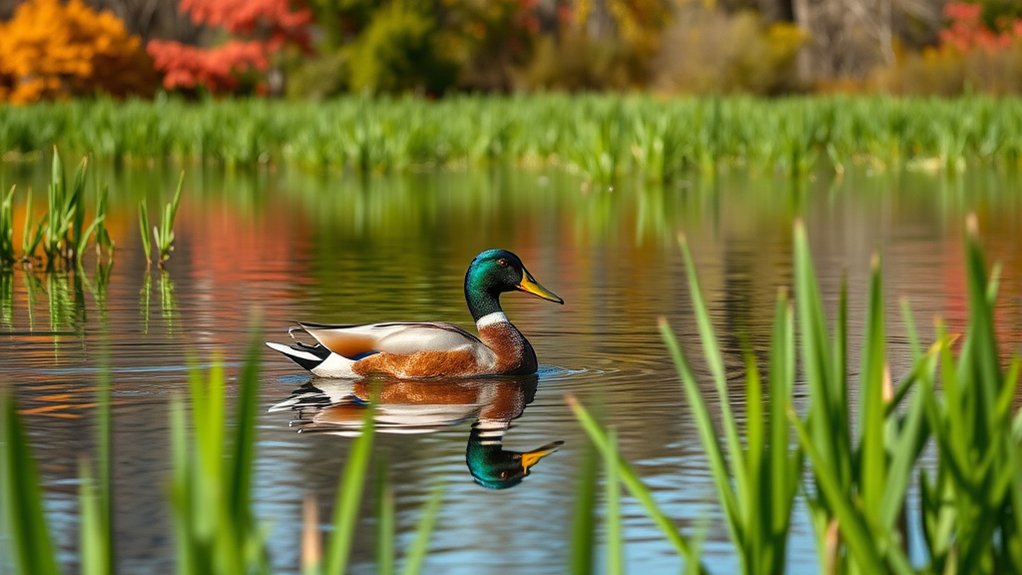
As the seasons shift, mallard ducks adjust their habitats to meet changing needs. You’ll notice their mallard behavior shifts to optimize survival, seeking warmer wetlands in winter and nesting near fresh water in spring.
These changes also affect predator interactions. During breeding, mallards stay closer to cover to avoid threats. In colder months, they move to open water where predators are less active.
Here’s a quick seasonal breakdown of their habitat changes:
| Season | Habitat Focus | Predator Interactions |
|---|---|---|
| Spring | Nesting near fresh water | High vigilance near nests |
| Summer | Shallow ponds, marshes | Moderate, more cover used |
| Fall | Larger wetlands | Increased alertness |
| Winter | Open water, unfrozen lakes | Lower predator activity |
| Migration | Various stopovers | Variable, depending on location |
Understanding these shifts helps you appreciate how mallards survive year-round.
The Types of Water Bodies Mallards Prefer

When you observe mallards in the wild, you’ll find they favor a variety of water bodies that offer both food and safety. These ducks often choose shallow ponds, marshes, and slow-moving rivers where aquatic plants grow abundantly.
Aquatic plants not only provide a rich food source but also help create cover that reduces predation risk. You’ll notice mallards prefer areas with plenty of vegetation since it allows them to hide from predators like foxes and birds of prey.
Besides food and shelter, mallards look for water bodies with calm surfaces, making it easier to spot danger and take flight quickly if needed. They tend to avoid fast-flowing streams or open waters where predation risk is higher.
Why Mallards Thrive in Cities and Wild Wetlands
You’ll notice that mallards adapt quickly to city life by finding food and shelter in parks and ponds. They seem pretty good at making the most of what’s around them. At the same time, wild wetlands offer plenty of resources and safe nesting spots. So, when you think about it, both urban and natural settings give mallards what they need to thrive. Understanding these benefits really helps explain why mallards do so well in both places.
Urban Adaptation Strategies
Although mallards originally thrived in natural wetlands, they’ve quickly learned to navigate urban environments with remarkable success. You’ll notice that mallard genetics play a vital role in their adaptability; their diverse gene pool allows them to adjust behaviors and physical traits to city life.
For example, variations in feather coloration help some mallards blend into urban settings better, reducing predation risk. You’ll also see they exploit human resources like park ponds, feeders, and stormwater basins.
Their flexible diet and tolerance for human presence let them thrive amid noise and pollution. By adjusting nesting sites and timing, mallards avoid many urban hazards.
Wetland Habitat Benefits
Because mallards rely on wetlands for food, shelter, and breeding, these habitats provide essential resources that support their survival both in cities and the wild. Wetland plants offer cover and nesting sites, while water quality guarantees a healthy environment rich in insects and aquatic life.
You’ll find mallards thriving where clean water and abundant vegetation coexist, whether in urban parks or natural marshes. These habitats not only nourish them but also protect their young from predators.
Understanding wetland benefits helps you appreciate why preserving these areas is vital for mallards’ continued success.
How Climate Shapes Where Mallards Live
When you look at where mallard ducks thrive, climate plays an essential role in shaping their habitats. These ducks depend on seasonal variations to find suitable breeding and feeding grounds. In warmer months, you’ll often spot mallards in temperate wetlands rich in vegetation and aquatic life.
As seasons change, they migrate to areas that offer milder conditions and open water, which is vital for survival during colder months.
However, climate change is altering these natural patterns. Rising temperatures and unpredictable weather affect wetland availability and the timing of seasonal shifts. You might notice that mallards arrive earlier or stay longer in certain regions because of these changes.
This shift can impact their breeding success and food resources, forcing them to adapt or relocate.
Understanding how climate shapes mallard habitats helps you appreciate the delicate balance these ducks maintain with their environment and why protecting stable climates matters for their future.
How Human Activity Affects Mallard Duck Habitats
Climate changes aren’t the only factor reshaping where mallard ducks live. Human activity plays a significant role as well. When you alter landscapes through agriculture, construction, or pollution, you directly impact mallard behavior and their predator interactions.
For example, habitat loss forces ducks to find new feeding and nesting sites, often exposing them to more predators. Pollution can degrade water quality, affecting food availability and health.
Here’s a quick look at how different human activities affect mallard habitats:
| Human Activity | Impact on Mallard Behavior | Effect on Predator Interactions |
|---|---|---|
| Urban development | Disrupts nesting, increases stress | Raises predator presence (cats, rats) |
| Agriculture | Alters food sources, changes migration | May attract predators like foxes |
| Pollution | Reduces water quality, harms health | Weakens ducks’ defenses, increasing vulnerability |
Understanding these effects helps you appreciate how your actions shape mallard survival and well-being.
How Urban Parks Support Mallard Duck Populations
You’ll find that urban parks offer key habitat features like ponds and grassy areas that mallard ducks need. Plus, these parks provide plenty of food sources, from aquatic plants to insects. When you understand how these elements support mallards, it really helps you appreciate their role in city environments.
Habitat Features in Parks
Although urban parks might seem like unlikely habitats, they provide essential resources that help mallard ducks thrive within city limits. You’ll notice how their bright feather coloration stands out against the greenery, signaling health and attracting mates.
Their flight patterns adapt to the open spaces and trees, allowing quick escapes from urban threats. Parks offer safe nesting sites near water bodies and plenty of shaded areas to rest.
| Habitat Feature | Importance to Mallards |
|---|---|
| Ponds & Lakes | Provide water for swimming, feeding |
| Trees & Shrubs | Shelter and nesting protection |
| Open Grass Areas | Space for foraging and resting |
| Walking Paths | Flight corridors for easy escape |
These features make parks ideal urban homes for mallards.
Food Sources Availability
Urban parks not only offer safe nesting spots and shelter but also supply a variety of food sources that help mallard ducks flourish. You’ll notice that their feeding habits adapt well to these environments, as they forage in ponds, grassy areas, and even near walking paths.
Their foraging behavior includes plunging in shallow water for aquatic plants, insects, and small fish, while also grazing on seeds and grains found in park vegetation. Because urban parks provide consistent food availability, mallards can sustain themselves year-round without migrating far.
You might even see them taking advantage of human-provided food, though it’s best not to feed them bread. Understanding how urban parks support these ducks through diverse food sources helps you appreciate their resilience and role in city ecosystems.
Where Do Mallard Ducks Nest and Raise Their Young?
When mallard ducks prepare to nest, they choose spots that offer both shelter and easy access to water. You’ll often find their nests hidden in tall grasses, reeds, or shrubs near ponds, lakes, or slow-moving rivers.
Mallard genetics play a role in their breeding behaviors, influencing nest location preferences and timing. Female mallards instinctively select safe, concealed sites to protect their eggs from predators.
Once the nest is built with down feathers and plant material, the female incubates about 8 to 13 eggs for nearly a month. After hatching, you’ll notice the ducklings quickly follow their mother to water, where she teaches them essential survival skills.
These breeding behaviors ensure that the young have a strong start in life, combining genetic instincts with practical parenting. By understanding where mallards nest and raise their young, you can better appreciate how these adaptable birds thrive in diverse habitats.
How Migration Influences Mallard Living Patterns
After the breeding season wraps up and ducklings grow strong, mallards begin to shift their living patterns to suit changing conditions. You’ll notice their migration patterns play a key role, as these ducks travel from northern breeding grounds to warmer areas in winter. This movement helps them find food and suitable habitats when cold weather limits resources.
Their breeding behaviors directly influence when and where they migrate, ensuring they return to ideal nesting sites each spring.
Here’s a quick look at how migration influences different aspects of mallard life:
| Aspect | Influence of Migration Patterns |
|---|---|
| Habitat | Shifts from northern wetlands to southern waters |
| Food Availability | Moves to areas with seasonal abundance |
| Breeding Timing | Migration aligns with breeding seasons |
| Energy Conservation | Stops at resting sites during long flights |
Understanding these patterns helps you appreciate how mallards adapt their living patterns year-round.
What You Can Do to Help Mallard Ducks in Your Area
Because mallard ducks rely on healthy habitats throughout the year, you can make a real difference by preserving local wetlands and providing safe spaces for them to feed and nest. Understanding their feeding habits helps you support them better. Avoid feeding bread, which lacks nutrition. Instead, offer cracked corn, oats, or birdseed to complement their natural diet of aquatic plants and insects.
Respecting their mating behaviors is also important. During breeding season, keep a distance to avoid disturbing nesting sites, as stress can disrupt their ability to mate and raise ducklings. You can plant native vegetation near water bodies to provide shelter and food, fostering a safe environment for mating and nesting.
Frequently Asked Questions
What Do Mallard Ducks Eat?
You’ll find mallard ducks eating a variety of foods like aquatic plants, insects, and small fish. During duck migration, they rely on wetland habitats to find plenty of these nutrients.
You’ll see them dabbling on the water’s surface or tipping their heads underwater to grab food. Their diet changes depending on the season and location, but they always make the most of the wetlands they pass through during migration.
How Long Do Mallard Ducks Live?
Mallard ducks typically live around 5 to 10 years in the wild, but some can reach up to 15 years. During Mallard migration, you’ll notice they travel long distances to find suitable habitats.
Their Mallard nesting habits include building nests close to water, which helps protect their eggs and ducklings. Understanding these behaviors helps you appreciate how they survive and thrive across seasons.
What Are the Main Predators of Mallards?
You might imagine a knight defending his castle, but mallards face predators like foxes, raccoons, and snapping turtles instead. During bird migration, these ducks rely on keen instincts to avoid danger.
Their nesting habits, often hidden in dense vegetation, help protect eggs from predators. You’ll notice mallards stay alert, constantly watching for threats while they feed or rest.
This makes survival a daily challenge in the wild.
How Can You Identify a Male Mallard?
You can identify a male mallard by its distinctive mallard coloration and male characteristics. Look for a glossy green head, bright yellow bill, and a white ring around its neck.
The chest is rich chestnut brown, while the body is mostly gray. These vibrant colors set males apart from females, who have mottled brown plumage. So, if you spot those bright, bold colors, you’re definitely looking at a male mallard.
Do Mallard Ducks Mate for Life?
Mallard ducks don’t mate for life; about 90% of pairs only stay together for a single breeding season. When you study Mallard breeding habits, you’ll see they form new pairs each year.
You’ll find their Mallard nesting locations near water, often hidden in tall grass or reeds. This flexibility helps them adapt to changing environments and increases their chances of reproductive success season after season.
Conclusion
You might not realize it, but spotting a mallard duck is like finding a little green-and-brown ambassador thriving anywhere from city parks to wild wetlands. Just like a traveler with a well-packed suitcase, mallards adapt to changing seasons and climates, making homes wherever water flows.
By protecting local ponds and planting native vegetation, you can help these resilient ducks continue their journey. This way, the presence of mallard ducks remains a familiar and welcome sight in your neighborhood.