How to Make Suet for Birds in 10 Easy Steps
If you’ve ever wanted to attract a variety of colorful birds to your backyard but struggled with finding the right food, you’re not alone. Many bird lovers find it challenging to prepare nutritious and appealing treats that keep birds coming back season after season.
That’s why making your own suet for birds can be such a rewarding solution—it’s affordable, customizable, and perfect for all kinds of feathered friends.
To make suet for birds in 10 easy steps, first gather high-energy ingredients like sunflower seeds, oats, and dried fruits, and choose rendered beef fat or lard without additives. Melt the fat slowly using low heat, then mix in the dry ingredients evenly.
Pour the blend into molds and let it harden in a cool place. Store it airtight, hang feeders in safe spots, and maintain them regularly to attract birds all year.
Keep going to learn tips for perfect suet preparation and feeder care.
Key Takeaways
- Gather high-energy ingredients like sunflower seeds, oats, nuts, and use rendered beef fat or lard as the fat base.
- Melt fat slowly using a double boiler, stirring frequently to avoid burning and preserve nutrition.
- Mix melted fat evenly with dry ingredients such as seeds, nuts, and dried fruits for balanced nutrition.
- Pour the mixture into molds, spreading evenly and letting it harden in a cool, dry place.
- Store hardened suet in airtight containers, refrigerate or freeze, and hang feeders in sheltered, visible spots for birds.
What Is Bird Suet and Why Make It?
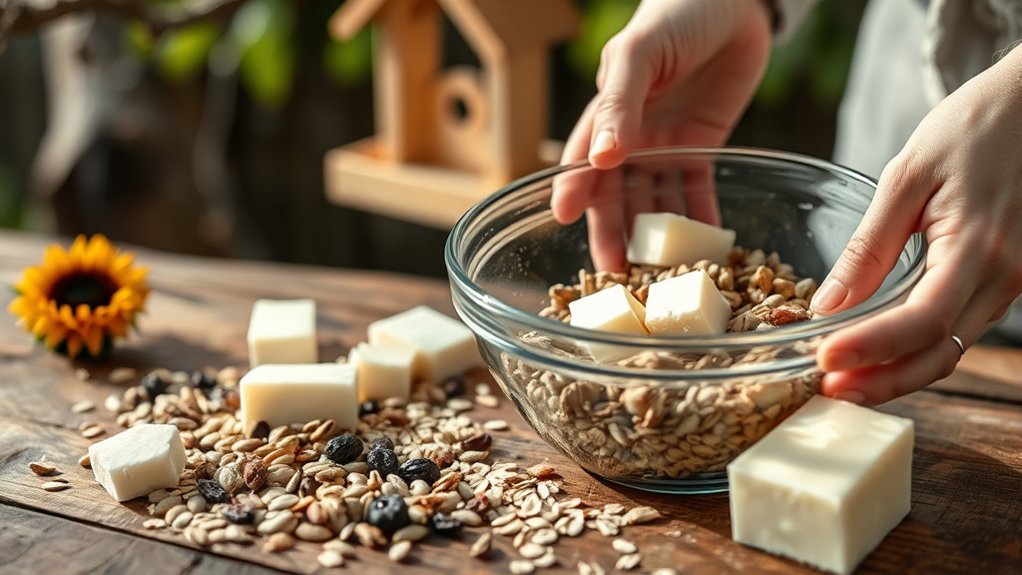
What exactly is bird suet, and why should you consider making it? Bird suet is a high-energy food made from animal fat mixed with seeds, nuts, and grains. It provides essential nutrition, especially during colder months when birds need extra calories to survive.
If you want to support local wildlife, suet acts as a crucial energy source that helps birds maintain their strength during bird migration. Migrating birds burn a lot of energy, and suet helps replenish their reserves quickly.
Gather Ingredients for Homemade Bird Suet
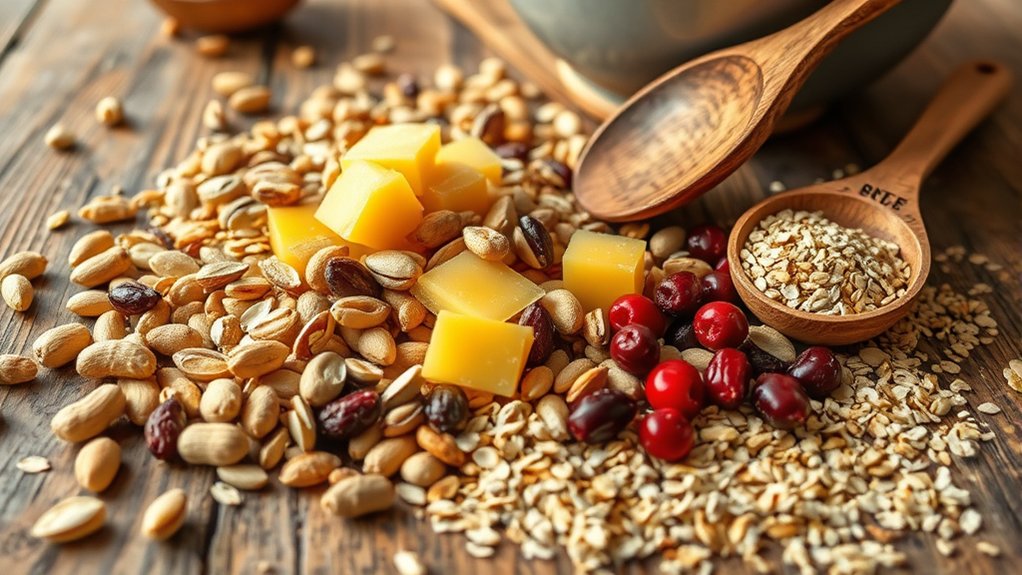
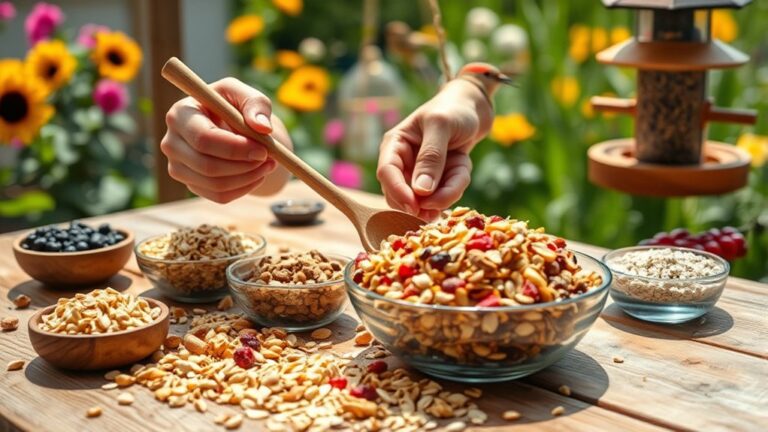
To make your own bird suet, you’ll need a few key ingredients that provide the energy and nutrients birds rely on. Start by gathering high-energy components like seeds, nuts, and dried fruits, which are essential during bird migration when birds need extra fuel. You can include sunflower seeds, cracked corn, and raisins to attract a variety of species. Adding oats or shredded coconut offers beneficial texture and nutrients.
In urban environments, where natural food sources can be scarce, your homemade suet becomes a crucial resource for local birds. Try to avoid ingredients with added salt or sugar, as these can harm birds. Furthermore, consider using ingredients that are readily available and safe, like unsalted peanuts or mealworms, to support birds year-round.
Once you have your ingredients ready, you’ll be set to create a nutritious suet that helps birds thrive through migration and tough urban winters.
Pick the Best Fat for Your Bird Suet
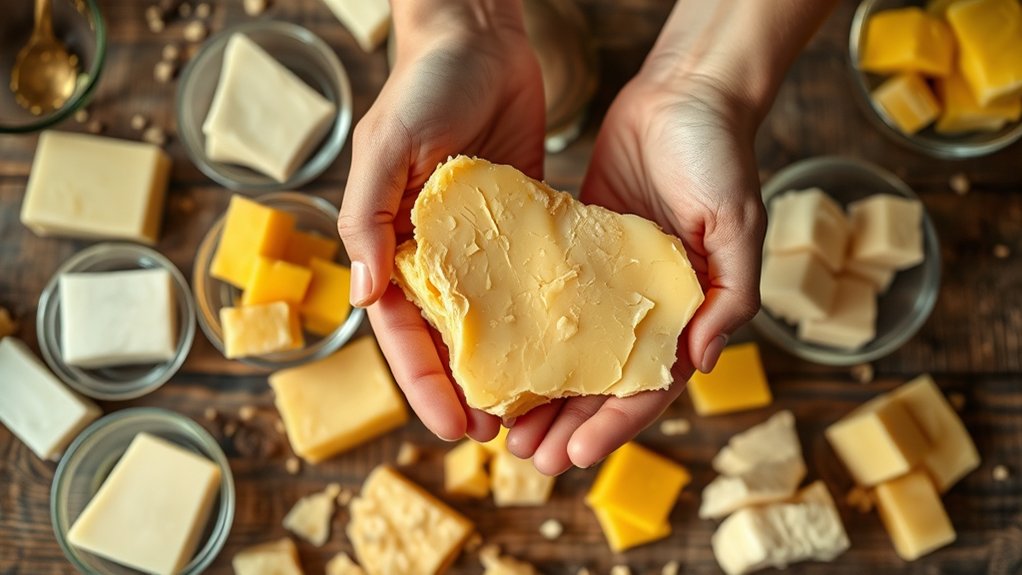
Since fat provides the essential energy birds need, choosing the right type is crucial for making effective suet. During bird migration, they burn a lot of calories, so your suet should be rich and energy-dense.
Rendered beef fat, also called suet, is a popular choice because it holds up well in cold weather and offers high energy content. You can also use lard, but avoid fats with additives or preservatives that could harm birds.
When sourcing suet ingredients, look for fresh, unseasoned fat from reliable suppliers like butcher shops or local markets. Avoid flavored fats or those with salt, as they’re not safe for birds.
If you’re eco-conscious, consider sourcing from local farms to reduce environmental impact and support sustainable practices. By picking the best fat, you guarantee your homemade suet meets birds’ nutritional needs, especially during their long migratory journeys when they need every calorie they can get.
Choose Bird Suet Mix-Ins for Extra Nutrition
You can boost your suet’s nutrition by adding nutrient-rich mix-ins like seeds, nuts, and dried fruits. Just think about what’s in season—it’s a great way to offer fresh, tasty options that birds will love.
And when you mix these ingredients carefully, you keep your suet both healthy and appealing. It’s a simple trick that makes a big difference!
Nutrient-Rich Ingredients
Why add extra ingredients to your suet mix? Including nutrient-rich ingredients boosts energy and supports feather health, especially during bird migration when birds need extra fuel.
You’ll want to add seeds like sunflower and millet, which provide essential fats and proteins. Nuts such as peanuts offer a great source of calories and nutrients, helping birds maintain strength on long journeys.
Don’t forget dried fruits; they supply vitamins and antioxidants that promote overall health. Incorporating these mix-ins guarantees your suet not only attracts a variety of birds but also contributes to their well-being.
Seasonal Mix-In Options
Four seasonal mix-ins can improve your bird suet by matching the changing nutritional needs and availability of local ingredients. In spring, add chopped berries and seeds to support birds during migration when energy demands spike.
Summer calls for dried fruits and nuts to provide essential fats and vitamins. Come fall, mix in cracked corn and sunflower seeds to help birds build fat reserves before winter.
Winter’s chill requires high-energy add-ins like suet mixed with peanut butter or mealworms to sustain birds through harsh weather. These seasonal ingredients not only enhance nutrition but also aid suet preservation by reducing spoilage and attracting a variety of species.
Get Your Workspace and Tools Ready for Suet Making
Before you start making suet, make sure to gather all the essential tools like a mixing bowl, spatula, and molds. It’s a good idea to clear and clean your workspace too, so everything stays organized and hygienic.
Having everything ready beforehand will really help make the whole process smooth and efficient. That way, you can focus on the fun part without any interruptions!
Essential Tools Needed
Although making suet is simple, having the right tools on hand will make the process smoother and more enjoyable. These tools help you prepare suet that supports bird migration and nest building by providing energy-rich food.
Here’s a table of essential tools you’ll need:
| Tool | Purpose | Tips |
|---|---|---|
| Mixing Bowl | Combine ingredients | Use a large, easy-to-clean bowl |
| Saucepan | Melt fat | Use low heat to avoid burning |
| Spoon/Spatula | Stir mixture | Choose a heat-resistant type |
| Suet Molds | Shape suet cakes | Silicone molds are easiest to use |
With these tools ready, you’ll efficiently create nutritious suet that helps birds during migration and nest building seasons.
Preparing Your Workspace
Since making suet involves melting fat and mixing various ingredients, you’ll want to set up a clean, well-organized workspace that’s easy to clean and free from distractions. Choose a spot with good ventilation and enough counter space for your tools and ingredients.
Lay down newspaper or parchment paper to catch spills and make cleanup easier. Keep your essential tools like a double boiler, mixing bowls, and molds within reach.
Remember, a tidy workspace helps you focus on creating suet that attracts birds with vibrant feather color, enhancing your bird habitat. Avoid clutter to prevent cross-contamination and guarantee safety when handling hot fat.
Preparing your workspace carefully sets the stage for successful suet making and happier, healthier birds visiting your outdoor space.
Melt the Fat Carefully Without Overheating
When you melt the fat, you’ll want to keep the temperature low to prevent it from burning or smoking. Use a double boiler or a heavy pot on very low heat, stirring frequently to help the fat melt evenly. Overheating can ruin the fat’s quality, making it less appealing to birds and affecting suet preservation.
Maintaining the fat fresh is essential, especially during bird migration when birds rely heavily on high-energy food sources. Burnt or scorched fat can produce off smells and reduce the suet’s shelf life, which defeats your purpose of providing reliable nourishment.
Patience is key here. Melt the fat slowly until it’s fully liquid but never let it bubble vigorously. If you notice smoke or a burnt smell, lower the heat immediately and consider starting over with fresh fat. This careful approach ensures you create a clean, nutritious base for your suet that birds will appreciate during their seasonal journeys.
Mix in Seeds, Nuts, and Other Additives
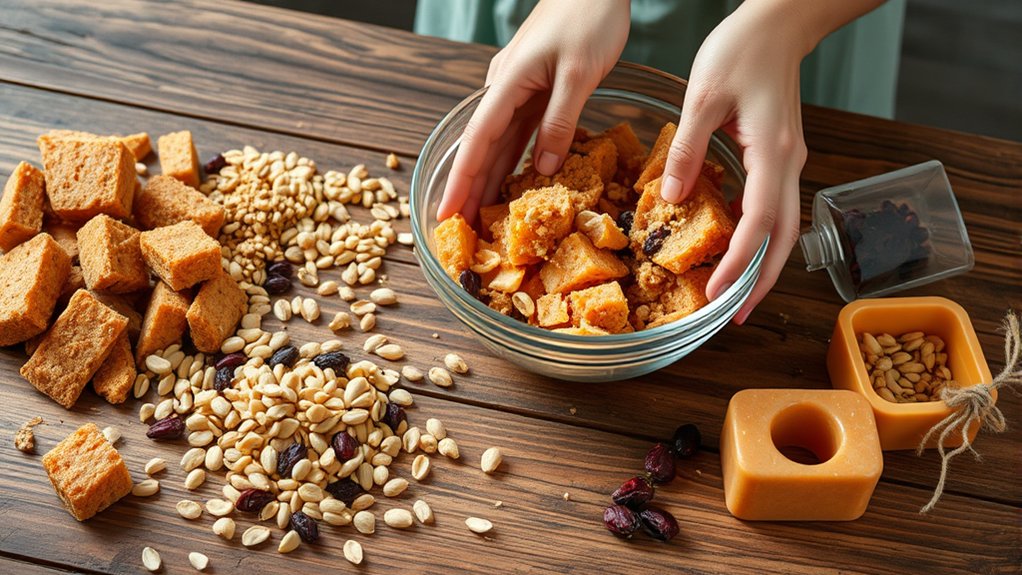
After melting the fat to a smooth consistency, you’ll want to quickly stir in your chosen seeds, nuts, and other additives before it starts to harden. This mix attracts various birds, especially during bird migration when they need high-energy food. Adding the right ingredients also helps with suet preservation, keeping it fresh longer.
Here’s a simple guide to ingredients:
| Seeds | Nuts | Other Additives |
|---|---|---|
| Sunflower | Peanuts (chopped) | Dried berries |
| Millet | Almonds (sliced) | Oats |
| Nyjer (thistle) | Walnuts (chopped) | Raisins |
Mix these evenly for a balanced suet block. Remember, the blend you create can cater to local bird species’ preferences during migration seasons. This thoughtful mix ensures your suet stays appealing and nutritious.
Pour the Suet Into Molds and Let It Harden
Pick molds that match the size and shape you want for your suet cakes. Pour the mixture slowly and evenly so you don’t get any air pockets or spills. After that, just let the suet harden by chilling it in a cool spot until it’s nice and firm.
Choosing Suitable Suet Molds
Although there are many options for suet molds, selecting one that fits your feeding area and bird species is key. Choose molds that are the right size and shape to attract local birds, especially during bird migration when different species visit.
For example, smaller molds work well for tiny birds, while larger molds suit bigger species. Also, consider how easy it is to remove hardened suet for refilling. Durable molds made of metal or sturdy plastic are ideal for repeated use and suet storage.
These materials help keep the suet fresh and prevent it from melting too quickly in warmer weather. By picking suitable molds, you’ll support the feeding habits of the birds you want to attract and make your suet-making process smoother and more efficient.
Pouring Techniques for Even Filling
Once you have the right molds, the next step is pouring the suet evenly to guarantee it sets properly. Pour slowly and steadily to avoid air bubbles and uneven surfaces. Use a spatula to gently spread the suet if needed.
Proper filling ensures your suet blocks will hold up well during bird migration, providing reliable energy for hungry birds. After pouring, place the molds in a cool spot for suet storage and hardening.
Feel the satisfaction of creating a safe haven for birds. Imagine flocks returning, nourished by your effort. Appreciate the simple joy of nature’s cycles.
Know your suet supports survival through tough seasons. Celebrate your role in sustaining local wildlife.
Tips for Proper Hardening
After pouring the suet into molds, let it harden in a cool, dry place to guarantee the best consistency. This step is essential, especially since bird migration patterns affect when and how birds feed. Proper hardening assures your suet recipes stay intact, providing reliable nourishment during these periods.
Avoid humidity and warmth, which can cause melting or spoilage. Patience here pays off with suet that holds its shape and attracts birds effectively.
| Condition | Effect on Suet |
|---|---|
| Cool, dry place | Solidifies evenly, preserves fats |
| Warm, humid area | Melts suet, reduces shelf life |
| Freezing | Extends storage but may crack |
Following these tips guarantees your suet supports birds throughout migration with ideal texture and nutrition.
Store Your Suet to Keep It Fresh Longer
To keep your suet fresh and appealing to birds, you’ll want to store it properly right after making it. Proper storage preserves the suet’s quality, ensuring it remains a nutritious treat that supports bird habitat during critical times.
As birds rely on reliable food sources, especially during migration patterns, your fresh suet plays an essential role in their survival.
Here’s how you can store your suet to keep it fresh longer:
- Wrap suet tightly in wax paper or plastic wrap to prevent air exposure.
- Store it in an airtight container to lock in moisture and scent.
- Keep it refrigerated if you plan to use it within a week.
- Freeze suet for longer storage, thawing only what you need.
- Label your suet with the date made to track freshness.
Hang Your Suet Feeders to Attract Birds Year-Round
Although birds can find natural food sources, hanging your suet feeders strategically guarantees they have reliable nourishment year-round. During bird migration, many species pass through your area, relying on consistent food sources to fuel their journeys.
By placing suet feeders in visible, sheltered spots, you help migrating and resident birds alike. To maintain suet preservation, hang feeders away from direct sunlight and rain, which can spoil the suet quickly.
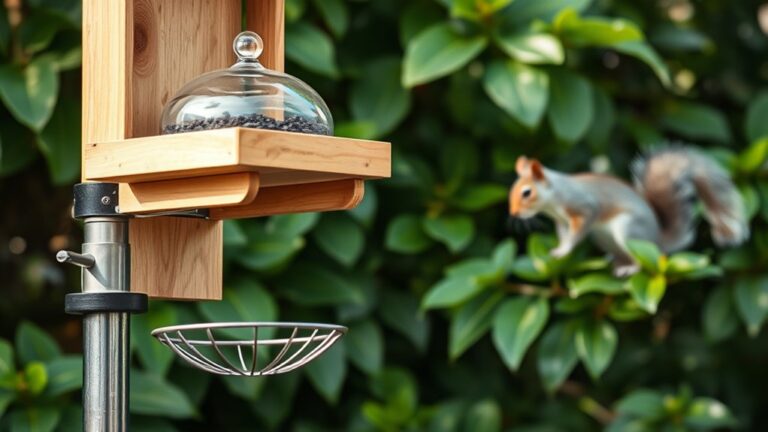
Using squirrel-proof cages or hanging feeders high reduces unwanted pests that compete for the suet. Rotate feeder locations occasionally to attract different bird species and reduce disease risk.
Remember, suet feeders work best when cleaned regularly to prevent mold and bacteria buildup. By paying attention to placement and maintenance, you support local wildlife through all seasons, ensuring your feeders remain an essential resource during bird migration and beyond.
Your efforts create a welcoming habitat that benefits both the birds and your enjoyment of their presence.
Frequently Asked Questions
Can Suet Attract Unwanted Animals Like Squirrels or Raccoons?
Yes, suet can attract unwanted animals like squirrels and raccoons, leading to wildlife competition at your feeders. To prevent pests, you’ll want to use squirrel-proof feeders or place suet in locations less accessible to these animals.
Regularly cleaning feeding areas and using deterrents can also help with pest prevention. By managing your suet feeding setup thoughtfully, you’ll enjoy birdwatching without unwanted visitors raiding your food.
How Often Should I Replace Suet in Feeders During Winter?
You should replace suet in feeders every 3 to 5 days during winter to keep it lively and appealing. If it’s warm or wet, swap it out more often to prevent spoilage.
Store extra suet in a cool, dry place or freeze it to maintain suet flavor preferences. Regularly invigorating suet helps attract birds and keeps unwanted animals away by avoiding rancid smells.
Is It Safe to Use Suet for Feeding Baby Birds?
You shouldn’t use suet for feeding baby birds because their bird nutrition needs are very specific and delicate. Suet can be too rich and hard for them to digest.
Instead, consider suet alternatives like soft, insect-based foods or specially formulated baby bird food. These options support healthy growth and development much better.
Always focus on providing foods that match what baby birds naturally eat to guarantee they thrive.
Can Suet Cause Any Health Issues for Birds?
Imagine feeding a marathon runner only candy bars. Your bird’s health could suffer likewise if you rely too much on suet.
Yes, suet can cause health issues if overused because it’s high in fat, which might lead to obesity or digestive problems.
You’ve got to balance bird dietary concerns by offering suet’s nutritional value alongside seeds and fruits. This ensures your feathered friends stay healthy and energetic without excess fat risks.
What Are the Best Types of Suet Feeders to Use?
The best suet feeders you can use are cage-style feeders that protect suet cakes from squirrels and weather. They allow birds easy access while keeping suet recipes fresh.
Mesh feeders work well too, but you’ll want to check them regularly. Feeder maintenance is key. Clean your feeders often to prevent mold and bacteria buildup, ensuring your feathered friends stay healthy and enjoy your homemade suet recipes all year round.
Conclusion
Making suet for birds is a simple act of kindness that transforms your backyard into a lively sanctuary. While you’re melting fat and mixing seeds, nature is quietly preparing to reward you with vibrant feathers and cheerful songs.
The effort you put in contrasts beautifully with the effortless joy it brings to the birds. So, don’t just feed them; create a feast that brightens both their days and yours, all year round.
By making suet for birds, you’re not only providing food but also inviting a splash of color and song into your life. It’s a rewarding experience that keeps on giving.