7 Best Organic Fertilizers for Vegetables
Growing healthy, vibrant vegetables can feel like a constant challenge, especially when you’re not sure which fertilizers will truly make a difference. You’re not alone—many gardeners struggle to find organic options that boost growth without harsh chemicals.
The good news? There are natural fertilizers that can help your garden thrive, no matter your experience level.
The 7 best organic fertilizers for vegetables are compost, worm castings, fish emulsion, bone meal, kelp meal, and well-aged manure, plus granular or liquid blends that fit your crop’s needs.
You should start with a soil test, then choose a fertilizer that matches the growth stage and plant type. Compost feeds steadily, fish emulsion works fast, and bone meal supports roots and fruiting.
Keep going, and you’ll see how to use each one for bigger harvests.
Key Takeaways
- Compost is the best all-purpose organic fertilizer. It improves soil structure, moisture retention, and provides slow nutrient release.
- Worm castings provide gentle, balanced nutrition for seedlings, container plants, and young vegetables.
- Fish emulsion delivers quick nitrogen for leafy growth. Just be sure to dilute it before application.
- Bone meal supplies phosphorus and calcium, supporting flowering, fruit set, and strong root development.
- Kelp meal and aged manure add trace minerals, steady nutrients, and promote long-term soil health.
How to Choose Organic Fertilizers for Vegetables?
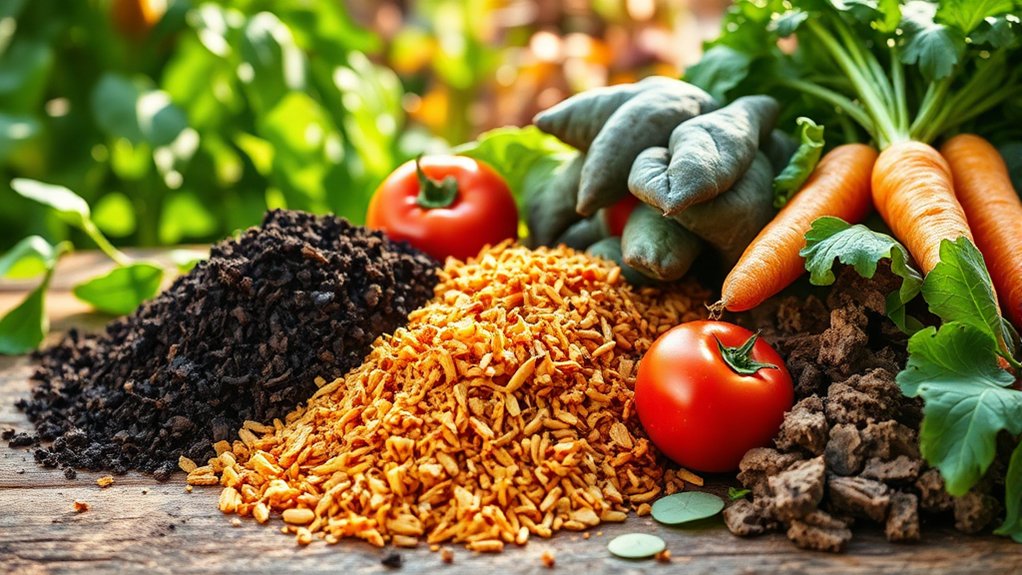
Choosing the right organic fertilizer for your vegetables starts with your soil and your crops’ needs. Start with soil testing so you know what’s lacking, then match the fertilizer’s nutrient balance to each crop’s stage.
Start with soil testing, then choose an organic fertilizer that matches your vegetables’ nutrient needs.
Check organic certification to make sure the product meets trusted standards and fits your growing goals. Compare application methods, since granular, liquid, and soil-incorporated options work differently in beds and containers.
Also weigh plant compatibility; leafy greens, tomatoes, and roots don’t all want the same feeding pattern. Use crop rotation to prevent repeated depletion of the same nutrients and to support healthier soil over time.
Pay attention to seasonal timing, because cool spring soil and hot summer growth call for different choices. Finally, consider environmental impact by choosing products that reduce runoff, support soil life, and avoid unnecessary waste.
When you plan carefully, you feed vegetables well and protect your garden.
Compost for Steady, All-Purpose Feeding
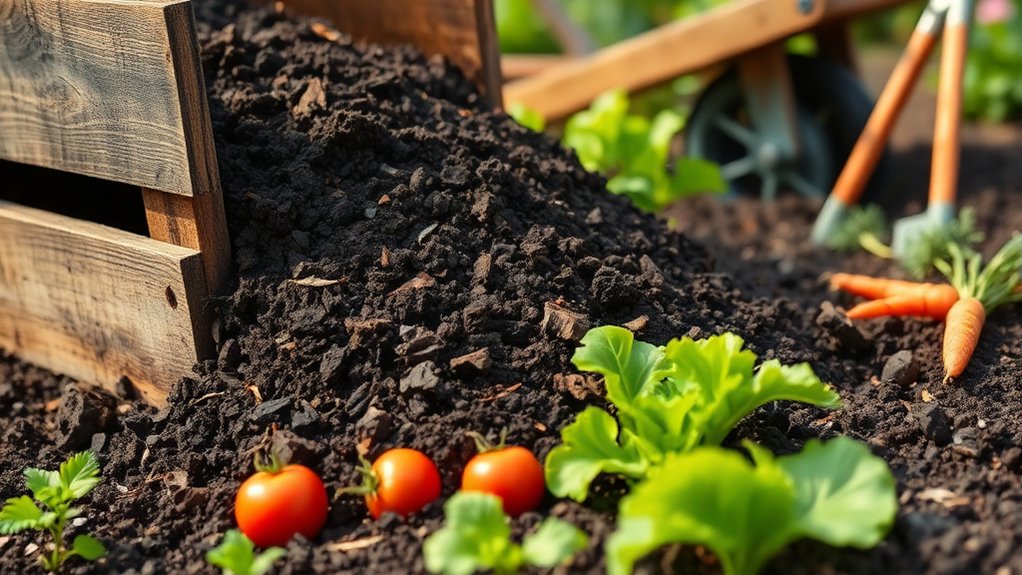
Compost gives your vegetables a steady, all-purpose boost by adding nutrients and improving soil structure at the same time. It’s a great way to feed your plants gently throughout the growing season. Plus, it helps the soil hold water and supports healthy root growth.
You can use finished compost safely by mixing it into the soil or spreading a thin layer around your plants. Just be sure to avoid using fresh, undecomposed material, as that can do more harm than good.
Compost Benefits
Rich, dark compost feeds your vegetable garden steadily by releasing nutrients over time, so plants get a balanced boost without the surge and drop of synthetic fertilizers. You can choose from many compost types, including leaf mold, kitchen scraps, and manure-based blends, then match them to your beds and crops.
This flexibility makes compost one of the most practical applications for vegetables because it improves soil structure, helps soil hold moisture, and supports healthy root growth. You’ll also feed beneficial microbes that turn organic matter into plant-ready nourishment.
Because compost works gently, you can use it throughout the season to topdress rows, mix into planting holes, or refresh tired beds. With regular use, you build richer soil and more productive harvests.
Using Compost Safely
When you use compost safely, you give vegetables steady nutrition without overdoing it. You should apply fully finished compost as a topdressing or mix it into beds before planting. This supports compost safety because mature compost is dark, crumbly, and earthy, not hot or smelly.
Keep raw manure and kitchen scraps out of vegetable rows since they can carry compost pathogens. If you’re unsure whether compost has cured, let it sit longer before use. Wash your hands after handling compost, and rinse produce well before eating.
For seedlings, use fine, screened compost so roots can spread easily. A thin layer around plants feeds soil life, improves moisture retention, and delivers gentle nutrients all season without the burn that synthetic fertilizers can cause.
Worm Castings for Stronger Roots and Growth

Worm castings give vegetables a gentle, nutrient-rich boost that supports stronger roots and steadier growth. You can mix them into planting holes, top-dress around seedlings, or blend them into potting soil to improve structure and moisture retention.
Because they’re mild, you won’t risk burning tender roots, and that makes them ideal for young plants and containers. Their balanced nutrients, helpful microbes, and humus-rich texture encourage better root development techniques, so your vegetables can anchor more deeply and take up water more efficiently.
If you’re looking for organic growth stimulants that work steadily rather than aggressively, worm castings fit well into your routine. Use them during transplanting or as a light side dressing through the season, then water them in well.
You’ll help your garden build resilience, support leafy growth, and create a healthier foundation for productive harvests without synthetic inputs.
Fish Emulsion for a Fast Nutrient Boost
Fish emulsion gives your vegetables a quick, easy-to-use boost when they need extra nitrogen for leafy growth. You’ll notice fish emulsion benefits fast: greener leaves, steadier vigor, and a simple way to correct a tired bed.
Mix it with water, then follow the label for fish emulsion application so you don’t overdo it. Apply it to damp soil in the morning or evening, and water lightly after feeding.
| Use | Result |
|---|---|
| Diluted spray | Fast leaf uptake |
| Soil drench | Direct root feeding |
| Regular feeding | Steady growth support |
You can use it on lettuce, spinach, kale, and other leafy crops when growth slows. Because it works quickly, it’s ideal when you want a short-term boost without synthetic fertilizer.
Keep your timing consistent, and your plants will respond with visible, healthy growth.
Bone Meal for Better Flowering and Fruit Set
Bone meal gives your vegetables a steady supply of phosphorus and calcium, which helps support strong roots and healthy blooms. It’s great for encouraging more flowers because phosphorus plays a key role in bloom development. Plus, it supports better fruit set, so your plants can turn more of those flowers into harvestable vegetables.
Bone Meal Nutrients
When your vegetables need a boost for flowering and fruit set, bone meal can help supply the phosphorus and calcium that support strong roots, blooms, and developing fruit. You’ll notice bone meal benefits most when your soil lacks these nutrients, because phosphorus helps plants move energy into buds and fruit while calcium supports sturdy cell growth.
For a simple bone meal application, mix it into the planting hole or work it into the top few inches of soil around established plants. Use it with tomatoes, peppers, squash, and beans when they’re setting flowers. You don’t need much; a light, even dose works best. Water it in after applying so nutrients start moving toward roots and your plants can use them steadily over time.
Flowering Boost Benefits
If your vegetable plants are forming buds but not setting much fruit, bone meal can give them a timely phosphorus and calcium boost. You’ll help support flowering triggers by feeding roots when plants shift from leafy growth to bloom mode.
Phosphorus encourages energy transfer, so your plants can channel more effort into blossoms instead of excess foliage. Calcium also strengthens developing tissues, which helps flowers hold up under changing weather.
For best results, focus on nutrient timing: mix bone meal into the soil near the root zone before flowering starts, then water it in well. Because it releases slowly, you won’t force a quick spike, but you will build steady support that fits your crop’s natural rhythm and keeps bloom production on track.
Fruit Set Support
As flowers start turning into tiny fruits, you can keep bone meal working for you by supporting the phosphorus your plants need for strong fruit set. You’ll give tomatoes, peppers, and squash a better chance to hold blossoms and build sturdy young fruit.
Use it alongside smart fruit development techniques and steady watering, and you’ll help roots and blooms stay balanced. For extra pollination improvement, invite bees with nearby herbs and avoid harsh sprays.
| Benefit | What you’ll notice |
|---|---|
| More phosphorus | Better flower retention |
| Gentle organic feeding | Stronger fruit start |
When you side-dress lightly, you’re feeding patience, not forcing growth. That calm support often means fewer dropped flowers and more harvests you’ll be proud of.
Kelp Meal for Micronutrients and Stress Relief
Kelp meal gives your vegetables a steady boost of trace minerals like iodine, potassium, and magnesium, which helps fill nutritional gaps that standard fertilizers can miss. You can work it into the soil or brew it as a light tea to give roots quick access to micronutrients.
The kelp benefits go beyond feeding; it also supports stress reduction after heat, transplant shock, or dry spells. When your plants face harsh weather, kelp’s natural compounds help them recover faster and keep growing with less setback.
You’ll often notice stronger foliage, better vigor, and improved overall resilience without pushing growth too hard. Use it as a supplement, not a full fertilizer, so your vegetables get balanced support while avoiding excesses.
For the best results, pair small, regular applications with good watering and healthy soil management.
Manure-Based Fertilizers for Long-Lasting Nutrition
Manure-based fertilizers give your vegetables a steady supply of nutrients that release slowly over time. You can choose from several manure types, including cow, horse, chicken, and sheep manure, each offering a different balance of nitrogen, phosphorus, and potassium. Composting or aging manure before use helps reduce pathogens and prevents burning tender roots, so your plants get safer, more stable nutrition.
Cow manure works well for general soil improvement and moisture retention. Chicken manure packs more nitrogen, so use it sparingly. Horse manure adds bulk and improves soil structure. Sheep manure delivers nutrients in a balanced, gentle form.
You’ll get the best results when you mix manure into the soil before planting or topdress established beds with well-rotted material. This supports consistent nutrient release, builds humus, and boosts microbial activity. Over time, your vegetables grow stronger, greener, and more productive without the quick spikes common in synthetic fertilizers.
Frequently Asked Questions
How Often Should I Apply Organic Fertilizer to Vegetables?
You should apply organic fertilizer every 3 to 6 weeks during the growing season, depending on your vegetables and soil needs. Start with a light fertilizer application at planting, then feed again as plants grow fast and need steady nutrient absorption.
You can top-dress or water it in, but don’t overdo it. Too much can stress roots, so follow package directions and watch your plants for signs they need more.
Can Organic Fertilizers Burn Vegetable Plants?
Yes, you can still burn your vegetable plants with organic fertilizer, even though it’s gentler than synthetic feed. Rich nutrients can nourish or scorch, depending on dose and timing.
You should watch the organic burn factors: fresh manure, overapplication, and dry soil. When you water well and spread fertilizer lightly, you help nutrient absorption and protect roots.
Which Organic Fertilizer Is Best for Container Vegetables?
For container gardening, you’ll usually do best with a balanced organic slow-release fertilizer, like composted poultry manure or an all-purpose granular blend. You should match it to your vegetables’ nutrient requirements since pots lose nutrients fast.
You can also boost growth with worm castings or diluted fish emulsion during the season. Choose one that feeds steadily, won’t burn roots, and suits your watering routine for healthier, better-producing plants.
When Is the Best Time to Fertilize Seedlings?
You should fertilize seedlings after they’ve developed their first true leaves, not right after germination. At that point, you can support steady seedling growth without burning tender roots.
Use a gentle, diluted feed and watch nutrient timing closely, because too much too soon can stunt growth. If you’re transplanting soon, wait until they’re established, then apply compost tea or a light organic fertilizer to keep them thriving.
How Do I Store Leftover Organic Fertilizer Safely?
Store leftover organic fertilizer in sealed storage containers, then tuck them in a cool, dry place away from sunlight. Keep moist product separate from dry material, and label each container with the date so you can track fertilizer expiration.
You’ll protect the nutrients and prevent pests by keeping bags off concrete and closed tightly. If it smells rotten, looks moldy, or clumps badly, don’t use it. Instead, discard it safely.
Conclusion
When you choose the right organic fertilizer, your vegetables seem to thank you twice: first with stronger growth, then with a better harvest. That’s no coincidence. Compost feeds steadily, worm castings build roots, fish emulsion revives tired plants, and bone meal and kelp help flowers, fruit, and resilience.
Even manure-based fertilizers keep the soil working longer. Match the feed to the need, and you’ll grow healthier vegetables with less guesswork. Using the best organic fertilizers for vegetables makes all the difference in your garden’s success.