Why Do Indoor Plant Leaves Turn Yellow?
If you’ve ever noticed your indoor plants’ leaves turning yellow, you’re not alone. Many people struggle with keeping their houseplants healthy and vibrant. It’s frustrating to see your greenery lose its lush color, especially when you’re unsure what’s causing the problem or how to fix it.
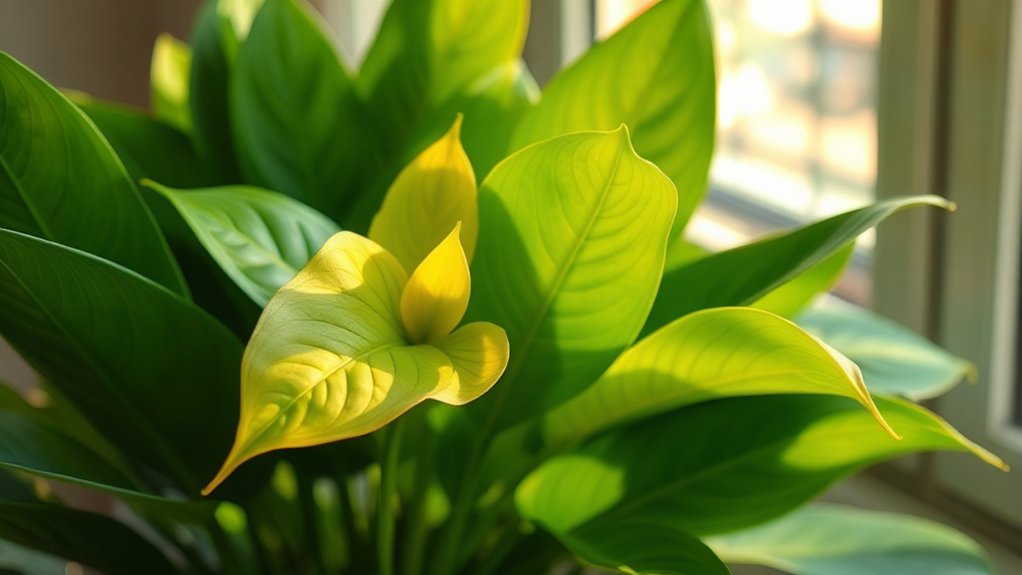
Indoor plant leaves turn yellow when your plant is stressed by overwatering, underwatering, low light, pests, nutrient shortages, or sudden temperature and humidity changes. Why Do Indoor Plant Leaves Turn Yellow?
You may also see older lower leaves yellow naturally as part of aging. Check the soil first: soggy soil points to root rot, while dry, curled leaves suggest thirst.
Fixing the cause early can help your plant bounce back, and a few simple clues can reveal the real problem.
Key Takeaways
- Overwatering is the most common cause. It leads to soft yellow leaves and soggy soil because of root damage.
- Underwatering can also cause yellowing, along with curled tips, crispy edges, and dry, brittle leaves.
- Poor lighting reduces photosynthesis. This makes indoor plant leaves lose color and turn pale or yellow.
- Nutrient deficiencies, especially nitrogen, iron, or potassium, can cause yellowing in specific leaf patterns.
- Pests and environmental stress like drafts, heat, or low humidity can weaken leaves and trigger yellowing.
Why Indoor Plant Leaves Turn Yellow
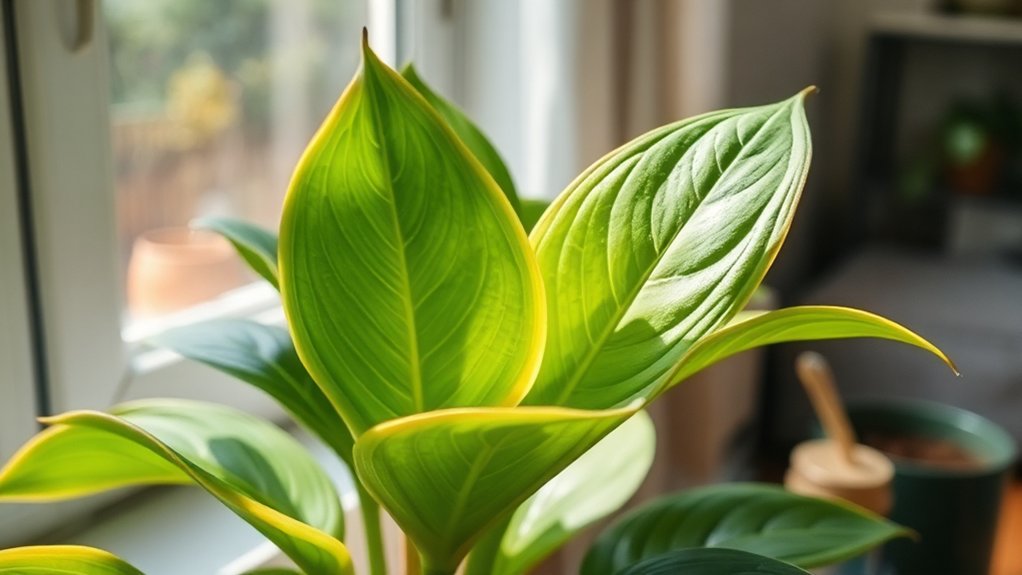
Indoor plant leaves turn yellow for a few common reasons, and the good news is that most of them are fixable. You’ll usually see leaf color shift when watering goes off balance, lighting is wrong, or nutrients run low.
Too much water can drown roots and block oxygen, while too little water stresses the plant and dries tissues. Poor light also affects photosynthesis, so leaves lose their rich green tone.
If you use the wrong fertilizer or your soil has poor drainage, plant health can decline quickly. Check the potting mix, the drainage holes, and how often you water.
You can also inspect the leaves for pests, because insects can weaken the plant and change its color. When you spot the cause early, you can adjust care before the damage spreads and help your plant recover faster, with stronger growth and healthier-looking foliage overall.
When Yellow Leaves Are Normal Aging
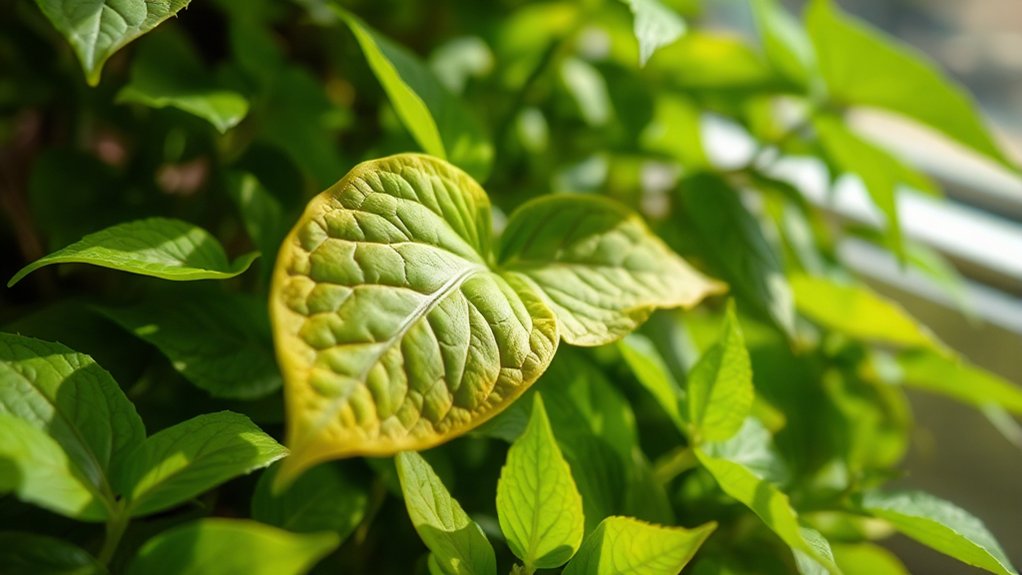
Sometimes, you might notice a few of the lower leaves turning yellow. This is just part of natural leaf aging, or senescence. Your plant is basically swapping out its older leaves for fresh, new growth. So, seeing some yellowing there can be totally normal.
If the yellowing is only happening on the older leaves and the rest of your plant looks healthy, there’s usually no need to worry. It’s just a normal part of how plants grow and renew themselves.
Natural Leaf Senescence
As plants age, older leaves naturally yellow and drop off as part of normal growth. You’ll often notice this on lower leaves first. It’s usually one of the natural processes that helps aging plants conserve energy.
The plant pulls useful nutrients from an older leaf, then lets it fade as new growth takes priority. You don’t need to panic if the rest of the plant looks healthy and keeps producing fresh leaves.
- Yellowing starts on the oldest leaves
- New growth stays firm and green
- The plant continues growing normally
This senescence is expected, not a disease. So, you can simply remove fully yellow leaves if you want a tidier look.
Old Leaf Replacement
That same natural aging process can also look like old leaf replacement, where a plant sheds its oldest leaves to make room for stronger new growth. You’ll often notice lower leaves yellow first while the plant keeps pushing fresh foliage upward.
This is usually normal, especially when leaf longevity is limited and the plant prioritizes new growth over old growth.
| Sign | Meaning | Action |
|---|---|---|
| Lower leaf yellows | Natural aging | Watch it |
| New leaves look healthy | Plant is thriving | Keep routine |
| One old leaf drops | Normal replacement | Remove it |
| Several leaves yellow fast | Possible stress | Check care |
If only a few older leaves fade, you don’t need to worry. Just trim them once they’re fully yellow and let the plant redirect energy.
Overwatering and Root Rot Problems
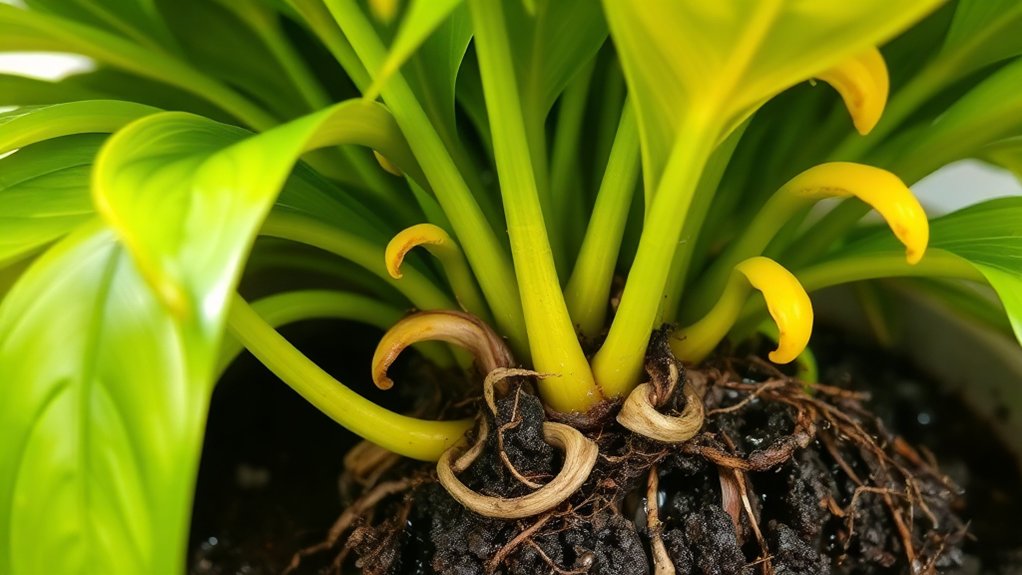
If you’re watering your plant too often, you might notice its leaves turning yellow, feeling soft, or even dropping off. It’s a clear sign that something’s not quite right. You might also see soggy soil around the base, or catch a musty smell coming from the pot.
And if you happen to check the roots, they could look brown and mushy instead of healthy and firm. These are classic warning signs of root rot, which can really weaken your plant fast. So, it’s a good idea to keep an eye out and adjust your watering habits if you spot these issues.
Signs Of Overwatering
One of the clearest signs of overwatering is yellowing leaves that feel soft, limp, or translucent instead of crisp and healthy. You may also notice the pot stays wet for days, and the plant looks tired even after you water it again.
Check your watering schedule and make sure you aren’t watering on autopilot. Improve drainage solutions by emptying saucers, using pots with holes, and loosening compact soil so roots can breathe.
If you spot these clues early, you can adjust before the plant declines further.
- Leaves yellow from the lower growth first
- Soil feels soggy long after watering
- Potting mix smells stale or sour
Root Rot Warning Signs
When overwatering continues, roots can start to rot, and the leaves often turn yellow even as the plant gets worse below the surface. You may notice soggy soil that stays wet for days, a sour smell, or stems that feel soft and weak.
Healthy roots should look firm and pale, but rotten roots turn brown or black and may fall apart when you touch them. As root health declines, the plant can’t take up water or nutrients, so yellow leaves spread and growth slows.
Fungal infections often join the problem, making the decay move faster. If you catch these signs early, remove the plant from its pot, trim damaged roots, and repot it in fresh, well-draining mix.
Underwatering and Dry Soil Stress
Underwatering can quickly make indoor plant leaves turn yellow because dry soil stresses the roots and limits how well they absorb water and nutrients. You’ll often notice soil moisture dropping fast, especially in dry air or warm rooms. That strain shows up as curled tips, dull color, or crispy edges.
Underwatering can yellow indoor plant leaves fast, with dry soil stressing roots and causing curled, dull, crispy foliage.
Check your watering schedule and adjust it before root health declines further. Soil composition matters too; fast-draining mixes can dry out sooner, so you may need to water more often. Watch these stress indicators:
- Soil pulls away from the pot edge
- Leaves feel limp, thin, or brittle
- Pot weight stays unusually light
Once you correct the watering issue, plant recovery can start within days, but damaged leaves may not regain their green color. Consider environmental factors like heat vents and low humidity since they speed evaporation and deepen drought stress.
Low Light Causes of Yellow Leaves
Low light can also turn indoor plant leaves yellow because the plant isn’t getting enough energy to keep producing healthy chlorophyll. You’ll often notice the oldest leaves fading first, especially on plants that sit far from a window or behind heavy curtains.
Your plant may stretch toward the light, grow slowly, or drop leaves as it tries to adjust. That’s part of its light adaptation, but it can’t compensate forever.
| Sign | What you see | What it means |
|---|---|---|
| Pale leaves | Color fades | Less chlorophyll |
| Stretching stems | Long gaps between leaves | Seeking light |
| Slow growth | New leaves stall | Energy shortage |
If your plant has strong shade tolerance, it may cope better, but even low-light lovers need some bright, indirect light. Move it closer to a window, rotate it weekly, and avoid dark corners so it can recover its color and vigor.
Nutrient Deficiencies in Indoor Plants
When your indoor plant isn’t getting enough nitrogen, you’ll often notice the older leaves turning pale or yellow first. It’s kind of like the plant is moving its resources to newer growth. Now, if you see yellowing between the leaf veins but mostly on the new leaves, that’s usually a sign of iron deficiency. On the other hand, potassium shortages tend to cause yellow edges on the leaves and make them look weak or stressed. Catching these signs early is super helpful because it means you can fix the problem before your plant starts to decline.
Nitrogen Deficiency Signs
If your plant isn’t getting enough nitrogen, the yellowing usually starts with the older leaves first. You’ll notice the leaf color fading from deep green to pale green, then yellow, while new growth may stay smaller than normal. This happens because your plant moves nitrogen to fresh tissue, leaving older foliage behind.
Check your nutrient balance and review soil pH, since poor pH can block uptake even when fertilizer is present. You can also see slower growth and fewer leaves overall.
- Older leaves yellow first
- Growth slows and looks sparse
- Fertilizer may need adjusting
Iron Deficiency Symptoms
Iron deficiency usually shows up first as yellowing between the veins of the newest leaves, while the veins themselves stay green. You may also notice the leaf edges stay firm while the blade looks pale and washed out.
These chlorosis symptoms often appear on young growth because the plant can’t move iron easily once it’s stored. If your potting mix stays too wet, has a high pH, or lacks available micronutrients, iron absorption can drop fast.
Check that you’re not overwatering and that your fertilizer includes trace minerals. You can correct the problem with a balanced feed or chelated iron, but don’t expect old yellow leaves to green up fully.
New growth should emerge healthier once the plant starts taking up iron again.
Potassium Deficiency Effects
Potassium deficiency usually shows up as yellowing and browning along the leaf edges, often starting on older leaves first. You may also notice weak stems, curled foliage, and slower growth because potassium helps move water and sugars through the plant.
When this nutrient runs low, your plant can’t regulate stress well, so leaves may scorch, wilt, or drop early.
- Check for potassium symptoms on older leaves and leaf margins.
- Use balanced fertilizer or compost as potassium sources.
- Water consistently, since drought can make the damage look worse.
If you catch the problem early, you can correct it before new growth suffers. Keep feeding on schedule, and your plant should recover with stronger, healthier foliage over time.
Pests That Cause Yellow Leaves
Pests can quietly drain the color from your houseplants, leaving leaves yellow, speckled, or curled before you notice the insects themselves. Check the undersides of leaves and stems for aphids, spider mites, mealybugs, or scale.
These pests suck sap, weaken tissue, and interrupt chlorophyll production, which can leave fresh growth pale or mottled. Good pest identification helps you match the damage to the culprit, so you can act fast.
Inspect new plants before bringing them home, isolate any suspect pot, and wipe leaves regularly as part of pest prevention. If you spot infestation, rinse the plant, remove heavily damaged leaves, and treat the foliage with insecticidal soap or neem oil, following label directions.
Keep monitoring every few days, because eggs and hidden adults can restart the problem quickly. Healthy, clean leaves recover best once you stop the feeding.
Temperature Stress and Draft Damage
If your indoor plant sits too close to a heater, AC vent, cold window, or drafty door, temperature swings can turn the leaves yellow. You might see older leaves fade first, then edges brown or curl as the plant struggles with stress.
Sudden temperature fluctuations interrupt normal growth, so the plant can’t move water and nutrients as efficiently. Move the pot away from draft sources and keep it in a spot with steady warmth.
If you notice a problem, check nearby vents, radiators, and exterior doors, then adjust the plant’s position a few feet.
Keep plants away from hot and cold blasts
Watch for yellowing after weather changes
Choose a stable, moderate room temperature
Consistent conditions help the plant recover and keep new growth green.
Humidity Issues Indoors
Dry air can be just as stressful for indoor plants as temperature swings. When your home’s humidity levels stay too low, leaves lose moisture faster than roots can replace it. That disruption weakens the plant’s moisture balance, so foliage may pale, yellow, or develop crispy edges.
You’ll often notice the problem more in winter, when heating systems dry the air and windows stay closed. Tropical plants, ferns, calatheas, and other moisture-loving species usually show stress first, but even sturdy houseplants can struggle if the air stays consistently dry.
Low humidity also makes transpiration work harder, which can leave leaves looking tired and less vibrant. If you group plants together, keep them away from vents, and watch for seasonal changes, you can better understand whether dry indoor air is contributing to yellowing.
The signs may seem subtle at first, yet humidity issues often show up clearly in leaf color and texture over time.
How to Fix Yellow Indoor Plant Leaves
To fix yellow indoor plant leaves, start by figuring out what’s stressing the plant and correcting it as quickly as you can. Check soil moisture first because overwatering and underwatering both cause yellowing. Adjust your watering routine so the roots stay evenly moist, not soggy.
Then inspect light levels. Move the plant closer to bright, indirect light if it looks weak or pale. Feed it with a balanced fertilizer during the growing season, but don’t overdo it. Trim damaged leaves to improve appearance and support healthy new growth.
Good plant care also means checking for pests, compacted soil, and poor drainage. Keep up with regular leaf maintenance so you can spot problems early.
Water only when the top inch feels dry. Rotate the pot for even light. Remove yellow leaves with clean scissors.
Frequently Asked Questions
Can Yellow Leaves Turn Green Again?
Yes, yellow leaves usually won’t turn green again because the damaged tissue can’t recover. You can improve leaf care and boost plant health by fixing the cause early, like watering mistakes, poor light, or nutrient problems.
If only part of the leaf is yellow, the rest might stay usable for a while, but that color won’t return. Focus on new growth instead, since healthy leaves show your plant’s recovery.
Which Houseplants Are Most Prone to Yellowing?
You’ll see yellowing most often in plant types like pothos, snake plants, peace lilies, ferns, and calatheas. You should watch their light requirements, watering habits, soil quality, and humidity levels closely.
These houseplants also react quickly to nutrient deficiencies, pest issues, and seasonal changes. If you overwater, underwater, or place them in harsh light, they’ll yellow fast. Adjust care early, and you can keep them healthier longer.
Should I Remove Yellow Leaves Immediately?
Yes, you should remove yellow leaves if they’re fully yellow or damaged since they won’t turn green again. First, check the yellow leaf causes so you can fix the real problem, like overwatering, low light, or poor drainage.
Then follow simple plant care tips: trim cleanly with sterile scissors, avoid removing too many leaves at once, and keep monitoring new growth to make sure your plant’s stress is easing.
Does Repotting Help Prevent Yellow Leaves?
Yes, repotting can help you avoid yellow leaves. Plants love a fresh start almost as much as you do. When you repot, you improve soil health, boost drainage, and give roots room to breathe. That’s one of the best repotting benefits.
You’ll also reduce salt buildup and refresh nutrients, which can stop stress before it starts. Just don’t overdo it; too much “help” can shock your plant instead of saving it.
Are Yellow Leaves Always a Sign of Disease?
No, you don’t always need to fear disease when you see yellow leaves. You might spot nutrient deficiency, overwatering symptoms, natural aging, low light, or stress from temperature changes.
Check the soil, watering habits, and leaf pattern before you assume illness. If only older leaves yellow and drop, that’s often normal.
But if damage spreads fast, you should inspect roots and act quickly to protect your plant.
Conclusion
Yellow leaves can feel like a punch to the gut, but they’re usually your plant’s way of asking for help. When you check the soil, light, pests, temperature, and humidity, you can spot the problem fast and get things back on track.
Don’t wait until the damage spreads. Act early, and your indoor plants can bounce back stronger. With a little care, you’ll turn things around and keep your leafy friends thriving.
Understanding why indoor plant leaves turn yellow is key to giving your plants the care they need to stay healthy and vibrant.