5 Essential Foods Budgies Do Eat
Feeding your budgie a nutritious diet can feel overwhelming, especially with so many options out there. You’re not alone—many bird owners struggle to find the right balance that keeps their feathered friends healthy and happy. That’s why understanding the essential foods budgies do eat is key to providing the best care.
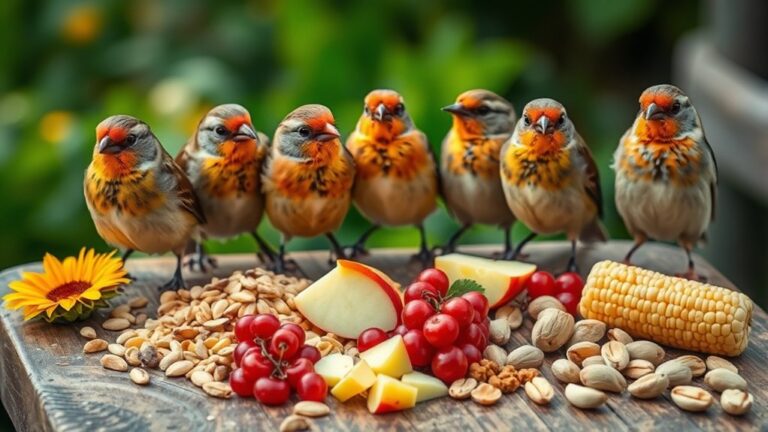
You feed your budgie a balanced diet by offering seeds like millet for essential nutrients and energy. Fresh fruits such as apple slices provide vitamins and hydration, while vegetables like spinach support digestion and bone health.
Adding protein sources like cooked eggs helps muscle and feather growth, and quality pellets fill nutritional gaps. Mixing these foods keeps your budgie healthy and active.
Keep exploring to uncover more ways to improve your budgie’s diet and well-being.
Key Takeaways
- Seeds and grains form the foundational diet, providing essential nutrients and energy for budgies.
- Fresh fruits like apples, pears, and berries supply vitamins and hydration while encouraging natural foraging.
- Vegetables such as spinach, carrots, and broccoli offer vital nutrients, fiber, and support digestion.
- Protein sources including cooked eggs and legumes aid muscle development and feather health.
- Pellets and supplements fill nutritional gaps and support overall budgie health when chosen carefully.
Seeds and Grains Budgies Need
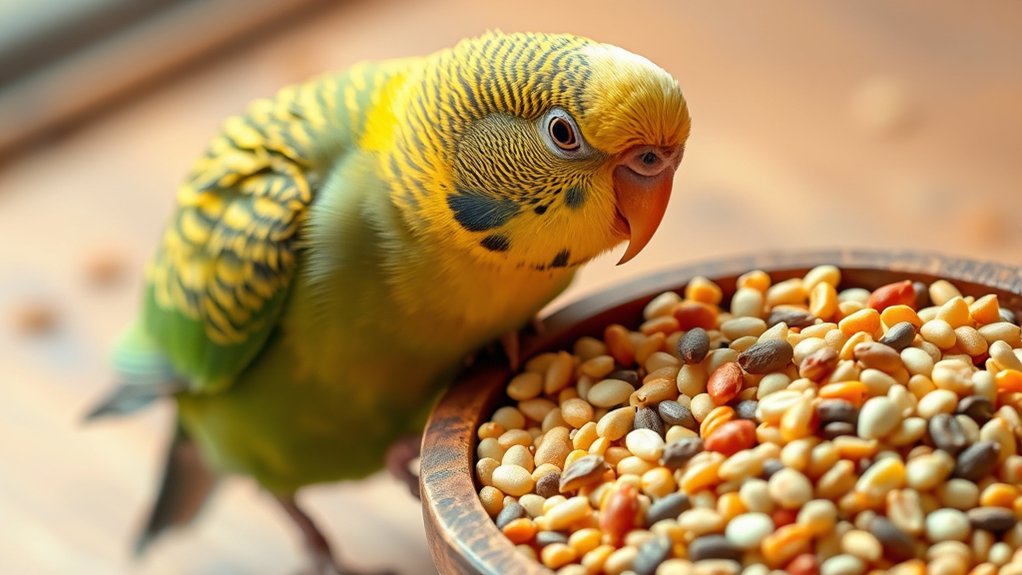
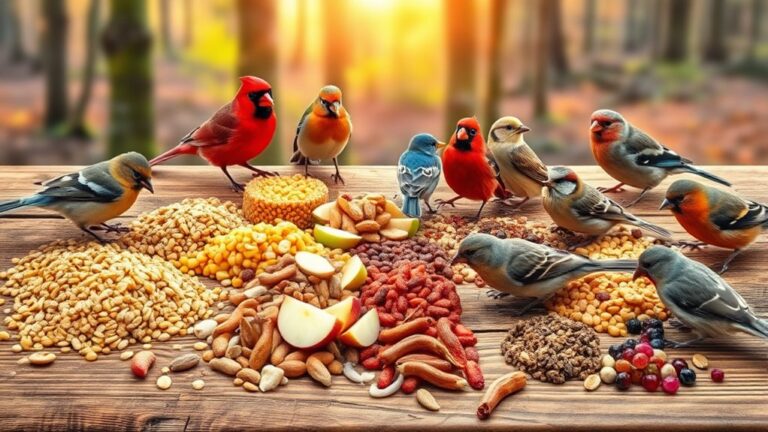
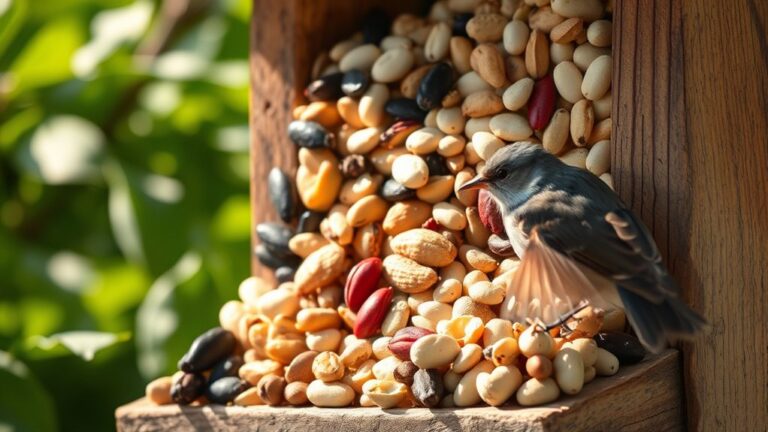
While budgies enjoy a variety of foods, seeds and grains form the foundation of their diet. You need to provide a balanced seed variety to guarantee your budgie gets essential nutrients and stays healthy.
Mix millet, canary seed, and oat groats to offer a diverse palette that meets their dietary needs. Different grain types supply energy and important vitamins that support your bird’s activity and feather health.
Avoid feeding just one type of seed since it may lack certain nutrients. Including a combination helps prevent nutritional deficiencies. You can find commercial seed blends designed specifically for budgies, which take the guesswork out of choosing the right grain types.
Keep in mind that seeds are calorie-dense, so monitor your budgie’s intake to avoid obesity. By focusing on a well-rounded seed variety and incorporating various grain types, you give your budgie a solid dietary base to flourish on every day.
Fresh Fruits Budgies Can Safely Eat
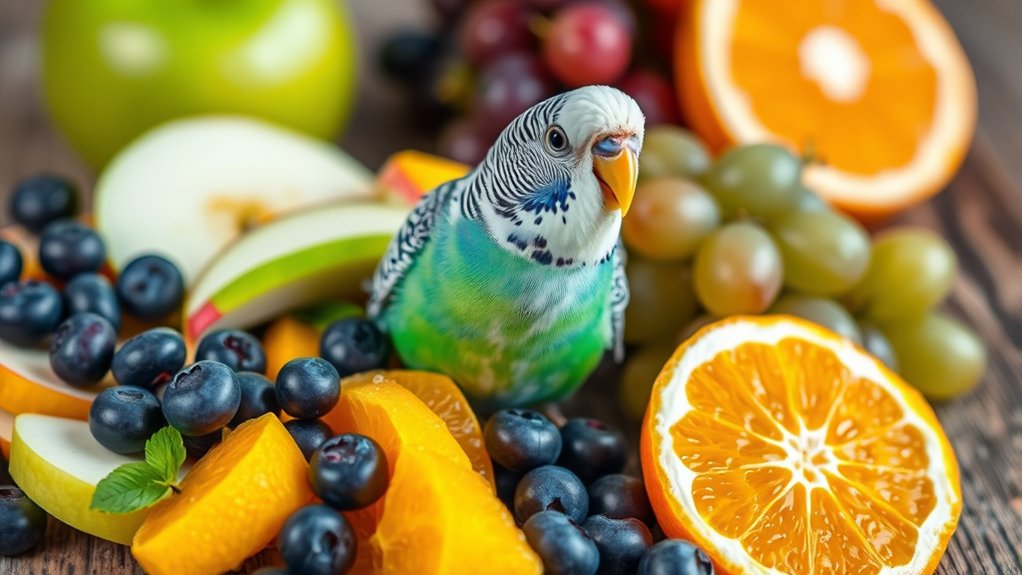
You can boost your budgie’s diet by offering a handful of fresh fruits that provide essential vitamins and hydration. Fruits like apples (without seeds), pears, berries, and melons are safe choices that energize your pet while supporting overall health. Introducing these fruits not only enriches their diet but also encourages natural foraging behaviors, enhancing their bird habitat experience.
Fresh fruits aid in bird grooming by promoting healthy feathers and skin, thanks to their moisture and nutrient content. Remember to wash fruits thoroughly to remove pesticides and cut them into bite-sized pieces to prevent choking. Avoid toxic fruits like avocado and citrus, as these can harm your budgie.
Regularly changing up the fruits keeps your bird interested and engaged. By incorporating fresh fruits into your budgie’s meals, you’re ensuring a balanced diet that supports vitality and happiness in their bird habitat.
Vegetables That Boost Budgies’ Health

Because vegetables provide essential nutrients and fiber, including them in your budgie’s diet boosts overall health and digestion. Vegetables are excellent dietary fiber sources that help maintain a healthy digestive tract and prevent constipation. Plus, they offer crucial calcium sources necessary for strong bones and beaks.
Here are some vegetables you should regularly offer your budgie:
| Vegetable | Key Benefit |
|---|---|
| Spinach | High in calcium |
| Carrots | Rich in dietary fiber |
| Broccoli | Provides vitamins and calcium |
Remember to wash vegetables thoroughly and serve them fresh or lightly steamed to keep nutrients intact. Avoid giving your budgie any vegetables that are toxic or harmful. By regularly adding these nutrient-packed vegetables, you’ll support your budgie’s health and vigor, ensuring a happy, active pet.
Protein and Treats Budgies Eat
Adding protein and treats to your budgie’s diet helps balance the nutrients they get from vegetables and seeds. You can offer small amounts of cooked eggs, legumes, or mealworms as protein sources, which support muscle development and feather health. When giving treats, choose options like millet sprays or small fruit pieces to avoid overfeeding sugary or fatty snacks.
Incorporate bird cage accessories like foraging toys or treat holders to make feeding time interactive. These accessories encourage natural behaviors and prevent boredom. Using budgie training techniques, you can teach your bird to come for treats or perform simple tricks, strengthening your bond while promoting mental stimulation.
Just remember to keep treats occasional and protein portions moderate to maintain a healthy diet. By balancing protein, treats, and regular meals, you’ll keep your budgie energetic and happy.
Pellets and Supplements for Budgies
While seeds and fresh foods form the foundation of your budgie’s diet, pellets and supplements play a crucial role in filling nutritional gaps. Pellets provide a balanced mix of vitamins and minerals that seeds alone can’t deliver, supporting your budgie’s overall health and vigor. Supplements, such as calcium or vitamin powders, guarantee your bird gets essential nutrients for strong bones and vibrant feathers.
Pellets and supplements fill nutritional gaps, ensuring your budgie thrives with strong bones and vibrant feathers.
To keep your budgie happy and healthy, consider these key points:
- Choose high-quality pellets formulated specifically for budgies.
- Use supplements sparingly and as recommended by your avian vet.
- Incorporate cage accessories like mineral blocks to encourage natural chewing and help with bird grooming.
- Rotate supplements to prevent nutrient imbalances.
Frequently Asked Questions
How Often Should I Change My Budgie’s Water Daily?
You should change your budgie’s water at least once daily to keep it fresh and clean. During bird cage cleaning, make sure to thoroughly wash the water dish to prevent bacteria buildup.
Fresh water supports your budgie’s health and hydration, which is vital for their well-being. Following these budgie nutrition tips, always provide clean water alongside a balanced diet to help your feathered friend stay happy and healthy.
Can Budgies Eat Human Junk Food Occasionally?
Think about it. Would you want to eat junk food all the time? Budgies shouldn’t eat human junk food, even occasionally, because it’s bad for their health.
Human snack safety is essential. Many processed snacks contain harmful ingredients like salt, sugar, and preservatives. Instead, choose junk food alternatives like small pieces of fresh fruits or veggies to keep your budgie happy and healthy without risking their wellbeing.
What Is the Best Way to Introduce New Foods to Budgies?
To introduce new foods to your budgie, start slowly by offering small amounts alongside their regular diet. You’ll want to encourage bird nutrition by providing a dietary variety that keeps them interested and healthy.
Be patient. Budgies can be cautious with new tastes. Try mixing new veggies or fruits with familiar favorites, and always observe their reaction.
Gradually increase portions if they accept the food, ensuring a balanced, nutritious diet.
How Do I Know if My Budgie Is Allergic to a Food?
Wondering if your budgie is allergic to a food? Watch closely for signs of food intolerance like itching, sneezing, or unusual feather loss.
You might also notice changes in droppings or a lack of energy. Budgie allergies can be subtle, so don’t ignore these clues.
If you see any of these symptoms after introducing new foods, stop feeding that item and consult your vet to keep your feathered friend safe and healthy.
Should I Soak Seeds Before Feeding Them to Budgies?
Yes, soaking seeds before feeding them to your budgie can be beneficial. It helps with seed preparation by softening the seeds, making them easier to digest and reducing the risk of choking.
Incorporate soaking into your feeding routines a few times a week, but don’t overdo it as fresh seeds are also important. Always rinse soaked seeds thoroughly to prevent mold growth and maintain your budgie’s health and happiness.
Conclusion
Now that you know the five essential foods budgies enjoy, you’re well on your way to giving your feathered friend a vibrant life. By offering a balanced mix of seeds, fresh fruits, veggies, protein, and supplements, you’re not just feeding them—you’re nourishing their little souls.
Remember, a happy budgie is a lively companion, so sprinkle kindness and care into every meal. Your budgie’s bright feathers will thank you in their own special way. Feeding your budgie the right foods is key to keeping them healthy and joyful.