How Do You Make Suet Balls for Birds in 10 Easy Steps?
If you love watching birds visit your garden but struggle to find healthy, affordable food options for them, you’re not alone. Many people want to provide nutritious snacks that attract a variety of feathered friends without breaking the bank or relying on store-bought mixes.
Luckily, making your own suet balls for birds is a simple and rewarding solution that anyone can try at home.
To make suet balls for birds, first gather suet, seeds, nuts, and dried fruits without additives. Melt the suet gently and mix in the nutritious ingredients thoroughly.
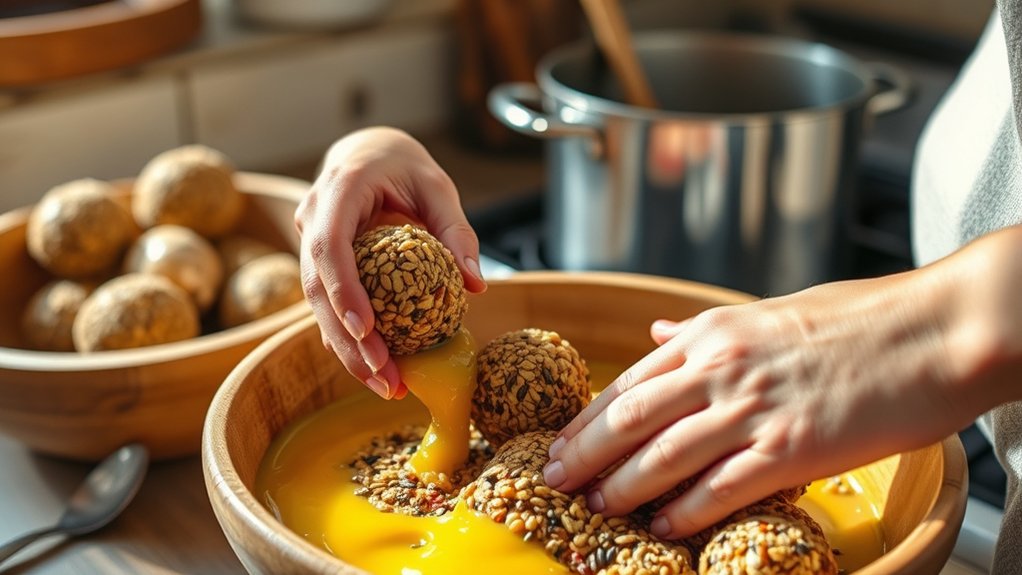
Shape the mixture into firm balls using gloves or wet hands, then chill them in the fridge for a few hours to set.
Hang your suet balls in a shaded spot about five feet high to attract various birds.
Keep your mix fresh and balanced, and investigate more tips to perfect your bird feeding.
Key Takeaways
- Melt solid suet gently using a double boiler, cutting it into small pieces for even melting.
- Mix in bird-friendly ingredients like sunflower seeds, peanuts, oats, and dried fruits without salt or preservatives.
- Shape the mixture firmly into balls or decorative shapes using wet or gloved hands to prevent crumbling.
- Chill the shaped suet balls in an airtight container at 35-40°F for 2-3 hours to set properly.
- Store suet balls wrapped individually in airtight containers or freezer bags, and thaw slightly before hanging outdoors.
Gather Ingredients for Your Suet Balls
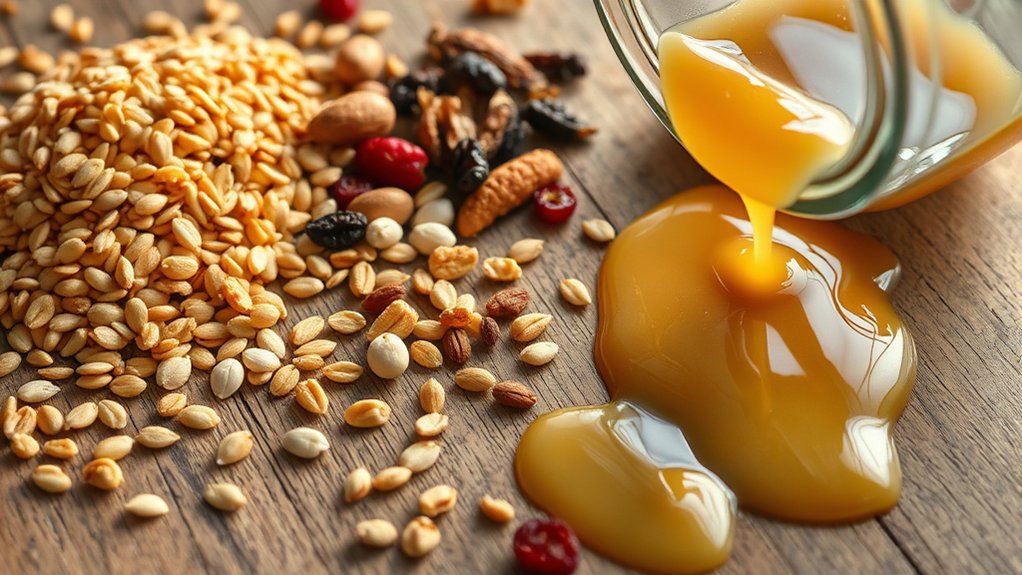
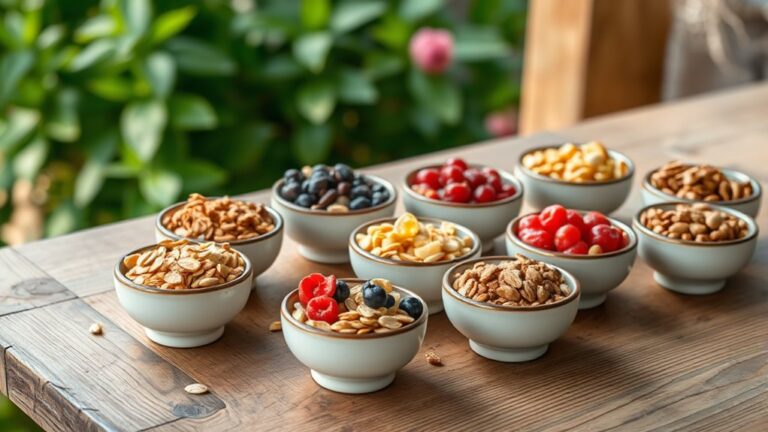
Before you begin making suet balls, you’ll need to gather a few key ingredients that will attract and nourish your feathered visitors. Bird feeding is all about providing energy-rich foods, especially in colder months when natural sources are scarce.
Gather nutrient-rich ingredients to create suet balls that nourish and attract birds during colder months.
Start with suet, which provides essential fat and calories. You can use store-bought suet or render your own beef fat. Next, add a mix of bird-friendly ingredients like sunflower seeds, peanuts, and cracked corn to create texture and nutrition.
For suet recipes, consider incorporating dried fruits such as raisins or cranberries to add natural sweetness and vitamins. You can also toss in oats or millet for extra carbohydrates.
Avoid any ingredients that contain salt, sugar, or preservatives, as these can harm birds. Once you have these essentials, you’re ready to move on to preparing the suet base for bird treats, ensuring your backyard visitors get a healthy, energy-packed snack all year round.
Prepare the Suet Base for Bird Treats
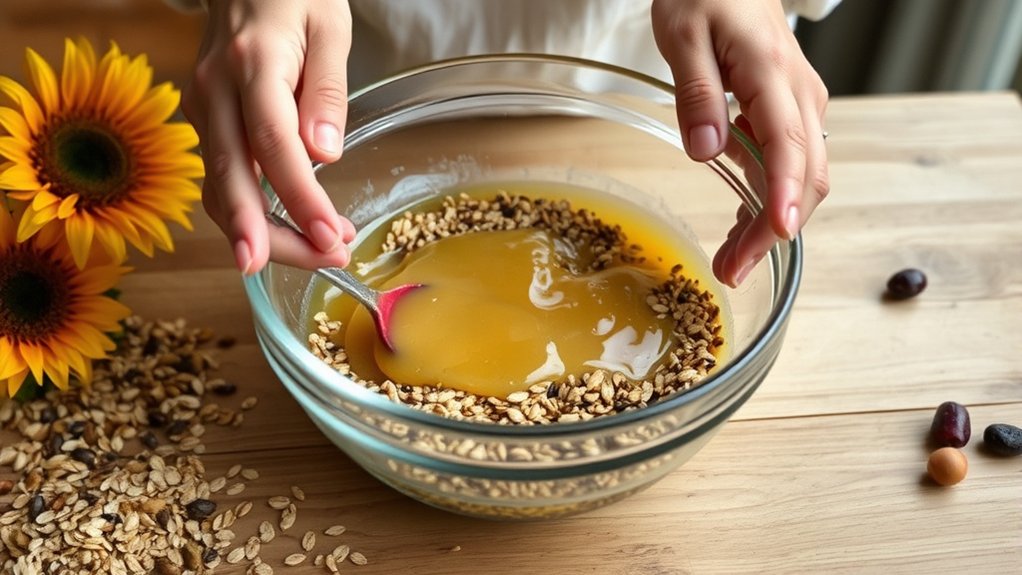
You’ll want to start by choosing the right fat to create a solid, nutritious base for your suet balls. Just make sure to melt the suet carefully so it doesn’t burn. Then, mix in your ingredients evenly—this way, every bite is packed with goodness. This step really sets the foundation for tasty treats your birds will love.
Choosing The Right Fat
When preparing suet balls, selecting the right fat is essential to guarantee your treats hold together and provide the energy birds need. The choice of fat has roots in suet ball history, where animal fats were traditionally used to mimic natural bird habitat nutrition.
Today, you have several options to consider that suit different bird habitats and climates.
Choose fats that:
- Are solid at room temperature for easy molding
- Have a neutral smell to avoid deterring birds
- Are free from additives or preservatives
- Provide high energy content, especially in colder months
- Are sustainable and safe for wildlife consumption
Using the right fat ensures your suet balls stay intact while attracting a variety of birds. This supports their dietary needs effectively.
Melting The Suet Safely
Although melting suet requires some attention, you can easily prepare a smooth, even suet base by heating it slowly and carefully. Start by cutting the suet into small pieces to help it melt evenly without burning.
Use a double boiler or a heat-safe bowl over simmering water to control the temperature. Avoid direct heat, as it can scorch the fat and affect the quality of your suet balls.
Mixing Ingredients Evenly
Since the suet has melted into a smooth base, it’s important to mix in your ingredients thoroughly to guarantee every bite is packed with nutrition. You want to distribute seeds, nuts, and dried fruits evenly to assure birds get a balanced treat. Proper mixing also helps with suet ball longevity, preventing ingredients from separating and spoiling faster.
To mix effectively, try these tips:
- Use a sturdy spoon or spatula to fold ingredients in gently.
- Stir slowly to avoid air pockets but ensure uniform distribution.
- Check for clumps and break them apart.
- Mix until ingredients are visibly consistent throughout.
- Consider bird feeder placement, choosing spots that keep suet balls cooler and extend freshness.
This way, your suet balls stay fresh and appealing longer.
Mix Seeds and Nuts for Extra Nutrition
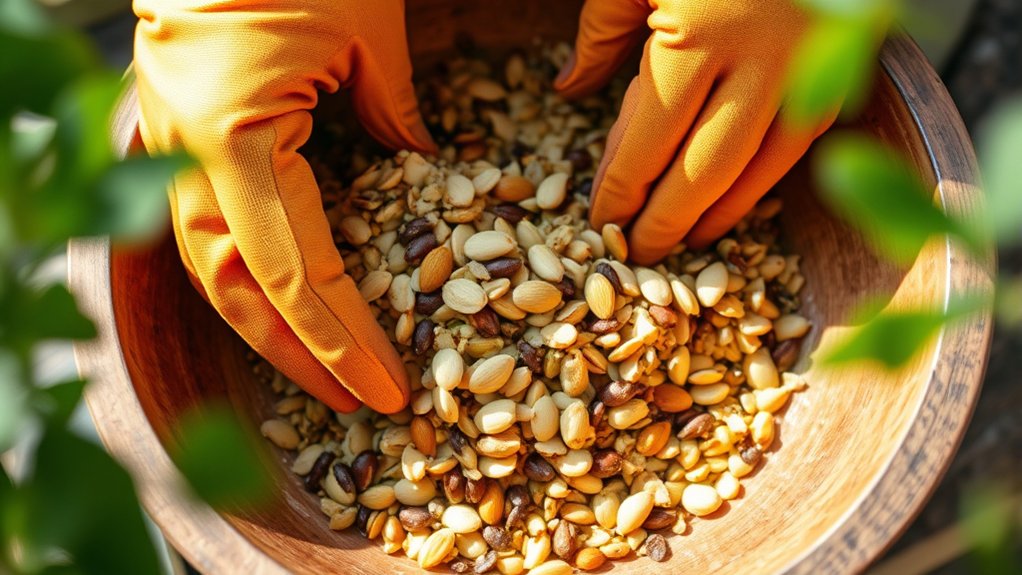
To boost your suet balls’ nutrition, try mixing in a variety of seeds like sunflower, millet, and safflower. These seeds offer essential fats and proteins that birds really need. Plus, adding chopped nuts gives them extra energy, which is especially helpful during the colder months. You’ll be giving your feathered friends a balanced, tasty treat they’re sure to love.
Nutrient-Rich Seed Selection
When you choose seeds and nuts for your suet balls, focusing on nutrient-rich options guarantees your feathered visitors get the energy they need. Selecting the right mix also complements bird feeder placement and seasonal recipe variations. This ensures your suet balls appeal year-round.
Consider these nutrient-packed ingredients:
- Black oil sunflower seeds: high in fat and protein
- Peanuts (unsalted, chopped): great for energy
- Millet: preferred by smaller birds like finches
- Safflower seeds: resistant to squirrels and loved by cardinals
- Cracked corn: adds carbohydrates for stamina
Benefits of Mixed Nuts
Adding a variety of nuts to your suet balls boosts the nutritional value and attracts an even wider range of bird species. Including nuts like almonds, walnuts, and peanuts provides essential fats, proteins, and vitamins that birds need, especially in colder months.
This mix not only supports their energy requirements but also improves the overall health of your feathered visitors. Plus, the different textures and flavors make your suet balls more appealing.
Birds are naturally drawn to diverse food sources, so combining seeds with nuts creates a balanced meal that keeps them coming back. When you blend seeds and nuts, you’re giving birds a tasty, nutrient-packed treat that supports their wellbeing all year round.
Shape the Suet Mixture Into Balls
Once your suet mixture has cooled enough to handle, you can start shaping it into balls. This step is where you add a personal touch, turning basic suet into a creative presentation that attracts birds and looks great in your garden. Use your hands to mold the mixture firmly, ensuring the balls hold their shape.
Here are some tips to shape your suet balls effectively:
Use gloves or wet your hands to prevent sticking. Press the mixture tightly to avoid crumbling. Experiment with different sizes to suit various bird species. Try decorative shapes like stars or hearts for visual appeal. Incorporate natural elements such as nuts or seeds on the surface for texture and attractiveness.
Chill Suet Balls to Set Firmly
Once you’ve shaped your suet balls, you’ll want to chill them at the right temperature—around 35-40°F works best. Just pop them in an airtight container to keep them fresh while they firm up. Usually, a few hours in the fridge is all it takes for them to set properly. Easy, right?
Ideal Chilling Temperature
Although suet balls can start to firm up at room temperature, chilling them in the refrigerator guarantees they set properly and hold their shape. The ideal chilling temperature is between 35°F and 40°F (1.5°C to 4.5°C). This range ensures the suet solidifies without becoming too hard or melting, preserving the texture birds enjoy.
Pay attention to refrigeration safety by storing suet balls in a clean, sealed container to prevent contamination and odors.
Keep these tips in mind for ideal chilling temperature and safety:
- Set fridge temperature between 35°F and 40°F
- Use airtight containers to avoid odors
- Chill for at least 2-3 hours to firm up
- Avoid freezing to maintain texture
- Place suet balls away from raw foods to ensure hygiene
Following these steps helps your suet balls stay fresh and bird-friendly.
Proper Storage Techniques
Because suet balls need to firm up properly to hold their shape, you should chill them in the refrigerator immediately after shaping. This step is vital, especially during bird migration when birds rely heavily on high-energy foods like suet.
Proper storage not only preserves the texture but also extends the suet balls’ usability, ensuring you can provide steady nourishment throughout the season. Remember, suet ball history shows these treats have long supported wild birds during colder months, so maintaining their quality is essential.
Keep the suet balls in an airtight container to prevent them from absorbing fridge odors or drying out. By chilling and storing them correctly, you guarantee your feathered visitors get the best, firm suet balls they need during their long migratory journeys.
Duration For Firmness
When you chill suet balls, giving them enough time to set firmly is essential to guarantee they hold their shape and withstand outdoor conditions. This step is especially important because birds rely on suet during migration when natural food sources can be scarce. From suet ball history, we understand that proper firmness ensures longevity and attractiveness to birds.
To set your suet balls effectively, consider these tips:
- Chill suet balls in the refrigerator for at least 2 hours
- Avoid freezing, which can make them too hard for birds to eat
- Use airtight containers to prevent moisture buildup
- Let suet balls reach outdoor temperature before hanging
- Monitor firmness during cold spells to adjust chilling time
Following these steps helps you provide durable, nutritious suet during critical migration periods.
Store Leftover Suet Balls Safely
If you want to keep your leftover suet balls fresh and safe for future use, storing them properly is essential. First, wrap each suet ball individually in wax paper or plastic wrap to protect them from moisture and freezer odors. Then, place the wrapped balls in an airtight container or resealable freezer bag.
Store them in the freezer, where they’ll stay fresh for several weeks. When you’re ready to use them, just take them out and let them thaw slightly before hanging.
Using these birdwatching tips, you’ll attract more feathered friends without wasting any suet. Plus, if you like adding suet ball decorations, make sure they’re dry and clean before storing to prevent mold growth.
Proper storage not only keeps the suet safe but also preserves the quality of your suet balls, so your garden visitors enjoy tasty, nutritious treats every time.
Choose the Best Spot to Hang Your Suet Balls
After storing your suet balls properly, the next step is to find the ideal spot to hang them. Understanding bird behavior helps you pick a location that attracts birds while keeping them safe. Tree placement plays a vital role. Hang your suet balls on sturdy branches about 5 to 6 feet off the ground to deter predators and make feeding easier for birds.
Consider these tips when choosing your spot:
- Pick a tree with good cover nearby to protect birds from predators.
- Avoid placing suet balls in direct sunlight to keep them from melting.
- Hang suet balls away from busy human activity to prevent scaring birds.
- Make certain the spot is visible from your window for easy birdwatching.
- Choose branches strong enough to support hanging suet feeders without breaking.
Attract Different Birds With Your Suet Balls
How can you attract a variety of birds with your suet balls? By tailoring ingredients to different species’ tastes, you’ll invite more feathered friends to your yard. During bird migration, many species need energy-rich foods, so adding nuts or seeds can help.
For birds focused on nest building, like wrens or chickadees, including suet mixed with natural fibers or small twigs encourages visits.
Here’s a quick guide to attract specific birds:
| Bird Species | Preferred Suet Additions |
|---|---|
| Woodpeckers | Peanuts, suet with insects |
| Chickadees | Sunflower seeds, nesting fibers |
| Nuthatches | Crushed nuts, dried fruit |
| Wrens | Suet with twigs or grass clippings |
| Migratory Warblers | High-fat suet with berries |
Mixing these ingredients supports birds’ energy needs and nest building, making your suet balls a hotspot for diverse species throughout the seasons.
Troubleshoot Suet Ball Problems
When you notice birds ignoring your suet balls or the mix falling apart too quickly, it’s time to troubleshoot common issues. Adjusting your approach can improve bird interest and durability. Keep in mind birds have specific preferences based on their diet, so tailoring ingredients matters. Also, consider your feeding frequency. Overfilling can deter birds, while infrequent refills may reduce visits.
Check these points to fix problems:
Key tips to improve suet ball success and attract more birds to your feeder.
- Use a balanced mix that matches local bird diet preferences. Avoid too much fat or filler.
- Confirm ingredients are fresh. Rancid fat or stale seeds repel birds.
- Adjust feeding frequency to keep suet balls fresh but not overwhelmed by leftovers.
- Protect suet balls from weather. Exposure to heat or rain causes crumbling.
- Hang suet balls where birds feel safe and can easily access them.
Experiment With Seasonal Suet Ball Recipes
If you’ve adjusted your suet balls to meet local bird preferences but want to keep things interesting, trying seasonal recipes can attract a wider variety of birds throughout the year. Seasonal bird behavior changes with temperature and food availability, so tailoring your suet balls can make your feeder more appealing.
For example, in winter, add high-energy ingredients like peanuts and dried berries to help birds build fat reserves. In spring, include softer seeds and fruits that match what’s naturally available.
Don’t forget suet ball decoration ideas to make your feeders visually attractive and inviting. You can press colorful dried fruits or sunflower seeds onto the surface, which not only looks great but also signals fresh food to birds.
Experimenting with seasonal recipes keeps your bird visitors happy and healthy and lets you enjoy watching different species throughout the year. Keep notes on what works best seasonally to perfect your suet ball creations over time.
Frequently Asked Questions
Can Suet Balls Harm Birds if Eaten in Excess?
Yes, eating too many suet balls can harm birds. While suet ball ingredients provide essential fats and energy, overfeeding can upset a bird’s natural diet balance.
You should offer suet balls in moderation to avoid obesity or nutritional imbalances. Remember, birds need a varied diet, so don’t rely solely on suet balls.
Keeping their diet diverse helps maintain their health and supports their natural foraging habits.
Are Suet Balls Safe for Pets or Children?
About 70% of pet poisonings happen at home, so pet safety is essential. Suet balls aren’t toxic but can pose choking hazards for pets or children if eaten.
You should keep suet balls out of reach to guarantee child safety too, as they may contain ingredients harmful if consumed in large amounts. Always supervise pets and kids around bird feed to prevent accidental ingestion or digestive upset.
How Long Do Suet Balls Last Outdoors in Winter?
Suet balls typically last about one to two weeks outdoors in winter, depending on weather conditions and bird activity. You’ll want to replace them regularly to support bird nutrition and promote wildlife conservation effectively.
Can I Use Homemade Lard Instead of Store-Bought Suet?
You know what they say, “Don’t put all your eggs in one basket.” Yes, you can use homemade lard as a DIY alternative to store-bought suet for your bird feeders.
Just make sure your lard is free of harmful additives and hasn’t gone rancid, as health considerations for birds are essential. Homemade lard can work well, but always observe how birds react and adjust if needed to keep them safe and happy.
What Types of Birds Are Most Attracted to Suet Balls?
You’ll find woodpeckers, nuthatches, chickadees, and wrens most attracted to suet balls because of their high energy content. During bird migration, these birds rely on suet ball nutrition to fuel their long journeys.
The fat and seeds provide essential calories and nutrients, helping them stay strong and healthy. If you want to support local wildlife, putting out suet balls is a great way to help these migratory and resident birds thrive.
Conclusion
Now that you’ve crafted your suet balls, you’re not just feeding birds, you’re creating a tiny sanctuary in your backyard. Like little magnets, these treats draw life and color right to your window. They remind you that nature’s beauty is always within reach.
So, hang those suet balls proudly and watch as your garden becomes a lively stage. Every bird plays a part in the endless dance of life. Making suet balls for birds is a simple way to invite that joy into your outdoor space.