How Do You Make Bird Suet in 3 Easy Steps
If you love attracting colorful birds to your garden but find it tricky to keep them coming back, you’re not alone. Many people struggle to find the perfect bird food that’s both nutritious and easy to prepare.
Luckily, making your own bird suet can solve this problem and bring more feathered friends to your yard.
To make bird suet in 3 easy steps, start by gathering suet or animal fat and bird-friendly seeds, nuts, and dried fruits. Melt the fat gently, then mix in your chosen ingredients thoroughly, tailoring to the birds you want to attract.
Pour the mixture into molds and chill until solid. Store leftovers airtight in the fridge or freezer.
Hang your suet in a shady, safe spot about 5 feet off the ground. Keep going to uncover tips for perfect placement and care.
Key Takeaways
- Melt suet or animal fat gently in a bowl until fully liquid.
- Mix in seeds, nuts, and chopped dried fruits thoroughly with the melted fat.
- Pour the mixture into molds or containers and let it solidify.
- Store unused suet in an airtight container in the refrigerator or freezer.
- Hang suet feeders about 5 feet high in shaded, protected areas for bird safety.
Gather Ingredients and Supplies for Homemade Bird Suet

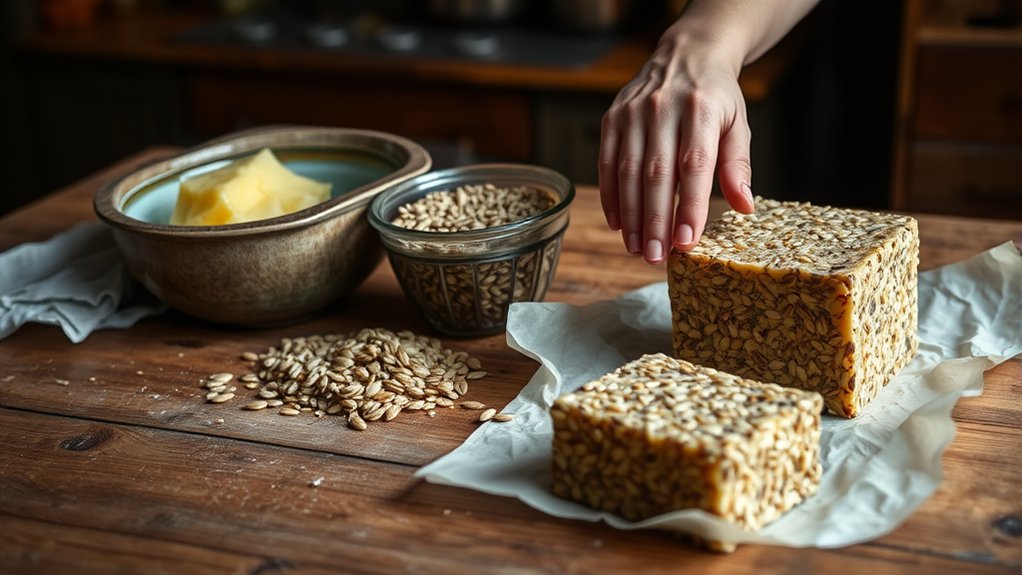
Before you start mixing, gather all the ingredients and supplies you’ll need to make bird suet. Knowing what to collect is vital, especially if you want to support birds during migration or in urban habitats.
You’ll need suet or animal fat as a base, which provides the high-energy fuel migrating birds need for their long journeys. Add in seeds, nuts, and dried fruits to attract a variety of species commonly found in city parks and gardens.
A mixing bowl and a mold or container to shape the suet are also necessary. Consider using ingredients safe for birds and locally available to encourage native birds passing through or residing in urban habitats.
Having everything on hand before you start ensures a smooth process and helps you create suet that effectively supports bird migration patterns and urban wildlife. This preparation sets the stage for making a nutritious treat that keeps birds energized and thriving.
Mix and Prepare Your Bird Suet Recipe
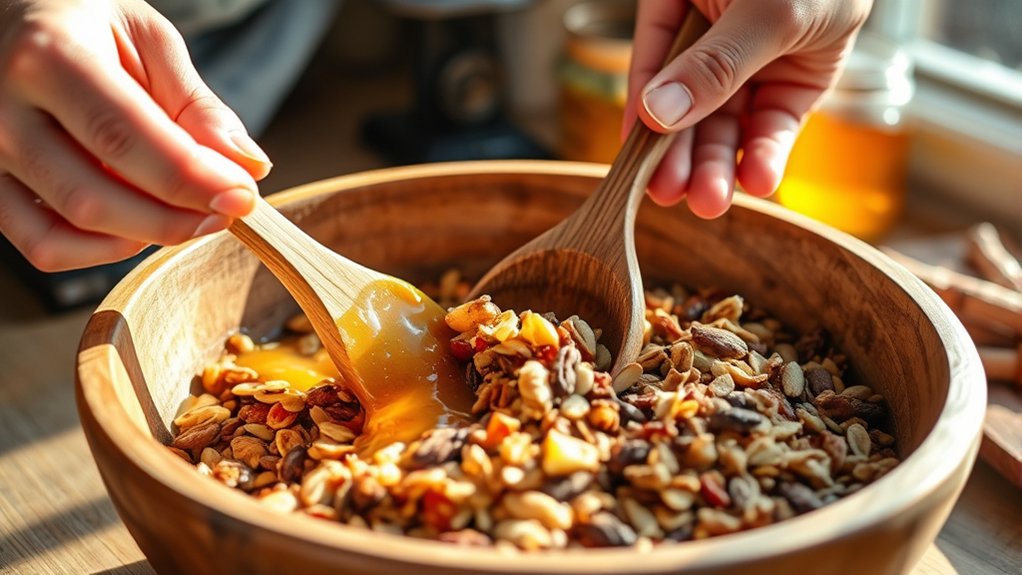
With all your ingredients and supplies ready, you can now mix the suet base with seeds, nuts, and dried fruits to create a nutritious blend. Start by melting your fat or suet base gently, then stir in your chosen mix-ins. Remember, bird species preferences vary. Woodpeckers enjoy peanuts and sunflower seeds, while chickadees prefer smaller seeds like millet. Tailor your recipe accordingly to attract the birds you want.
If you need suet ingredient substitutions, use lard or coconut oil instead of beef fat for a different texture and shelf life. You can swap out sunflower seeds for safflower seeds or pumpkin seeds if you want to cater to specific birds or deal with allergies. Keep dried fruits unsweetened and chopped small to ensure easy feeding.
Mix everything thoroughly, then pour into molds or containers before it solidifies. This step ensures your homemade bird suet is ready to nourish a variety of feathered friends.
Store Bird Suet Properly and Hang It to Attract Birds

Once your bird suet has set, you’ll want to store it properly to keep it fresh and safe from melting or spoilage. Store any unused suet in an airtight container in the refrigerator or freezer, especially if you’ve made multiple suet flavor options. This helps preserve the suet’s quality and prevents it from becoming rancid.
When hanging your suet, consider feeder placement carefully. Choose a shady spot away from direct sunlight to avoid melting. Position the feeder where you can easily observe visiting birds but also where predators can’t reach it.
Keep these tips in mind for best results:
- Hang suet feeders about 5 feet off the ground for safety.
- Avoid windy areas to prevent suet from falling.
- Rotate suet flavors regularly to attract a variety of birds.
- Clean feeders regularly to maintain hygiene.
Frequently Asked Questions
What Types of Birds Are Attracted to Homemade Suet?
You’ll attract woodpeckers, chickadees, nuthatches, and titmice with homemade suet because their bird diet includes high-energy fats, especially in winter. These birds have food preferences for fatty, protein-rich treats that suet provides.
You might also see wrens and some sparrows stopping by. By offering suet, you cater to their nutritional needs and food preferences, helping them stay healthy and active during colder months when natural food is scarce.
Can Suet Be Used Year-Round in All Climates?
You can use suet year-round, but it depends on your climate. For example, in hot southern states, suet ingredients like fat melt quickly in summer, making it messy and less effective for bird feeding.
In cooler areas, suet stays solid longer, attracting birds throughout the year. To keep suet usable in warm months, try adding alternatives like peanut butter or using specially formulated blocks designed for heat resistance.
Are There Any Safety Concerns for Birds Eating Suet?
Yes, you should watch out for bird health when offering suet. Some suet ingredients, like spoiled fat or added salt and sugar, can harm birds. Always use fresh, natural ingredients without additives.
Also, avoid suet during hot weather since it can melt and spoil quickly, leading to bacterial growth that affects bird health. Regularly clean feeders to prevent disease, and choose suet recipes suited for the local climate to keep birds safe and healthy.
How Often Should Suet Feeders Be Cleaned?
How often should you clean suet feeders to keep birds healthy? You should clean them at least once every two weeks, especially if you feed birds frequently. If feeding frequency increases, clean more often to prevent mold and bacteria buildup.
Use hot, soapy water and rinse thoroughly. These cleaning tips help guarantee your feathered friends stay safe and enjoy fresh suet. Don’t let dirty feeders spoil their tasty treats!
Can Suet Help Deter Pests Like Squirrels?
Yes, suet can help with squirrel resistance if you use pest deterrent strategies. You’ll want to choose suet blends designed to deter squirrels, often containing ingredients they dislike, like hot pepper flakes.
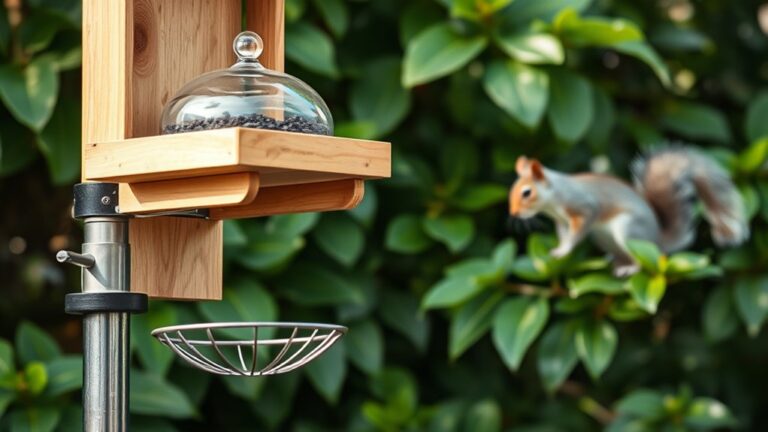
Placing suet feeders with built-in squirrel guards or hanging them strategically also boosts your chances. While suet alone won’t completely stop squirrels, combining these tactics makes your feeder less attractive to pests and helps protect your bird food.
Conclusion
Now that you’ve made your own bird suet, you’re ready to welcome feathered friends to your yard. Just like Sarah, who saw her backyard fill with cheerful chickadees after hanging her homemade suet, you’ll enjoy watching birds up close.
It’s simple, rewarding, and a wonderful way to connect with nature. So, hang your suet, grab a cup of coffee, and enjoy the lively show right outside your window.
Making bird suet is a great way to attract and observe birds, bringing nature closer to home.