What Does a Bird Eat in the Wild?
If you’ve ever tried to attract birds to your backyard or simply wondered what they eat in the wild, you’re not alone. Many people struggle to understand their dietary needs and how those change throughout the year. Knowing what birds eat can help you provide the right food or create the perfect environment for them to thrive.
In the wild, birds eat a variety of foods depending on where they live and the time of year. You’ll see them eating insects, seeds, nuts, fruits, nectar, small animals, and even fish.
Their diets shift with the seasons, with high-protein insects during breeding and energy-rich seeds or berries before migration. They use unique hunting and foraging methods, sometimes storing food for leaner times.
Keep exploring to uncover how these habits shape their survival and behavior.
Key Takeaways
- Birds eat a variety of foods including insects, seeds, fruits, nuts, small animals, and aquatic prey depending on habitat and season.
- Insects and small animals provide essential proteins and fats, especially during breeding and migration periods.
- Fish and aquatic creatures are important for species like herons and kingfishers that hunt in wetlands and shallow waters.
- Fruits, seeds, nuts, and nectar supply energy-rich sugars and calories crucial for migration and reproductive health.
- Birds use diverse foraging techniques and may store surplus food to survive seasonal scarcity and environmental changes.
Overview of Wild Bird Diets

Although bird diets vary widely, understanding what wild birds eat helps you support their health and habitat. You’ll notice that birds adjust their feeding habits based on migratory patterns, which influence the availability of food sources throughout the year.
For example, some species switch from insects to seeds as they travel to different regions. Nesting diets are especially critical since birds need more protein and energy to raise their young. You can observe that many birds increase their intake of insects or other high-protein foods during breeding season to guarantee their chicks grow strong.
Knowing these changes allows you to provide appropriate food if you’re feeding birds or managing habitats. By paying attention to these seasonal diet shifts, you’ll better understand how birds meet their nutritional needs as they move and reproduce, helping you make informed decisions about supporting wild bird populations.
How Habitat Influences Bird Diets

You’ll notice that what birds eat changes depending on where they live. For example, forest birds tend to rely on insects and fruits. On the other hand, wetland birds often feast on aquatic creatures. Then there are urban birds, which adapt by scavenging from human sources and local plants. It’s pretty interesting how their diets shift with their habitats!
Forest Birds’ Food Sources
Because the forest offers a complex mix of plants, insects, and other food sources, birds living there have diets distinctly shaped by their surroundings. You’ll notice their migration patterns and nesting behaviors influence what they eat.
Forest birds adapt to seasonal changes, feeding on:
- Insects and larvae found under bark or in leaf litter, providing protein during breeding seasons.
- Fruits, nuts, and seeds, which supply energy especially in fall and winter when insects are scarce.
- Small amphibians or reptiles, consumed by larger species needing more substantial meals.
Wetland Diet Variations
Birds in wetlands face a very different set of dietary options compared to those in forests. You’ll notice that wetland birds rely heavily on wetland vegetation like reeds and aquatic plants, which provide both food and shelter.
Insects, small fish, and crustaceans also make up a large part of their diet, especially species living in areas where water quality supports diverse aquatic life. When water quality is high, you’ll find more abundant and varied prey, allowing birds to eat a balanced diet.
Conversely, poor water quality can limit food sources, forcing birds to adapt their feeding habits. So, the habitat’s characteristics directly influence what wetland birds eat, shaping their survival strategies in these unique ecosystems.
Urban Birds’ Eating Habits
Although urban environments differ greatly from natural habitats, many bird species have adapted their diets to thrive in cities. You’ll notice that urban noise and human activity affect not only where birds settle but also what they eat. Some birds adjust their feeding habits due to these changes, especially during bird migration when they need reliable food sources.
Here’s how urban living influences their diet:
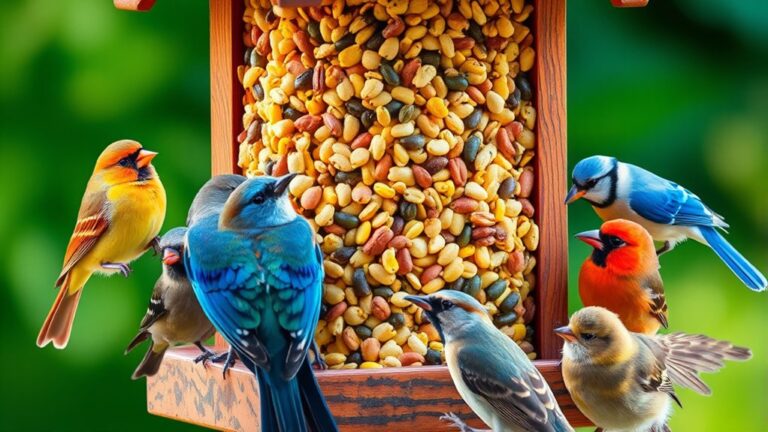
- Birds often rely on human food scraps and bird feeders, supplementing their natural diet.
- Insects attracted to city lights become a crucial protein source.
- Some species consume more seeds and fruits from non-native plants found in parks and gardens.
How Do Birds’ Diets Change With the Seasons?

As the seasons shift, you’ll notice that the types of food available to wild birds change dramatically, prompting them to adjust their diets accordingly. In spring and summer, many birds focus on protein-rich meals to support their nesting habits. They feed on seeds, fruits, and small animals to fuel egg production and chick growth.
As temperatures drop, their diet shifts to energy-dense foods like nuts and berries. This helps them build fat reserves to endure colder months.
You’ll also see changes influenced by migration patterns. Birds that travel long distances often eat heavily before departure, stocking up on high-calorie foods. Meanwhile, resident species adapt locally, switching from fresh insects and fruits to stored seeds or buds.
Why Birds Love Eating Insects and Bugs
Because insects and bugs offer a concentrated source of protein and nutrients, many wild birds rely on them as a primary food source. You’ll notice birds especially target insects during critical times, like when their migratory patterns bring them to nutrient-rich areas or when they prepare their breeding diets. Insects fuel their energy and support chick growth.
Insects provide wild birds with essential protein and nutrients, especially during migration and breeding seasons.
Here’s why birds love eating insects and bugs:
- High Nutritional Value Insects pack essential proteins, fats, and vitamins that birds need for survival and reproduction.
- Abundance During Breeding Birds increase insect consumption during breeding seasons to feed their rapidly growing chicks.
- Energy for Migration Insects provide quick, dense energy, helping birds sustain long migratory flights.
Fruits and Berries in Wild Bird Diets
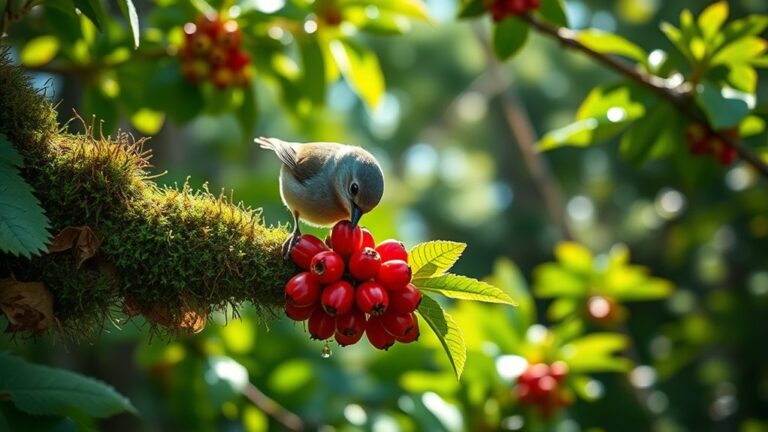
Insects might be a favorite for many birds, but fruits and berries also play a big role in their diets. You’ll notice that many bird species rely on these natural sweets, especially during certain times of the year. Fruits and berries provide essential sugars and nutrients that fuel long journeys, making them vital for birds during migration patterns.
When you observe birds on the move, they often stop in areas rich with fruit-bearing plants to refuel. Besides energy, fruits and berries also influence nesting preferences. Some birds choose nesting sites close to abundant fruit sources, ensuring easy access to food for their chicks.
This proximity helps parents feed their young efficiently without straying far from the nest. By understanding how fruits and berries fit into wild bird diets, you can better appreciate how these natural foods support survival, growth, and reproduction throughout the seasons.
Seeds and Nuts: Bird Diet Staples
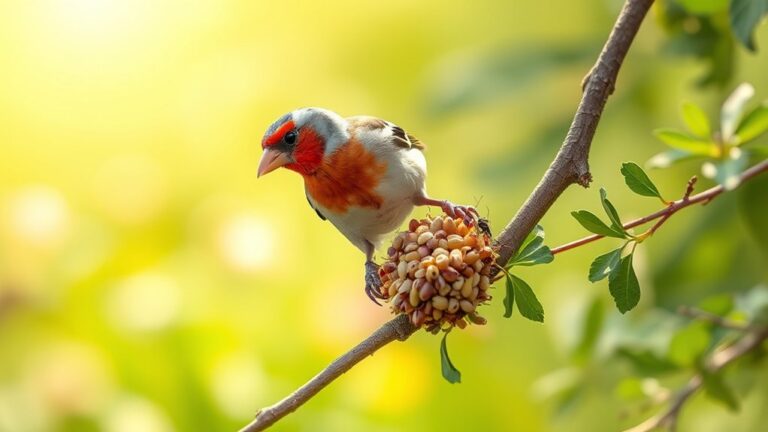
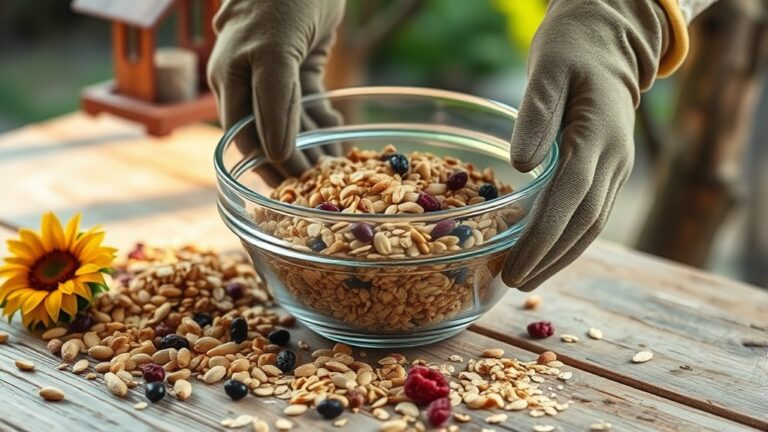
While birds might enjoy a variety of foods, seeds and nuts remain essential staples in their diets year-round. You’ll notice these foods provide the energy birds need, especially during migration patterns when they travel long distances. Seeds and nuts are calorie-dense, helping birds fuel their journeys and survive colder months.
Seeds and nuts are vital, providing birds with essential energy for long migrations and cold seasons.
Besides nutrition, these items contribute to nest building materials. Some birds gather seed husks and nut shells to reinforce nests, adding insulation and protection for their young.
Here’s why seeds and nuts are indispensable for birds:
- Energy Source: They offer concentrated fats and proteins essential for endurance during migration.
- Seasonal Availability: Seeds remain accessible even when fruits or insects are scarce.
- Nest Construction: Husks and shells serve as durable, insulating materials.
The Role of Nectar and Flowers in Bird Diets
Even though seeds and nuts provide essential energy, many birds rely on nectar and flowers to meet their dietary needs. When you observe hummingbirds or orioles, you’ll notice their keen preference for floral nectar, which offers a quick source of sugar fueling their high-energy activities.
Nectar also plays a significant role during migratory patterns, supplying needed calories for long journeys. As a result, these birds often time their migration to coincide with blooming seasons.
When you consider nesting diets, nectar-rich flowers contribute important nutrients that support egg production and chick growth. You’ll find that flower-visiting birds often supplement nectar with pollen or soft floral parts, ensuring a balanced intake.
Small Animals and Fish in Bird Diets
You’ll find that many birds eat small animals like insects, amphibians, and rodents to get the protein they need. And some don’t stop there—they even catch fish, usually going after those that hang out near the water’s surface. It’s pretty fascinating to watch how they hunt. You’ll see all kinds of techniques, from quick swooping grabs to patiently stalking their prey.
Types Of Small Animals
Because many birds rely on protein-rich diets, small animals and fish play an essential role in their nutrition. When you observe birds, you’ll notice their migration patterns and nesting behaviors often influence their choice of prey. Small animals provide fundamental energy during these demanding periods.
Here are three common types of small animals birds consume:
- Insects and Arachnids These are abundant and easy to catch, fueling birds during migration and nesting.
- Amphibians Frogs and salamanders offer a rich protein source, especially near wetlands.
- Small Rodents Mice and voles provide substantial nutrition, indispensable for larger bird species.
Understanding these types helps you appreciate how birds adapt their diets to survive and thrive in the wild.
Fish Species Birds Consume
What types of fish do birds typically hunt to meet their dietary needs? You’ll often find birds preying on small, freshwater fish like minnows, sticklebacks, and young trout. These fish provide essential nutrients that support energy-intensive activities such as mating behaviors and long migration patterns.
Birds adjust their fish choices based on availability, which fluctuates with seasonal changes affecting migration routes. For example, herons and kingfishers target shallow waters where these fish thrive during breeding seasons.
You’ll notice that fish-rich diets help birds maintain stamina for courtship displays and the demanding flights during migration. Understanding which fish species birds consume sheds light on their survival strategies and how their diet intertwines with their life cycles and environmental rhythms.
Hunting Techniques For Prey
Birds don’t just rely on the types of prey available. They actively use a variety of hunting techniques to catch their food. Understanding these methods helps you appreciate how birds adapt to their environment, especially as migration patterns influence prey availability.
Here are three key techniques birds use to capture small animals and fish:
- Plunge diving: Birds like kingfishers plunge sharply into water to catch fish. They then use the catch not only for food but sometimes as nesting materials.
- Stalking and pouncing: Raptors quietly approach small mammals before striking quickly to secure a meal.
- Surface skimming: Some birds fly low over water, scooping fish or insects from the surface with their beaks.
How Birds Forage and Store Food in the Wild
How do wild birds find and manage their food daily? You’ll notice birds adapt their foraging based on migration patterns and nesting behaviors. During migration, they seek high-energy foods to fuel long flights. When nesting, they focus on nutrient-rich items to feed chicks.
Many birds forage by pecking, probing, or catching insects mid-air. To handle surplus food, some species store it strategically. This caching helps them survive when resources are scarce.
| Foraging Method | Food Type |
|---|---|
| Pecking | Seeds, insects |
| Probing | Worms, larvae |
| Aerial Catching | Flying insects |
| Caching | Nuts, berries |
You can see wild birds are efficient foragers and smart storers, adjusting to environmental shifts. Understanding these tactics gives you insight into their survival strategies.
What Bird Diets Reveal About Behavior and Health
Although diets vary widely across species, they reveal a lot about a bird’s behavior and overall health. When you observe what a bird eats, you gain insight into its daily habits, survival strategies, and even its role in the ecosystem. Understanding diet helps you connect the dots between nutrition and crucial behaviors like bird migration patterns and nesting site selection.
Here are three key takeaways to contemplate:
- Diet influences energy levels essential for long migratory flights; birds consuming high-fat seeds or insects fuel these journeys efficiently.
- Nutritional needs impact nesting site selection since birds prefer habitats abundant in their preferred food, ensuring easier feeding for their chicks.
- Changes in diet can signal environmental stress or health problems, alerting you to possible habitat degradation or disease outbreaks.
Frequently Asked Questions
How Do Birds Digest Different Types of Food?
You digest different foods based on your feeding behaviors and dietary adaptations. Your beak shapes how you pick up food, while your digestive system adjusts to break down what you eat.
For example, birds with strong gizzards grind seeds, and those eating insects have enzymes to process protein quickly. These adaptations guarantee you efficiently extract nutrients, whether you’re munching on fruits, seeds, or small animals.
This helps you thrive in diverse environments.
Do All Birds Eat the Same Foods Within a Habitat?
You can’t paint all birds with the same brush regarding feeding behaviors. Even within one habitat, their dietary preferences vary widely. Some birds might feast on insects, while others prefer seeds or nectar.
These differences help reduce competition for food, letting each species thrive. So, no, not all birds eat the same foods; their diets reflect their unique needs and adaptations.
How Do Baby Birds Learn What to Eat?
Baby birds learn what to eat by observing their parents’ feeding habits closely. You’ll notice that parent birds bring specific foods to their chicks, shaping their food preferences early on.
As a baby bird grows, it starts to mimic these behaviors, gradually trying different foods offered by the parents. This hands-on learning guarantees they develop the right feeding habits suited for their species and environment.
Can Birds Survive on Human Food in the Wild?
You can see birds survive on human food in urban feeding situations because of their food plasticity, the ability to adapt their diet. However, relying too much on processed or unhealthy human food can harm them.
While they might eat bread or snacks you offer, these don’t provide the nutrients they need long-term. So, you should offer bird-safe foods and avoid encouraging dependency on unsuitable human meals.
How Do Migratory Birds Find Food During Travel?
Think of migratory birds as skilled navigators following a treasure map. You’ll find they rely on migration patterns to anticipate where food is abundant along their route.
Their foraging strategies adapt to different environments, allowing them to efficiently scout for insects, berries, or seeds. By reading natural cues and adjusting their diet, they keep their energy up during long journeys, ensuring they don’t run out of fuel before reaching their destination.
Conclusion
You might be surprised to learn that over 90% of wild birds rely on insects at some point, highlighting how essential bugs are to their survival. Understanding what birds eat helps you appreciate their role in the ecosystem and how they adapt to changing seasons and habitats.
Next time you watch a bird, remember its diet isn’t just about food. It’s a window into its behavior and health, revealing the fascinating complexity of wildlife around you and showing why knowing what does a bird eat in the wild matters so much.