What to Feed a Bird: Top 10 Healthy Options
If you’re trying to feed birds but find yourself unsure what’s truly healthy for them, you’re not alone. Many people struggle with choosing the right foods that provide proper nutrition without harming their feathered visitors. Finding the perfect balance can feel overwhelming, but it’s easier than you think once you know the basics.
To feed a bird well, offer nutrient-rich favorites like sunflower seeds for energy, millet for quick carbs, and safflower for protein. Add fresh fruits like berries and apples for vitamins and hydration, plus leafy greens and carrots for extra nutrition.
Include high-fat suet during colder months and protein-packed insects or mealworms in spring. Avoid processed or salty snacks, and keep feeders clean. Keep these basics in mind to support your birds year-round, with more helpful tips just ahead.
Key Takeaways
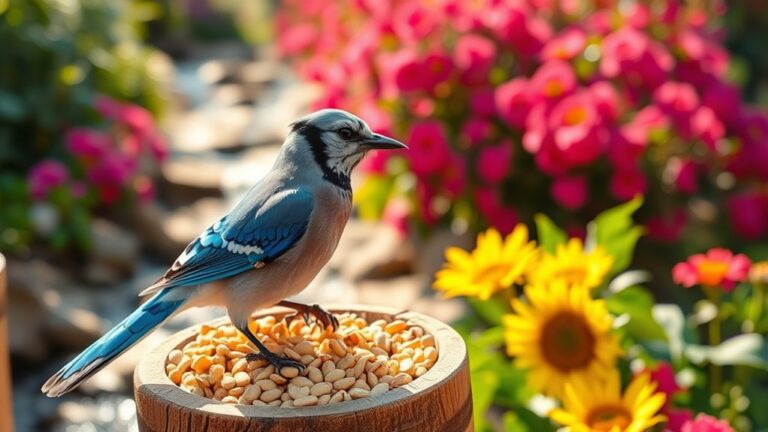
- Provide high-energy sunflower seeds and nyjer to boost bird metabolism and attract finches. These seeds are favorites and help keep birds active and healthy.
- Offer fresh fruits like apples and berries for vitamins, hydration, and natural sugars. Birds love the sweetness, and it’s a great way to support their diet naturally.
- Include protein sources such as mealworms and insects during nesting and migration seasons. Protein is crucial for growth and energy during these busy times.
- Feed suet blocks in winter for essential fats that support warmth and energy. Suet helps birds survive cold weather by giving them the calories they need.
- Avoid processed, salty, or sugary foods to maintain bird health and encourage natural foraging. Sticking to natural options keeps birds safe and thriving.
How to Choose Healthy Foods to Feed Birds

When choosing healthy foods to feed birds, focus on natural, nutrient-rich options that support their energy and growth. You’ll want to take into account how bird migration and nesting habits affect dietary needs.
During migration, birds need high-energy foods to fuel their long journeys, so offering fat-rich foods like suet or nuts can help. When nesting, birds require protein to support chick development, so insects or mealworms are excellent choices.
Birds need fat-rich foods during migration and protein-rich foods like insects when nesting.
You can also provide fresh fruits and vegetables to supply essential vitamins. Avoid processed or sugary foods that can harm their health.
Understanding the seasonal changes in bird activity helps you tailor their diet effectively. By matching food choices to their natural behaviors, you’ll support birds through critical periods like migration and breeding.
This approach ensures they get the nutrients necessary for survival and reproduction, keeping your local bird population healthy and thriving.
Best Seeds for Wild and Pet Birds

You’ll want to focus on seeds that offer the right balance of nutrients for your birds’ health. It’s important to know which seed varieties are popular and packed with nutrition, so you can make the best choice. Let’s take a look at some of the top seeds for both wild and pet birds.
Nutritional Value Breakdown
How do you choose the best seeds to keep your wild or pet birds healthy and energetic? Understanding their nutritional value helps you support birds during bird migration and nesting habits when energy demands rise. Seeds rich in fats provide fuel, while those with protein aid feather growth and repair.
Here’s a quick breakdown:
| Seed Type | Key Nutritional Benefit |
|---|---|
| Sunflower | High fat, energy-dense |
| Millet | Rich in carbohydrates |
| Safflower | Good fat and protein source |
| Nyjer (Thistle) | High oil content, supports metabolism |
Popular Seed Varieties
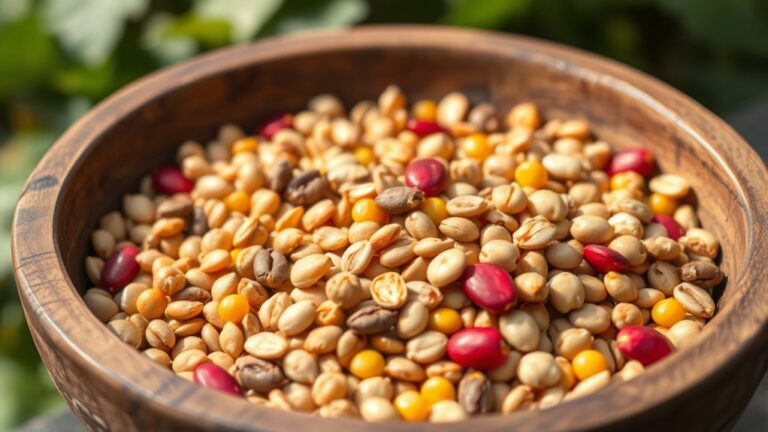
Several popular seed varieties form the foundation of a healthy diet for both wild and pet birds. Black oil sunflower seeds are a favorite, packed with fat and protein, perfect for boosting energy during nesting behaviors.
Millet is another excellent choice, especially for smaller birds, providing essential nutrients without overwhelming them. Nyjer seeds attract finches, encouraging vibrant bird vocalizations as they gather around feeders.
Safflower seeds appeal to cardinals and grosbeaks, supporting their dietary needs during breeding seasons. When selecting seeds, consider variety to mimic natural diets and promote healthy behaviors.
Fresh Fruits to Feed Birds and Their Benefits

You can boost your bird’s health by offering fresh fruits packed with vitamins and natural sugars. It’s a simple way to give them a tasty, nutritious treat. When you pick bird-friendly options like apples, berries, and melons, you’re making sure they get something safe and good for them. So, let’s take a closer look at which fruits are best and why they’re great for your feathered friends.
Nutritional Value Of Fruits
Why do birds benefit so much from fresh fruits? Fresh fruits provide essential nutrients that support crucial activities like bird migration and nest building. When you offer fruits, you’re giving birds a natural source of energy and vitamins.
Here are three key nutritional benefits:
- Energy Boost: Fruits are rich in natural sugars, helping birds fuel long migrations.
- Vitamin Supply: Vitamins A and C in fruits promote healthy feathers and immune systems.
- Hydration: High water content in fruits keeps birds hydrated, especially during nest building.
Bird-Friendly Fruit Choices
Fresh fruits offer birds a natural boost, but not all fruits provide the same benefits or attract the same species. You can feed birds slices of apples, berries, grapes, or melon to support their feather color and overall health.
These fruits are rich in vitamins that improve the vibrancy of their plumage, making them more attractive to mates. Offering fruits like oranges and bananas can also encourage birds to stay near your feeders.
This positively influences their nesting habits by providing easy access to nutritious food during breeding season. Remember to avoid fruits with pesticides or added sugars.
Vegetables That Boost Bird Nutrition
Although birds can eat a variety of foods, incorporating certain vegetables into their diet markedly boosts their nutrition. Vegetables provide essential vitamins and minerals that support a bird’s energy, especially during demanding times like bird migration or nest building. You’ll want to offer fresh, safe options that strengthen their strength and overall health.
Here are three vegetables to focus on:
- Leafy greens like kale and spinach supply calcium and vitamin A, vital for bone strength and feather health.
- Carrots are rich in beta-carotene, which improves eyesight and immune function, important when birds are on the move.
- Peas provide protein and fiber, aiding digestion and muscle development needed for nest building activities.
Safe Nuts Birds Can Eat and How to Offer Them
Vegetables provide great nutrients, but adding nuts to your bird’s diet can offer healthy fats and protein that support energy and feather condition. Safe nuts like unsalted almonds, walnuts, and pecans are excellent choices. These nuts mimic natural food sources birds might gather during bird migration or while preparing for nesting habits.
They provide the energy birds need to fly long distances or build strong nests. When offering nuts, chop them into small pieces to prevent choking and make them easier to digest. Avoid salted or flavored nuts, as additives can harm birds.
You can scatter nuts on the ground or place them in feeders designed for larger seeds and nuts. Offering nuts occasionally complements their natural diet, especially during colder months or breeding seasons when energy demands increase.
Grains and Cereals Suitable for Birds
When you include grains and cereals in a bird’s diet, you provide essential carbohydrates and fiber that fuel their daily activities. These foods support energy needs, helping birds stay active for feather grooming and nest building. You can offer a variety of grains and cereals that are both nutritious and appealing.
Here are three great options to contemplate:
- Oats Rolled or whole, oats supply fiber and aid digestion, helping birds maintain healthy feathers.
- Millet A favorite for many small birds, millet is easy to digest and provides quick energy.
- Brown rice A whole grain rich in nutrients that supports stamina during flight and nest construction.
Avoid processed cereals with added sugars or salts. By feeding these wholesome grains, you contribute to a bird’s overall health and natural behaviors, ensuring they thrive in your care.
Why Birds Need Suet and How to Feed It
You’ll want to offer suet because it gives birds a great boost of energy, especially when the weather turns cold. It’s like a little power snack for them. To feed it safely, use a suet feeder that keeps the fat secure and clean. That way, you attract all kinds of birds while making sure they stay healthy.
Benefits of Suet
Why do birds flock to suet feeders, especially in colder months? Suet provides essential energy that helps birds survive harsh weather and supports vital activities like bird migration and nesting behaviors. When you offer suet, you’re giving birds a high-calorie food source that fuels their daily needs. Here are three key benefits of suet:
- Energy Boost: Suet’s fat content supplies quick energy, which is indispensable for birds during cold seasons and long migrations.
- Supports Nesting: During nesting seasons, birds need extra calories to build nests and care for young.
- Attracts Diverse Species: Suet appeals to insect-eaters and insectivores who rely on fat for survival in winter.
Safe Suet Feeding Methods
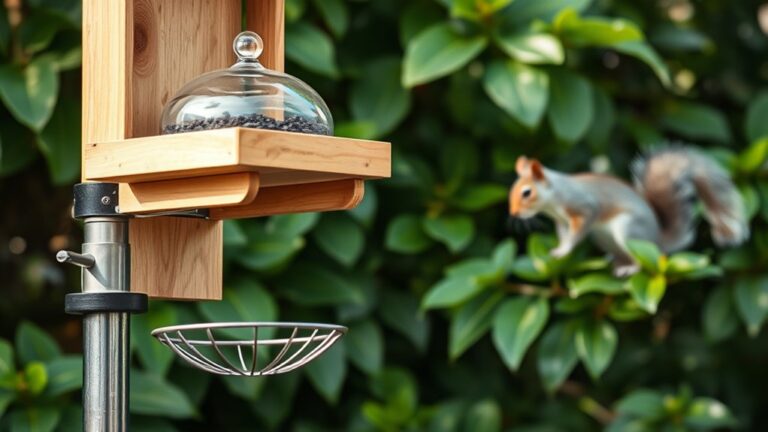
Because birds rely on suet for essential energy, especially in cold weather, feeding it safely guarantees they get the benefits without harm. You should offer suet in specialized feeders that keep it protected from rain and pests, preventing spoilage.
Place feeders away from windows to avoid bird collisions during bird migration seasons. Clean feeders regularly to stop mold and bacteria growth, which can harm birds. Remember, suet supports birds not only in harsh weather but also during nest building, providing crucial fats for feather growth and energy.
Avoid suet mixed with harmful additives and choose natural suet blocks with seeds or insects. By following these safe feeding methods, you help birds thrive through migration and nesting periods while minimizing risks associated with improper suet feeding.
Including Mealworms and Insects in Bird Diets
Although many birds naturally hunt for insects, including mealworms in their diet can provide a valuable protein boost that supports growth, breeding, and overall health. You’ll find that mealworms and other insects are especially beneficial during bird migration and nesting habits, when energy demands peak. Offering these protein-rich treats encourages stronger feathers and healthier chicks.
To successfully include mealworms and insects in your bird feeding routine, remember:
- Choose live or dried mealworms to suit your bird species’ preferences and local climate.
- Offer insects in moderation, mixing them with seeds or fruits to maintain a balanced diet.
- Guarantee insects come from safe, pesticide-free sources to avoid harming the birds.
Foods to Avoid and Common Feeding Mistakes
When feeding birds, you need to steer clear of certain foods that can harm their health or disrupt their natural diet. Avoid offering bread, salty snacks, or processed foods, as these provide little nutrition and can cause digestive issues. Also, don’t feed birds foods with added sugar or artificial ingredients, which may interfere with their energy during bird migration.
A common mistake is overfeeding, which can discourage birds from foraging naturally or interfere with their nesting behaviors. Excess food can attract pests or cause mold growth, posing risks to both birds and their environment. Make sure to clean feeders regularly to prevent disease spread, especially during sensitive periods like migration and nesting.
Seasonal Foods and Tips for a Balanced Feeding Routine
As the seasons change, you’ll want to adjust the foods you offer to match birds’ shifting nutritional needs. During spring and early summer, birds focus on nest building and raising young, so provide protein-rich foods like mealworms and chopped nuts.
In fall, many species prepare for bird migration, requiring high-energy foods such as seeds and berries. Winter calls for high-fat options to help birds stay warm.
To maintain a balanced feeding routine year-round, keep these tips in mind:
- Rotate food types seasonally to support different life stages and activities.
- Offer fresh water daily, especially during migration and nest building periods.
- Keep feeders clean to prevent disease and encourage regular visits.
Frequently Asked Questions
How Often Should I Clean My Bird Feeder?
You should clean your bird feeder at least once every two weeks to prevent mold and bacteria buildup. If you use seed types that attract moisture or spoil quickly, like sunflower seeds or mixed blends, cleaning more often, about once a week, is best.
Regular feeder maintenance keeps birds healthy and encourages more visits. Always empty old seeds, scrub with warm soapy water, rinse thoroughly, and let it dry before refilling.
Can Feeding Birds Affect Local Wildlife Populations?
Yes, feeding birds can impact native species by altering their natural behaviors and increasing competition for resources. When you put out food, some species may dominate the feeder, pushing others away and disrupting local wildlife balance.
You need to be mindful of this impact on native species by offering appropriate food and cleaning feeders regularly to minimize disease spread. This way, you help support rather than harm local ecosystems.
What Is the Best Time of Day to Feed Birds?
The best time to feed birds is early morning and late afternoon. You’ll find bird feeding schedules work well when you offer food at these times because birds are most active then.
In colder seasons, feed them more often to help with energy needs. During warmer months, reduce feeding frequency to encourage natural foraging.
Following seasonal feeding tips guarantees birds stay healthy and keep visiting your feeders regularly.
How Do I Attract Specific Bird Species to My Feeder?
To attract specific bird species, you’ll want to research native species in your area and their seasonal preferences. Choose feeders and food that appeal to those birds during the right time of year. For example, hummingbirds prefer nectar in summer, while finches favor thistle seeds in fall.
Plant native flowers and shrubs to provide natural food and shelter. Adjust your feeder type and placement to match the habits of the birds you want to see.
Are There Any Health Risks to Humans From Feeding Wild Birds?
When you feed wild birds, imagine a delicate dance where disease transmission can slip through unnoticed cracks. Yes, bird disease transmission can pose risks to you, especially if you touch feeders or bird droppings without care.
To stay safe, you should practice human hygiene precautions. Wash your hands thoroughly after handling feeders and avoid close contact with sick-looking birds. This way, you keep your sanctuary safe for both you and your feathered visitors.
Conclusion
Feeding birds is like tending a vibrant garden. Each seed, fruit, and nut you offer plants a little joy and health in their world. By choosing wisely, you’re not just giving food; you’re nurturing wings that dance through the sky.
Remember, a balanced diet is the sunlight and water they need to thrive. So, fill your feeders with care, and watch nature’s colorful messengers flourish in your backyard. What to feed a bird matters, because healthy options help them stay strong and lively.