How to Get Rid of Whiteflies on Plants in 7 Steps
Dealing with whiteflies on your plants can be incredibly frustrating. You’re not alone—many plant lovers struggle with these tiny pests that sap the life out of greenery and leave behind sticky residue.
If you’ve been searching for reliable ways to protect your plants, you’ve come to the right place.
To get rid of whiteflies on plants, first check the undersides of leaves for tiny white insects, sticky honeydew, and yellowing foliage.
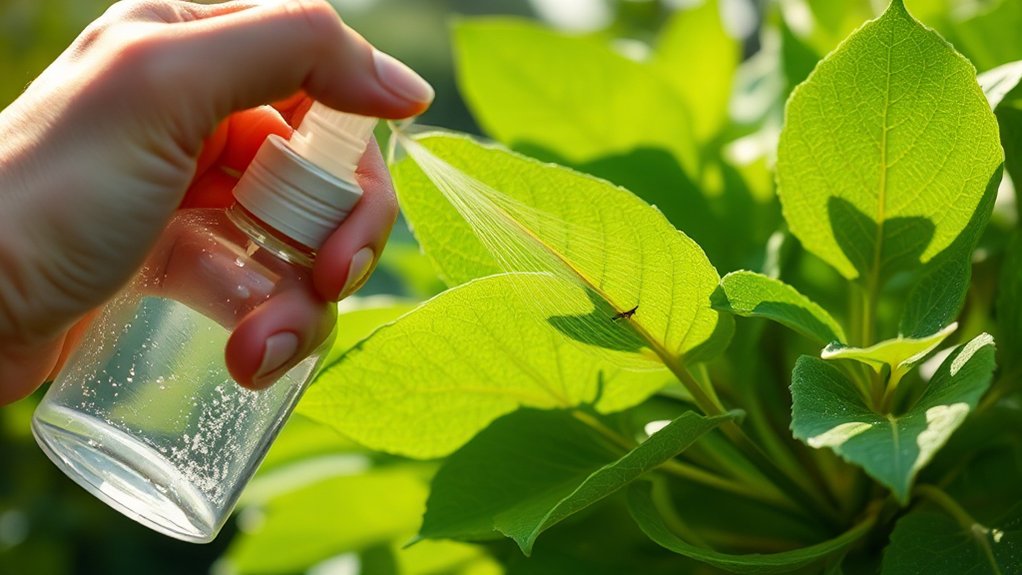
Isolate the infested plant right away, then rinse the leaves with a strong spray of water.
Remove eggs and nymphs by hand when you can, and spray insecticidal soap on both sides of the leaves.
Set sticky traps nearby, and keep watching new growth so you can stop them from coming back and learn a few extra tricks.
Key Takeaways
- Inspect the undersides of leaves for whiteflies, sticky honeydew, and yellowing foliage to confirm an infestation early.
- Isolate infested plants immediately to prevent whiteflies from spreading to nearby healthy plants.
- Rinse leaves with a strong water spray every few days, focusing on the undersides where whiteflies hide.
- Treat plants with insecticidal soap and place sticky traps near the top of infested plants to catch adults.
- Prevent future infestations by monitoring new growth, avoiding excess nitrogen, and introducing beneficial insects when possible.
How to Spot Whiteflies on Plants
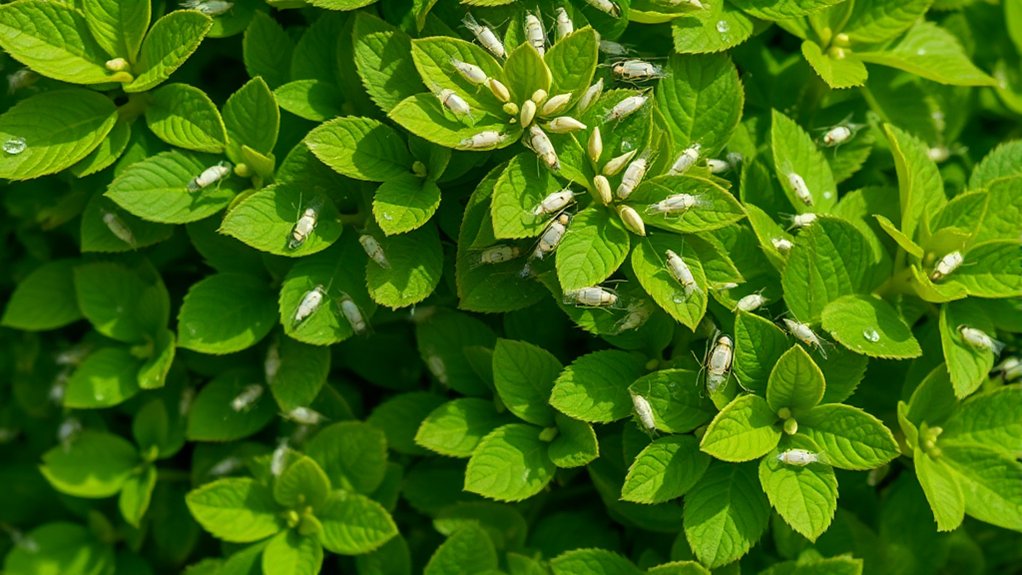
To spot whiteflies on your plants, check the undersides of leaves for tiny, white, moth-like insects that flutter up when you disturb the foliage. For accurate whitefly identification, look closely at new growth, where they often gather in clusters.
You may also notice sticky honeydew on leaves or nearby surfaces, which signals an active infestation. Another clue is pale, yellowing foliage that loses vigor over time.
As feeding continues, leaves can curl, wilt, or drop early, and your plant may seem stressed even when you water and feed it properly. Use a flashlight or hand lens if the insects are hard to see, since adults and nymphs can blend into the leaf surface.
Check several plants, not just one, because whiteflies spread quickly. Catching these pest symptoms early helps you act before the damage becomes severe.
Isolate Infested Plants Immediately
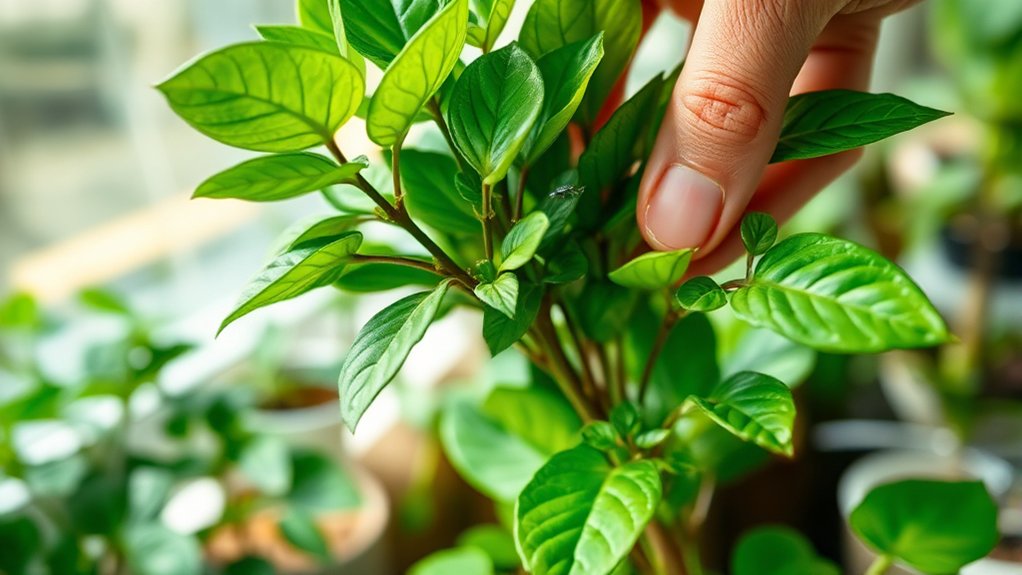
Move the infested plant away from your other plants right away so whiteflies don’t spread. Also, check nearby plants for signs of infestation, since these pests can move fast. By isolating the problem early, you can stop the outbreak before it gets worse.
Move Plants Away
If you spot whiteflies, separate the infested plant right away so the pests don’t spread to nearby plants. Move it to a different room, porch, or sheltered spot where you can work on it without crowding other greenery. This plant relocation step gives you better control and supports faster pest management.
- Carry the pot carefully to avoid shaking loose adults.
- Place it several feet from other plants and keep air moving around it.
- Set it on a tray or tarp to catch fallen insects and debris.
Keep tools, watering cans, and gloves dedicated to the isolated plant until you finish treatment. By moving it fast, you limit escape routes and make every next step easier.
Check Nearby Plants
Check every plant nearby right away, because whiteflies can spread fast from one pot to the next. Inspect leaves, stems, and undersides for tiny white insects, sticky residue, and yellowing. You should focus on the closest plants first, then widen your check to the whole area.
Good pest monitoring helps you catch an outbreak before it gets out of hand. If you find more than one affected plant, separate each one so you can assess its plant health without confusion.
Use a flashlight to spot hidden adults and nymphs, and note which plants look stressed. Keep checking daily, since early detection gives you the best chance to protect the rest of your collection and limit further damage.
Prevent Whitefly Spread
Once you’ve found an infested plant, isolate it right away so whiteflies don’t spread to healthy ones. Move it several feet away, or better yet, keep it indoors or in a separate zone until you’ve treated it. This quick step limits the flying adults and protects nearby leaves, stems, and seedlings.
- Inspect and prune heavily infested growth.
- Wash leaves with a strong water spray.
- Monitor daily for new adults or eggs.
Use sticky traps nearby to catch stragglers, but don’t place them on healthy plants. Support natural predators like ladybugs once the outbreak is controlled. You can also plan companion planting later to discourage future infestations and reduce repeat problems in your garden.
Rinse Whiteflies Off Plant Leaves
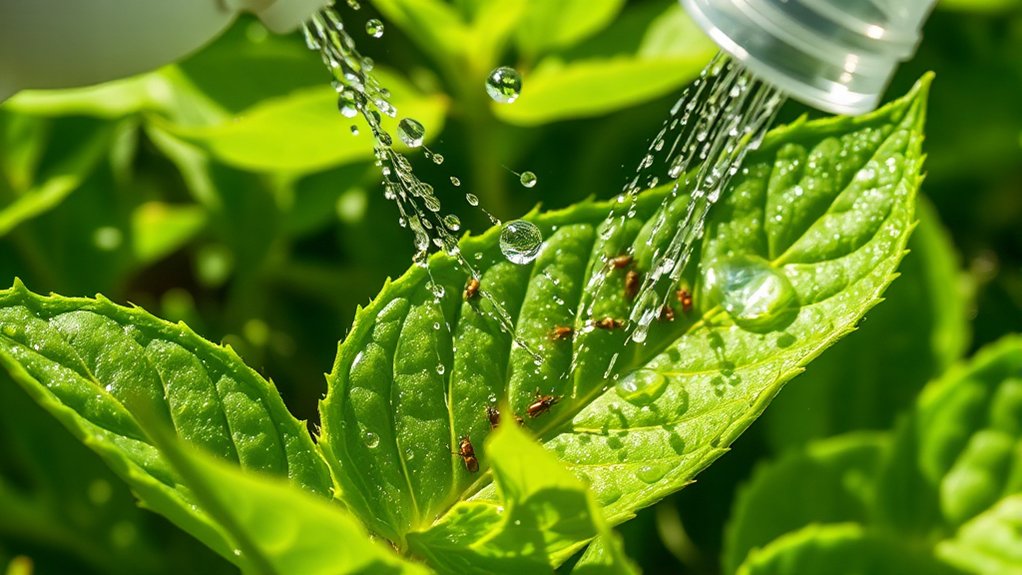
Try using a gentle spray of water to wash whiteflies off your plant leaves without harming them. Focus on the undersides of the leaves since that’s where these pesky bugs usually hide. After rinsing, let the leaves dry completely. You can repeat this process as often as needed to keep those whiteflies under control.
Gentle Water Spray
A gentle spray of water can knock whiteflies off your plant leaves without harming the plant. Use gentle water in the morning, when leaves dry quickly, and treat this as a natural deterrent that interrupts feeding.
Aim a steady stream at the foliage, then let the plant recover before you repeat the rinse. For best results, keep it simple:
- Check the plant for visible whiteflies.
- Spray with enough pressure to dislodge them, not bruise leaves.
- Repeat every few days until numbers drop.
You’ll weaken their hold, reduce egg-laying, and make your plant less appealing. This easy step works well for mild infestations and fits neatly into your regular care routine.
Leaf Underside Coverage
Focus on the undersides of leaves, since whiteflies cluster there and hide from casual sprays. Angle your hose or sprayer upward and wet every leaf bottom until the insects loosen and wash away.
Move slowly across each plant, especially on crowded stems, so you don’t miss tucked-away eggs and nymphs. A firm rinse helps protect leaf health by removing feeding pests before they weaken new growth.
Keep the pressure strong enough to dislodge whiteflies, but not so strong that you tear foliage or compact soil. After rinsing, check nearby plants too, because whiteflies can move quickly.
This simple pass also supports natural predators by reducing pest buildup without adding chemicals that could disrupt beneficial insects. Focus on thorough coverage, and you’ll give your plants a cleaner start.
Repeat After Drying
Let the leaves dry, then rinse them again to catch any whiteflies that survived the first wash. This repeat drying step helps you dislodge stubborn insects and eggs that clung to hidden leaf surfaces. Keep your spray gentle so you don’t bruise tender growth, and focus on undersides, stems, and new shoots.
In your plant care routine, check the plant every few days and act fast if you spot fresh clusters.
- Wait until foliage is fully dry before spraying again.
- Use a strong but careful stream of water.
- Inspect leaves after each rinse to track progress.
Repeat this cycle until you see fewer pests. Consistent repeat drying and rinsing can weaken the infestation and give your plants a better chance to recover.
Remove Eggs and Nymphs by Hand
If you catch whiteflies early, you can often stop an infestation by removing eggs and nymphs by hand before they spread. Use hand removal on the undersides of leaves, where egg identification matters most because the eggs look tiny, pale, and clustered.
Check your plants daily, especially tender new growth, and pinch off heavily infested leaves if you can do so without stressing the plant. For smaller outbreaks, rub the eggs and nymphs away with your fingers or a soft, damp cloth.
You can also use a cotton swab to lift stubborn spots from veins and stems. Work gently so you don’t tear leaf tissue or crush nearby buds. Afterward, inspect the plant again to make sure you didn’t miss hidden patches.
Dispose of the removed material in a sealed bag, not on the soil. Consistent attention helps you reduce the population fast and keeps the infestation from gaining momentum.
Spray Plants With Insecticidal Soap
A quick spray of insecticidal soap can knock down whiteflies without leaving harsh residues on your plants. You should coat the undersides of leaves, where pests hide, and repeat after a few days if needed. Good application techniques matter, because missed spots let survivors rebound fast.
For better insecticidal soap effectiveness, spray in the cool morning or evening so the solution dries slowly and won’t scorch tender foliage.
- Mix the soap exactly as directed on the label.
- Test one leaf first, especially on sensitive plants.
- Reapply after rain or heavy watering washes it off.
Keep the spray gentle but thorough, and don’t drench the soil. The soap works by contact, so you need direct hits on whiteflies and nymphs. If you stay consistent, you’ll reduce their numbers without relying on harsh chemicals or disrupting your plants’ growth.
Set Sticky Traps for Adult Whiteflies
Bright yellow sticky traps can help you catch adult whiteflies before they spread through your plants. Choose from several sticky trap types, including cards, rolls, and small hanging sheets. Then match the size to your growing area.
Place traps near the top of infested plants, where adults fly and rest. Check them every few days and replace them when they’re coated with insects or dust.
| Trap type | Best use | Tip |
|---|---|---|
| Yellow card | Pots and seedlings | Hang at leaf height |
| Roll strip | Greenhouses | Cut to fit rows |
| Hanging sheet | Dense foliage | Set above canopy |
Good trap placement makes a big difference, so keep the surface visible and unobstructed. If you see fewer adults after a week, you’re on the right track.
Combine traps with careful monitoring to quickly gauge pressure and target the worst hotspots.
Prevent Whiteflies From Returning
Once you’ve knocked back the adults, keep whiteflies from coming back by staying on top of new growth and checking the undersides of leaves regularly. Inspect plants every few days, especially in warm weather, so you catch eggs and nymphs before they spread.
Use these habits to stay ahead:
Stay ahead by rinsing foliage, releasing beneficial insects, and planting companions that help confuse pests.
- Rinse foliage with a strong spray of water to dislodge early infestations.
- Release biological controls, like lady beetles or parasitic wasps, when populations stay low.
- Practice companion planting with herbs and flowers that confuse pests and attract beneficial insects.
You should also remove heavily infested leaves, avoid overfertilizing with nitrogen, and keep plants healthy but not overly lush. If you grow indoors, isolate new plants before placing them near others.
Frequently Asked Questions
What Plants Attract Whiteflies Most?
You’ll notice whiteflies are most drawn to tender, fast-growing plants like poinsettias, hibiscus, tomatoes, peppers, cucumbers, and many ornamental ornamentals. They prefer lush foliage and warm conditions, so your host plant preferences matter a lot.
If you choose varieties with stronger whitefly resistance, you can reduce infestations before they start. Keep an eye on new growth, since that’s where they usually feed, lay eggs, and spread quickly.
Can Whiteflies Spread Plant Diseases?
Yes, whiteflies can spread plant diseases, and you shouldn’t ignore that risk. You might think a few tiny insects can’t do much, but whitefly transmission can carry viruses from one plant to another as they feed.
Watch for disease symptoms like yellowing, curling, stunting, or mottled leaves. If you spot these signs, act fast so you can protect nearby plants and limit further damage in your garden.
Are Whiteflies Harmful to Humans or Pets?
No, whiteflies aren’t harmful to you or your pets. You might find them annoying, but they don’t bite, sting, or spread illness to people or animals.
Focus your whitefly control on protecting your plants instead. Good pest management means checking leaves, removing infested growth, and using safe treatments like insecticidal soap. If you keep up with monitoring, you’ll reduce damage fast and keep your home environment comfortable for everyone.
When Is Whitefly Season Outdoors?
You’ll usually see whiteflies outdoors from late spring through early fall, when warmth turns your garden into their stage. Their white-winged swarms rise as temperatures climb, then fade when cold returns.
The whitefly life cycle speeds up in hot weather, and environmental factors like humidity, rainfall, and host plants shape their numbers. In mild climates, you might notice them almost year-round, especially on tender new growth and protected spots.
Do Whiteflies Live in Soil?
No, whiteflies usually don’t live in soil; you’ll find them on leaves and stems. You can still see them pupate near plants, but the whitefly lifecycle mostly stays aboveground.
If you’re dealing with an infestation, focus on soil treatment only as a support step since it won’t solve the main problem. You’ll get better results by targeting adults, eggs, and nymphs on the plant itself with repeated control.
Conclusion
By now, you’ve learned how to spot, wash, and outsmart whiteflies before they can drain the life from your plants. Think of each step as a small shield, protecting the green promise in your garden.
When you stay watchful and act quickly, you don’t just clear away pests. You preserve the quiet strength of growth itself. Keep tending with care, and your plants can stand bright, healthy, and free like dawn returning after a storm.
With these 7 steps to get rid of whiteflies on plants, you’re giving your greenery the best chance to thrive without unwanted visitors.