How to Feed Mallard Ducklings Simply
Feeding mallard ducklings can feel overwhelming, especially if you want to make sure they grow up healthy and happy. You’re not alone—many people struggle with what to feed these little birds without accidentally harming them. Getting the right balance of nutrients and knowing what to avoid is key, and luckily, it doesn’t have to be complicated.
To feed mallard ducklings simply, provide a balanced diet with protein, greens, and grains on a regular schedule, starting every 2-3 hours and tapering as they grow. Use homemade meals like chopped vegetables and scrambled eggs, but avoid bread and junk food to prevent health issues.
Always offer fresh, shallow water nearby. Introduce new foods gradually while keeping their environment clean and stress-free. With these basics, you’ll set them up for strong, healthy growth and can investigate more tips for their care.
Key Takeaways
- Feed mallard ducklings a balanced diet of protein, greens, and grains. Include finely chopped vegetables and boiled eggs for healthy growth.
- Offer fresh, clean water daily in shallow dishes near feeding areas to encourage proper hydration.
- Feed ducklings every 2-3 hours during their first week. Gradually reduce the frequency as they grow older.
- Introduce new foods slowly by mixing small amounts with regular feed. Watch for any adverse reactions.
- Avoid bread and junk food. Focus on natural, species-appropriate foods to prevent digestive and health issues.
How To Feed Mallard Ducklings For Healthy Growth
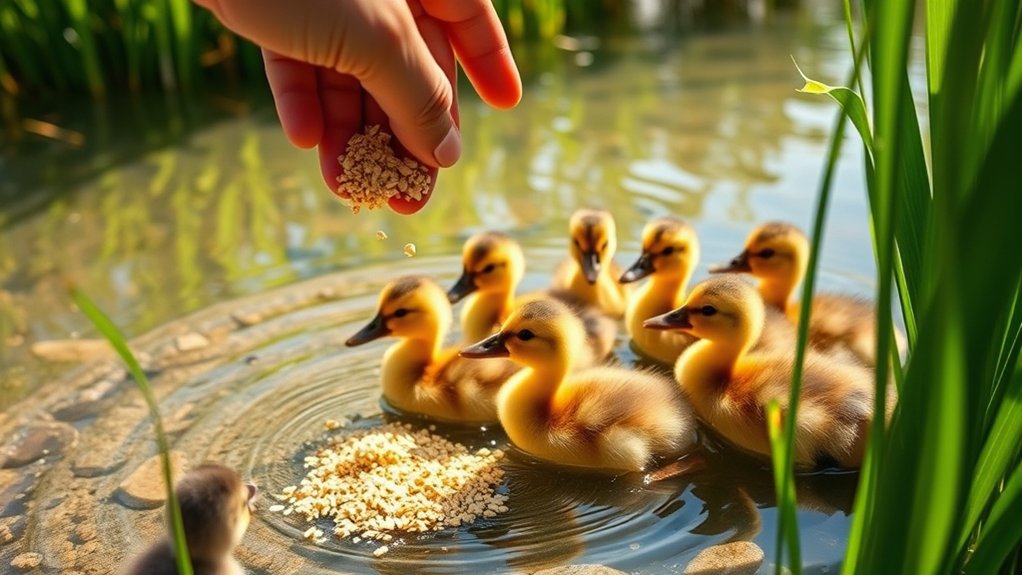
Although mallard ducklings can find some food on their own, you’ll need to provide a balanced diet to guarantee they grow healthy and strong. You should focus on offering a mix of protein, greens, and grains to support their rapid development.
Keep an eye on their feeding frequency, ensuring they eat small meals multiple times a day to match their high energy needs. You don’t want to overfeed or leave them hungry.
Including homemade treats can improve their diet and keep them interested in eating. Simple options like finely chopped vegetables or scrambled eggs add variety and important nutrients.
Be cautious with treats; they should complement, not replace, their staple food. Remember, fresh water is essential during every feeding session.
How Often Should You Feed Mallard Ducklings?
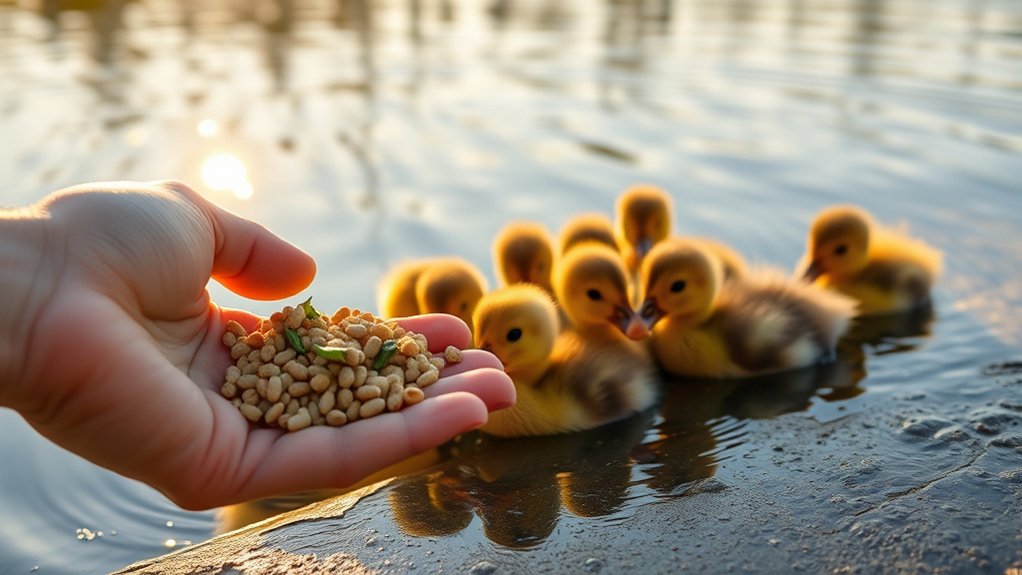
Feeding mallard ducklings the right amount goes hand in hand with providing a balanced diet. To keep them healthy, you need to establish consistent feeding schedules. Ducklings require frequent, smaller meals because they have fast metabolisms and grow rapidly.
Typically, feeding them every 2-3 hours during their first week is best. As they age, you can space out meals to 3-4 times daily. Incorporating dietary supplements in their meals guarantees they get essential nutrients not always present in basic feed.
Here’s a simple feeding schedule guide:
| Age (Weeks) | Feeding Frequency | Dietary Supplements Needed |
|---|---|---|
| 0-1 | Every 2-3 hours | Vitamin D, Calcium |
| 1-2 | 4-5 times daily | Vitamin D, Calcium |
| 2-4 | 3-4 times daily | Vitamin D, Calcium, Omega-3 |
| 4-6 | 3 times daily | Calcium, Omega-3 |
| 6+ | 2 times daily | Omega-3 |
Stick to these feeding schedules for strong, thriving ducklings.
How To Make Homemade Meals And Treats For Ducklings
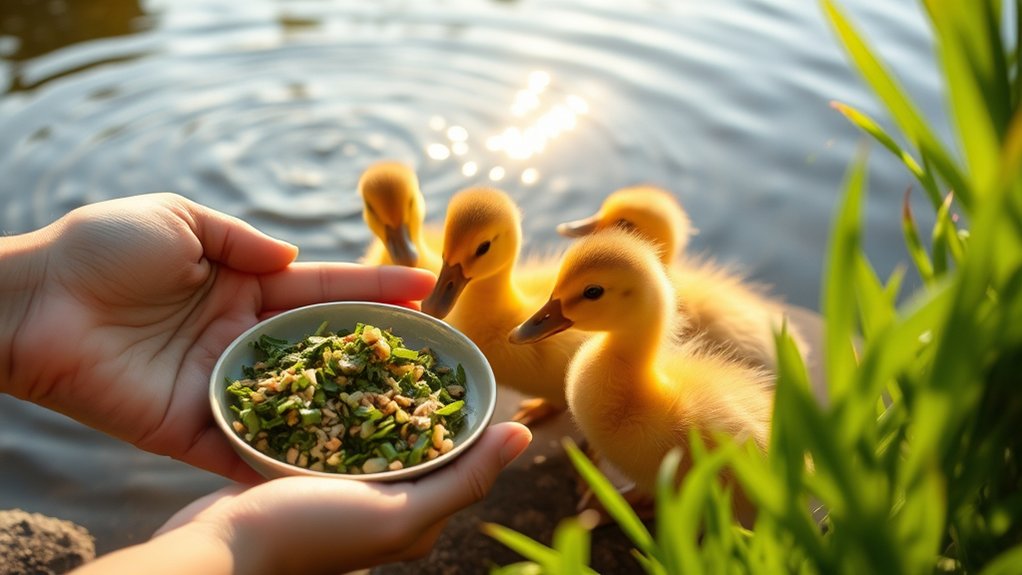
When you prepare homemade meals and treats for your mallard ducklings, you control exactly what goes into their diet. This way, you ensure they get fresh, nutritious ingredients without unwanted additives. Start with finely chopped greens like spinach or lettuce, which mimic their natural foraging habits.
You can add boiled eggs or mealworms as a protein source since mallards instinctively seek out diverse nutrients. Mixing in small amounts of oats or cornmeal creates energy-rich meals that support growth.
Keep treats simple and wholesome, such as tiny pieces of fruit or finely chopped vegetables. Remember, mallards’ nesting behaviors mean ducklings often feed near water, so offering meals near their usual spots encourages natural feeding instincts.
Avoid overfeeding treats to maintain balanced nutrition and promote healthy foraging skills. By preparing homemade meals that reflect their natural diet and habits, you help your ducklings grow strong and thrive in their environment.
Why Bread And Junk Food Are Bad For Mallard Ducklings
You really shouldn’t feed mallard ducklings bread or junk food. These foods don’t have the essential nutrients that the ducklings need to grow up healthy. Plus, giving them bread or junk food can lead to serious digestive problems that hurt their overall well-being.
Instead, it’s much better to offer balanced meals that support their nutrition and digestion. That way, you’re helping them stay strong and healthy as they grow.
Nutritional Deficiencies Risks
Although it might seem harmless to toss bread or snacks to mallard ducklings, doing so can lead to serious nutritional deficiencies. Bread lacks essential nutrients, causing imbalances that affect their growth and health.
You should focus on providing balanced meals with proper feeding frequency to meet their needs. Without vitamin supplements or natural food sources, ducklings miss out on crucial nutrients like protein, calcium, and vitamins A and D.
Here’s what you risk by feeding bread or junk food:
- Vitamin deficiencies impair immune function
- Poor bone development from calcium shortage
- Energy imbalance causing lethargy or obesity
- Weakened growth due to lack of protein
- Disrupted feeding frequency affecting metabolism
Providing nutritious food and proper vitamin supplements keeps your ducklings healthy and thriving.
Digestive Health Problems
Because mallard ducklings have delicate digestive systems, feeding them bread or junk food can cause serious health issues. These foods lack essential nutrients and disrupt the balance of digestive enzymes needed to break down their natural diet.
When you give ducklings bread, it can lead to poor digestion and blockages because their gut flora isn’t equipped to handle processed carbs. Junk food, often high in salt and preservatives, further harms their gut flora, weakening their immune system.
Without a healthy gut flora, ducklings struggle to absorb nutrients, leading to malnutrition and digestive distress. To keep their digestive health strong, stick to natural, species-appropriate foods that support enzyme activity and maintain balanced gut flora, ensuring your mallard ducklings thrive.
How To Provide Water When Feeding Mallard Ducklings
When feeding mallard ducklings, always provide fresh, clean water nearby. This helps them swallow their food easily and stay hydrated. Meeting their hydration needs is essential, and ensuring water safety prevents accidents and contamination.
Use shallow dishes to avoid drowning risks, and change the water frequently to keep it clean.
Keep these tips in mind when providing water:
- Use a shallow container, no deeper than an inch or two
- Place water close to their feeding area for easy access
- Change water daily to maintain cleanliness and prevent bacteria
- Avoid slippery or unstable containers to reduce injury risks
- Monitor water temperature; lukewarm water encourages drinking
How To Tell If Your Mallard Ducklings Are Eating Enough
You can tell if your mallard ducklings are eating enough by keeping an eye on their weight and eating habits. If they’re gaining steadily and seem enthusiastic during feeding times, that’s a good sign.
Just watch for consistent, active feeding behavior to make sure they’re getting the nutrition they need. If they’re eager to eat and growing well, you’re probably on the right track.
Monitoring Duckling Weight
Although mallard ducklings may seem lively and healthy, monitoring their weight is the best way to guarantee they’re eating enough. Weight reflects their overall health more accurately than feather coloration or nesting habits, which can vary naturally.
To keep track, you should:
- Weigh ducklings daily using a small, accurate scale
- Record weights to spot consistent gains or losses
- Compare weights to average growth charts for mallards
- Note any sudden drops, which could signal feeding issues
- Consult a vet if weights don’t steadily increase
Observing Eating Behavior
Tracking weight gives you a clear picture of your ducklings’ growth, but watching how they eat offers immediate clues about their well-being. Pay close attention to their feeding habits. Healthy ducklings eagerly peck at food and investigate new items.
If you notice hesitation or disinterest, it could signal a problem. Behavior cues like frequent head dipping into water after eating suggest they’re properly hydrating, which helps digestion. Conversely, sluggishness or refusal to eat might mean illness or stress.
Make certain they’re feeding regularly throughout the day in small amounts, which is typical for mallard ducklings. By observing these behavior cues closely, you can quickly adjust feeding schedules or diet to guarantee they’re getting enough nutrients. This hands-on approach helps you support their healthy development effectively.
How To Introduce New Foods To Mallard Ducklings
When introducing new foods to mallard ducklings, start slowly to prevent digestive upset and help them adjust to different tastes and textures. Stick to a consistent feeding schedule, offering small amounts of the new food alongside their regular diet. This gradual approach lets their digestive systems adapt without stress. Proper food storage is also essential to keep new foods fresh and safe, preventing spoilage or contamination.
To introduce new foods effectively, try these steps:
- Mix a small portion of the new food with their usual feed.
- Observe their reaction to ensure they accept the new taste.
- Increase the new food amount gradually over several days.
- Keep feeding times consistent to maintain a routine.
- Store fresh foods in airtight containers, refrigerated if necessary.
Following these tips helps your mallard ducklings enjoy a varied diet while staying healthy and happy.
What’s Different About Feeding Wild And Backyard Mallard Ducklings?
When you’re feeding wild and backyard mallard ducklings, you’ll quickly notice their diets aren’t quite the same. Wild ducklings mostly rely on insects and plants they find naturally around them. On the other hand, backyard ducklings usually get more controlled and supplemental foods from their caretakers. So, knowing these differences in their feeding environments really helps you make sure each type of duckling gets the right nutrition.
Diet Variations
Although both wild and backyard mallard ducklings need nutritious food to grow healthy, their diets differ considerably because of their environments. You’ll find feeding schedules vary. Wild ducklings eat frequently as they forage, while backyard ducklings rely on you for timed, balanced meals. Nutritional balance is key in both settings but achieved differently.
In the wild, ducklings consume:
- Aquatic insects and larvae
- Algae and aquatic plants
- Small fish and amphibians
- Natural grains and seeds
- Occasional human-provided treats from responsible feeders
Backyard ducklings depend more on formulated feed or kitchen scraps supplemented with fresh greens. Understanding these diet variations helps you provide the right nutrients and maintain healthy growth no matter where the ducklings are raised.
Feeding Environment Differences
Because wild and backyard mallard ducklings live in vastly different settings, the way you feed them changes considerably. You’ll notice differences in feeding frequency and dietary supplements based on their environment.
Wild ducklings forage frequently throughout the day, relying on natural food sources. Backyard ducklings, however, depend more on you for scheduled meals and additional nutrients.
| Aspect | Wild Mallard Ducklings |
|---|---|
| Feeding Frequency | Continuous natural foraging |
| Dietary Supplements | Rarely needed |
| Feeding Control | None |
| Food Variety | Diverse, natural diet |
| Human Interaction | Minimal |
| Aspect | Backyard Mallard Ducklings |
| Feeding Frequency | Set times daily |
| Dietary Supplements | Often necessary |
| Feeding Control | Full control by caretaker |
| Food Variety | Controlled, supplemented |
| Human Interaction | Frequent |
You’ll need to adjust your care accordingly.
Easy Tips To Keep Mallard Ducklings Happy And Healthy
To keep your mallard ducklings happy and healthy, you’ll need to provide a clean environment, nutritious food, and plenty of fresh water. Understanding their natural feeding behavior helps you time feedings to when they’re most active, encouraging healthy eating habits.
Also, promoting duckling bonding by allowing them to feed together reduces stress and supports social development.
Here are easy tips to maintain their well-being:
Keep their living space clean and dry to prevent illness. Offer a balanced diet rich in protein and vitamins. Provide fresh, clean water at all times for hydration and feeding. Feed them in groups to encourage natural social interactions. Observe their feeding behavior daily to spot any issues early.
Troubleshooting Common Feeding Problems With Mallard Ducklings
When you notice your mallard ducklings hesitating to eat or showing signs of distress during feeding, it’s important to identify and address common issues quickly. Irregular feeding schedules, lack of parental guidance, or unsuitable food can cause problems. Sticking to consistent feeding times helps ducklings feel secure and encourages healthy eating habits.
Here’s a quick troubleshooting guide:
| Problem | Cause | Solution |
|---|---|---|
| Refusal to eat | Irregular feeding schedule | Establish and maintain routine |
| Weak or lethargic | Poor nutrition or illness | Provide balanced feed, check health |
| Overcrowding | Too many ducklings feeding | Space out feeding areas |
If you observe persistent issues, consult a vet for advice. Remember, proper feeding schedules combined with parental guidance are key to raising strong, healthy mallard ducklings.
Frequently Asked Questions
Can Mallard Ducklings Eat Insects From the Wild?
Yes, mallard ducklings can eat insects from the wild. Their wild insect diet plays a vital role in their natural foraging behavior, providing essential proteins and nutrients for growth.
When you let them forage naturally, they’ll instinctively find various insects like beetles, flies, and larvae. Just make sure the area is safe and free from pesticides or harmful chemicals so their wild insect diet stays healthy and supports their development.
What Is the Best Temperature for Storing Duckling Food?
You should store duckling food at a cool, dry temperature around 50-70°F (10-21°C) to keep it fresh and maintain nutritional balance. Avoid heat and moisture, which can spoil the feed and reduce its quality.
How Do Weather Changes Affect Duckling Feeding Habits?
You might think weather changes drastically alter duckling feeding habits, but they mainly drive climate adaptation through seasonal variations. As temperatures drop, ducklings eat more to maintain energy, while warmer weather reduces their intake.
You’ll notice their feeding patterns shift with daylight length and food availability, so adjusting feeding times and amounts helps them thrive. Staying aware of these changes guarantees you support their natural adaptation effectively.
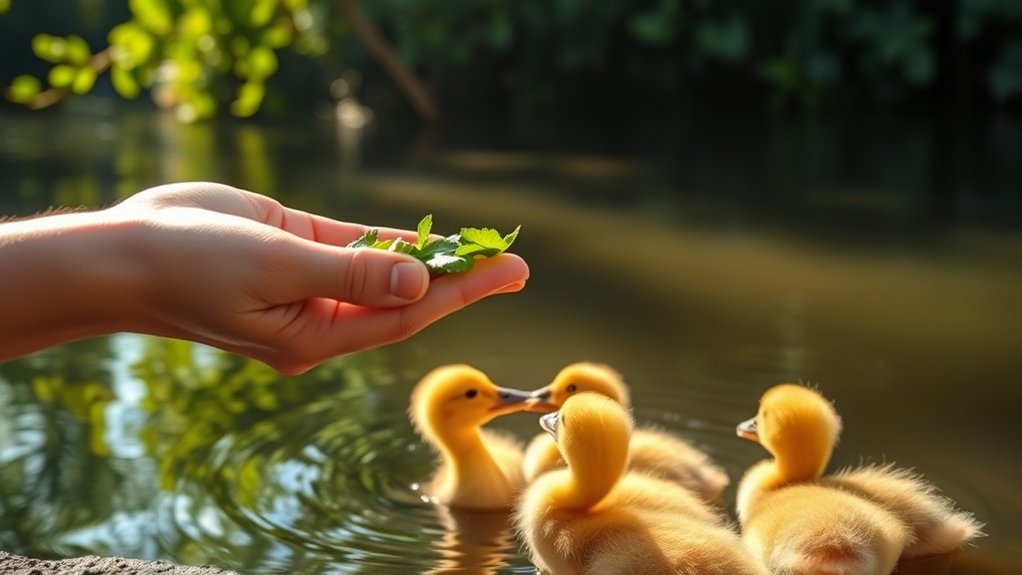
Is It Safe to Hand-Feed Mallard Ducklings?
Yes, you can hand-feed mallard ducklings, but you need to follow safe hand feeding tips to avoid stressing them or causing harm. Use gentle duckling feeding techniques like offering small, appropriate-sized food pieces and keeping your hands clean.
Avoid feeding them bread or anything harmful. Always stay calm and patient, letting the ducklings approach you. This way, you create a safe environment for them while building trust through careful, safe hand feeding.
How to Clean Feeding Dishes to Prevent Illness?
You rinse, scrub, and sanitize your feeding dishes to keep them safe. Use cleaning tools like brushes and mild soap to remove all food residue. Rinse thoroughly with warm water to eliminate soap traces.
Dry completely before refilling. Store leftover food properly in sealed containers to avoid contamination. Regularly cleaning dishes and managing food storage prevents illness, ensuring your ducklings stay healthy and happy every time they eat.
Conclusion
Feeding mallard ducklings may seem tricky, but it’s simpler than you think! You don’t need fancy ingredients. Just wholesome, safe foods and fresh water will keep them healthy and happy.
If you worry about making mistakes, remember even small efforts help their growth. With patience and consistency, you’ll enjoy watching these lively little ducks thrive.
Stick to the basics and avoid junk food. You’ll have a rewarding experience feeding your mallard ducklings!